


Antique Furniture Appraisal: Value Your Pieces
Free Consultation
Ready to Sell Your Estate or Collection?
Lion & Unicorn's expert team offers free appraisals and nationwide pickup service.
Over 30 years of experience — Florida's most trusted auction house.
Antique Furniture Appraisal: How to Value Your Pieces
The FAQ schema below mirrors the questions and answers in this article.
An inherited sideboard, writing desk, dining set, or cabinet can be beautiful and difficult to value. Age alone does not establish what a piece is worth. Maker, construction, condition, restoration, provenance, and current demand all matter when furniture is part of an estate, insurance record, probate file, or planned sale.
Request an antique furniture appraisal consultation for guidance on the right valuation approach for your piece or collection.
An antique furniture appraisal is a documented opinion of value based on a piece’s identity, materials, age, craftsmanship, condition, provenance, and comparable market evidence. A quick online estimate may help with early research. But a formal appraisal is better suited to estate settlement, probate, tax, insurance, and other decisions that require supporting documentation.
The purpose of the valuation should guide the process. A market opinion for sale planning is different from an insurance valuation or an estate report. Understanding that distinction helps you collect the right records, ask better questions, and avoid treating an asking price as proof of market value.
What Is an Antique Furniture Appraisal?
An antique furniture appraisal is a research-based opinion of value prepared for a stated purpose. At Lion & Unicorn, the appraiser identifies the furniture, evaluates construction and condition, researches comparable sales, and explains the conclusion. The report may be informal or formal, depending on the intended use and documentation requirements.
An appraisal is more than naming a style or estimating a likely sale price. It should explain what is being valued, the effective date, the definition of value, and the evidence supporting the conclusion. A careful report separates observable facts from attribution, interpretation, and market judgment.
Furniture can have several relevant values. Fair Market Value considers what a willing buyer and willing seller might agree to under defined conditions. Replacement value addresses the cost of replacing an item with a similar one for insurance. Liquidation or auction value may reflect a different sale setting, timeline, audience, and expense structure.
A preliminary estimate can help you decide whether a piece deserves more research. It may be based on photographs, a short description, or broad market knowledge. It is not automatically equivalent to a formal, in-person report. It may not include a complete inspection, itemized inventory, stated purpose, or documentation suitable for probate, tax, insurance, or a dispute.
For an estate, a formal report can create an organized record of furniture scattered across rooms, storage areas, and family memories. An itemized inventory can help an executor identify pieces, record condition, support conversations among heirs, and decide whether to retain, divide, consign, or sell property. Confirm the receiving party’s requirements before the inspection. If the furniture is part of a larger property transition, review Lion & Unicorn’s estate sales consulting services for context on the logistics beyond valuation.
Lion & Unicorn describes its appraisal work as certified and USPAP-compliant, with appraisal work performed by ISA members. Review the company’s antique appraisal service information before arranging an assignment.
How Does an Antique Furniture Appraisal Determine Value?
At Lion & Unicorn, value is determined by weighing identity, age, materials, construction, condition, provenance, and recent comparable sales together. No single feature guarantees a price. A recognized maker can increase interest, while restoration, missing parts, uncertain attribution, or weak demand can reduce what buyers may pay.
A sound appraisal begins with identification. The appraiser considers function, design, period, regional tradition, and likely maker or manufacturer. A desk that resembles a well-known period piece may have a different value if its construction dates to a later revival. Attribution should be supported by physical evidence, not appearance alone.
Maker, period, and design
Maker and designer information can matter when it is credible and relevant to the market. Furniture associated with Andre-Charles Boulle, George Hepplewhite, Josef Dannhauser, Paul Evans, Charles and Ray Eames, or Gio Ponti may attract specialist attention. The appraiser must still determine whether construction, proportions, materials, hardware, and finish fit the claimed maker and period.
Style can narrow an investigation, but style is not the same as authorship. Georgian, Victorian, Art Deco, and mid-century modern furniture may be original, later reproduced, or altered. Style is one part of identification, not a guarantee of rarity or value.
Materials, construction, and craftsmanship
Wood species, veneer, marquetry, inlay, hardware, upholstery, and joinery all provide evidence. Mahogany, walnut, oak, and other woods can be associated with different periods. A veneer pattern, dovetail, screw, hinge, or drawer bottom can help distinguish original construction from a later replacement.
Well-executed carving, balanced proportions, thoughtful joinery, and high-quality materials can support collector interest. Impressive workmanship does not by itself prove age or a famous attribution. The appraiser compares physical evidence with documented examples and market results.
Condition, restoration, and provenance
Condition is a major valuation factor. Normal age-related wear may be accepted by buyers. Structural instability, missing elements, insect damage, severe splits, replaced hardware, or extensive refinishing can affect desirability. Restoration is not automatically harmful. The key questions are what changed, whether the work was appropriate, and how much original material remains.
Provenance is the documented history of ownership, acquisition, exhibition, or sale. Receipts, auction records, dealer invoices, estate inventories, correspondence, catalog entries, and photographs can connect a piece to a person, collection, maker, or place. Provenance does not replace physical examination, but credible documentation can clarify identity.
Comparable sales and current demand
Comparable sales anchor a valuation in observed transactions. The best comparisons share meaningful characteristics such as maker, period, materials, size, condition, provenance, and selling venue. An online asking price is not a completed sale. One unusually high result does not establish a typical market outcome.

How Can You Prepare Furniture for an Appraisal?
Lion & Unicorn recommends preparing for an appraisal by documenting the furniture without altering it. Photograph every side and important detail. Record accurate measurements, gather ownership records, note repairs, and make safe access possible. Clear information helps the appraiser identify the piece and produce a report that matches your purpose.
Build a visual record
Take clear photographs of the front, back, sides, top, underside where safe, interior compartments, drawers, doors, shelves, hardware, upholstery, carving, inlay, veneer, and visible damage. Include full views and close-ups. Photograph labels, stamps, marks, and numbers in place.
Good photographs do not replace an inspection, but they make an initial review more efficient. Use even lighting and include enough surroundings to show scale. Avoid filters that change color or hide wear. If a maker mark or construction detail is unclear, note that uncertainty rather than guessing at an identification.
For additional preparation, compare your records with Lion & Unicorn’s guide to antique appraisal services. The subject and purpose of that guide differ from this furniture-focused article, but its documentation principles can help you organize a request.
If a mark is difficult to read, provide an unedited image and a closer view.
Record measurements and identifying details
Measure height, width, and depth. Note extensions, leaves, removable shelves, detachable sections, caster feet, and other components that change dimensions or function. If the furniture is part of a suite, identify which pieces appear to match.
Write down every mark, label, stamp, serial number, and family description. Note where each mark appears. Do not force a drawer, dismantle a joint, or turn over a large piece without assistance.
Gather records and make access safe
Make an ownership timeline. Include who owned the furniture, where it was acquired, approximate dates, family connections, dealer information, and auction references. Gather receipts, insurance schedules, estate inventories, older photographs, catalog descriptions, repair invoices, and conservation documentation.
Be candid about repairs and alterations. Note replaced feet, new hardware, refinished surfaces, reupholstery, repaired veneer, reconstructed sections, and missing parts. A documented alteration is easier to interpret than a concealed one. If you are unsure whether a change is original, describe what you know.
Clear a safe path and provide good lighting. Tell the appraiser about stairs, narrow doors, fragile elements, pets, storage restrictions, or furniture that cannot be moved. For a large estate inventory, group pieces by room or inventory number. Keep paperwork together without placing labels or tape on finished surfaces.
- Photograph the whole piece and its important details.
- Measure height, width, depth, and removable components.
- Record all marks, labels, numbers, and locations.
- Gather receipts, ownership history, prior reports, and estate records.
- Document repairs, refinishing, restoration, and missing parts.
- Avoid cleaning or changing the furniture before receiving advice.
- Arrange safe access and identify pieces clearly.
For additional preparation ideas, see Lion & Unicorn’s overview of antique appraisal costs and process. The goal is to preserve evidence, not to make furniture look newer.
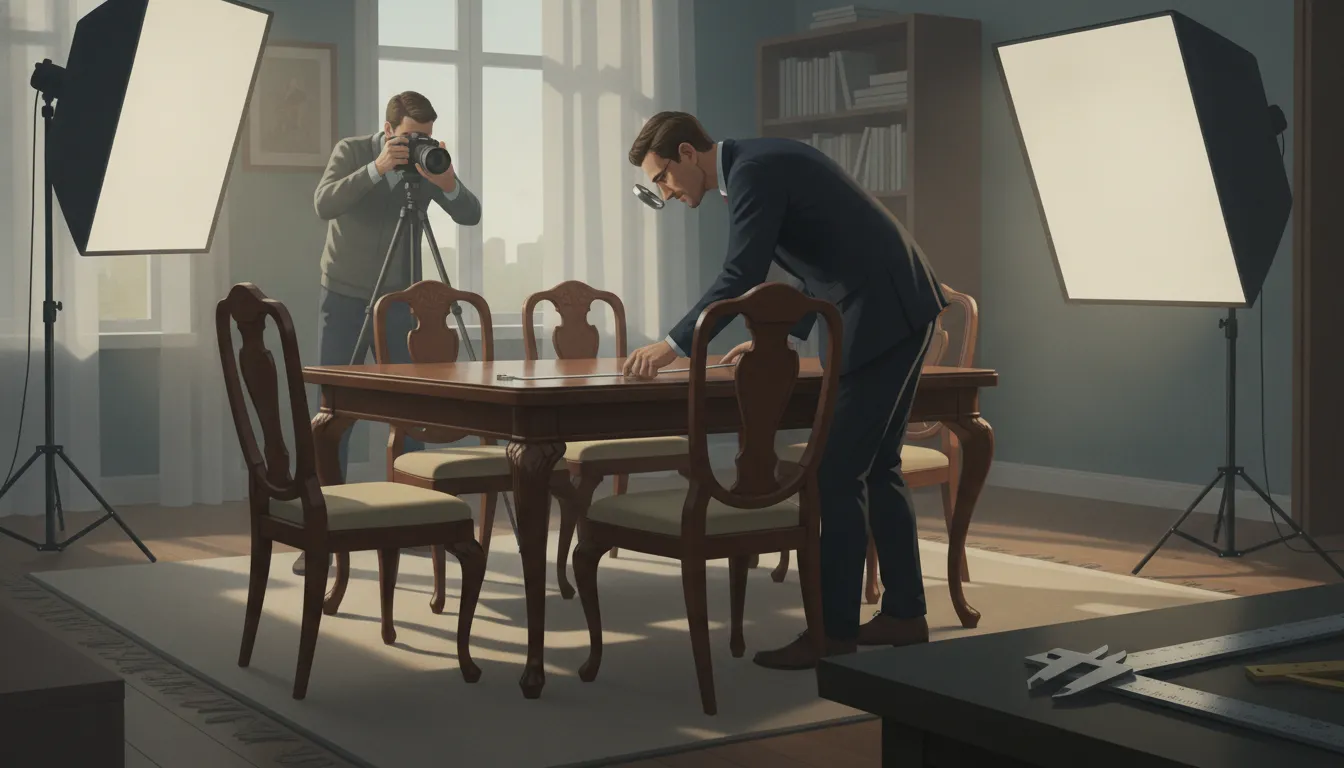
Which Type of Antique Furniture Appraisal Do You Need?
The appropriate appraisal type depends on what you will do with the conclusion. An informal estimate may be enough for early research. A formal market, insurance, estate, probate, or tax assignment may require defined scope, supporting comparables, an itemized inventory, and a signed report. State the intended use first.
| Type | What it may provide | When it may help | Important limitation |
|---|---|---|---|
| Informal estimate | Preliminary opinion based on visible features and broad market knowledge. | Deciding whether to research further. | May not include institutional documentation. |
| Online photo review | Photo-based feedback when inspection is not practical. | Screening pieces or a large group. | Photos may not reveal construction or hidden damage. |
| Market valuation | Opinion informed by comparable sales and current demand. | Planning a sale, consignment, or retention. | Does not guarantee a future selling price. |
| Insurance appraisal | Documented value prepared for insurance. | Creating or updating coverage records. | Replacement value should not be reused for another purpose. |
| Estate or probate appraisal | Itemized inventory and formal valuation. | Inheritance, settlement, probate, or tax. | Confirm the receiving party’s requirements first. |
A market valuation for sale planning asks what comparable furniture has achieved in a relevant market. It may help you choose between private sale, consignment, auction, or retention. It is a planning opinion, not a promise. Venue, timing, presentation, buyer interest, fees, and bidding affect results.
An insurance assignment asks a different question. It may focus on the cost to replace an item with a similar example. An estate or probate assignment may need a valuation date, itemized schedule, supporting explanation, and signature. Ask the intended recipient what the report must contain.
How Much Does an Antique Furniture Appraisal Cost?
At Lion & Unicorn, appraisal fees vary with scope, number of pieces, research depth, travel, access, urgency, and report requirements. One accessible side table requires less work than a household inventory with dozens of pieces. Request a written scope and fee explanation before the inspection.
Factors that affect the fee
The number, size, and location of the pieces are major considerations. A single desk in one room may require less time than a collection spread across a home, storage unit, and second location. Large furniture can require additional handling coordination, measurements, photography, and access planning.
Research depth also affects the assignment. Clear marks and strong records may require less investigation than uncertain authorship, unusual construction, disputed provenance, or complicated restoration. Research may include auction records, specialist references, prior sales, and comparable examples.
The report’s purpose changes the documentation. A preliminary sale discussion may not require the same deliverables as an insurance, probate, tax, or estate settlement report. Formal assignments may include an inventory, photographs, condition notes, value definition, effective date, comparable evidence, assumptions, and a signed conclusion.
Questions to ask before booking
- What valuation purpose and definition of value will the report use?
- Will the assignment include an inspection, photographs, condition notes, and research?
- Is the fee based on time, number of pieces, travel, or a fixed scope?
- Are added pieces, locations, research, revisions, or rush delivery billed separately?
- Will the report meet the requirements of my insurer, attorney, court, tax professional, or executor?
- What credentials and relevant furniture experience does the appraiser have?
Review how to choose a qualified appraiser in Florida before making a decision. A clear scope is more useful than a low initial price with undefined services.
How Do You Choose a Qualified Furniture Appraiser?
Lion & Unicorn recommends choosing an appraiser with relevant furniture experience, appropriate credentials, a clear written scope, and an objective approach. Ask how the professional handles maker attribution, construction, restoration, comparable sales, conflicts of interest, and report requirements.
Look for relevant experience
Ask whether the appraiser regularly handles the type of furniture you own. Relevant experience might include case furniture, seating, tables, desks, cabinets, regional pieces, period furniture, or mid-century design. The professional should be comfortable examining wood, veneer, joinery, hardware, carving, inlay, labels, alterations, and restoration.
Furniture value can turn on details that are easy to miss in a general inspection. A replaced drawer, altered foot, modern screw, later finish, or mismatched component can change the interpretation. Experience does not eliminate uncertainty, but it should lead to a disciplined explanation.
Confirm credentials, independence, and terms
Ask for credentials, memberships, training, and experience with formal assignments. For an estate, insurance, probate, or tax matter, confirm whether the report will be signed and whether it follows the requested standard. Lion & Unicorn states that its appraisal work is performed by ISA members and is USPAP-compliant.
Ask whether the appraiser owns the furniture, intends to buy it, receives a sales commission, has a referral arrangement, or has another relationship that could affect the assignment. If the appraiser also offers selling services, ask how the appraisal and sales recommendation are kept clear and transparent.
A written engagement should identify the property, purpose, intended user, effective date, inspection method, deliverables, fee, timeline, and limits. It should state whether the conclusion is a formal appraisal, estimate, consultation, or another service.
For more questions, see this guide to finding a trusted antique specialist.
When Should You Get a Professional Appraisal?
Lion & Unicorn finds a professional appraisal most useful when a furniture valuation affects a legal, financial, insurance, estate, or shared ownership decision. It can also help before a significant sale when identity, condition, provenance, or market positioning is uncertain. Casual curiosity may only require preliminary research.
Common reasons to order a formal report
- Estate administration: An itemized valuation can help an executor organize property and communicate with heirs.
- Probate or tax matters: The receiving professional may require a report with a defined date and value.
- Insurance: A documented replacement-oriented opinion can support coverage discussions.
- Downsizing: A valuation can separate pieces that deserve specialist attention from items with limited resale potential.
- Divorce or shared ownership: An impartial report can create a documented basis for discussion.
- Uncertain authenticity: A notable maker, unusual construction, rare material, or disputed history may justify specialist review.
- Sale planning: Comparable market evidence can help determine whether to consign, auction, sell privately, or retain furniture.
For a collection connected to an estate sale, appraisal is often one part of a larger plan. Inventory, packing, transport, storage, photography, consignment, and sale strategy may need coordination. Lion & Unicorn also explains how auction houses work for sellers and buyers.
A professional opinion does not guarantee a sale price. Market conditions can change. The final result depends on venue, presentation, timing, buyer pool, bidding, fees, and terms. The value of a formal appraisal is the clarity and support it provides for a stated decision.
When the matter carries little legal or financial consequence, an initial research estimate may be reasonable. Use completed sales rather than asking prices. Compare genuinely similar furniture. Move to a professional assignment when the result must be documented, defended, or relied on by another party.
Talk with an antique appraisal specialist before you order a report for an estate, insurance file, probate matter, or planned sale.
Frequently Asked Questions About Antique Furniture Appraisal
For Lion & Unicorn, the best appraisal process starts with a clear purpose and complete information. Tell the appraiser whether you need sale planning, insurance, estate, probate, tax, or general research guidance. Provide photographs, measurements, marks, ownership history, condition details, and recipient requirements.
How do I find out what my antique furniture is worth?
Start with photographs, measurements, maker marks, construction details, condition notes, ownership history, and repair records. Compare the furniture with completed sales of similar pieces. A qualified appraiser can assess identity, condition, provenance, demand, and the purpose for which the value is needed.
Is an online furniture estimate the same as a formal appraisal?
No. An online estimate may help with preliminary research. It may not include an in-person inspection, complete condition analysis, itemized inventory, defined value, supporting comparables, or a signed report. Ask the receiving insurer, attorney, court, or tax professional what documentation is required.
Should I refinish antique furniture before an appraisal?
Usually, do not strip, repaint, aggressively clean, refinish, or replace hardware before professional guidance. These changes can remove evidence of age and originality. Document known repairs and let the appraiser evaluate whether restoration is appropriate.
What records should I bring to an appraisal?
Bring receipts, prior appraisals, insurance schedules, estate inventories, auction catalogs, dealer correspondence, repair invoices, conservation notes, family photographs, and written ownership history. Also bring clear photographs of labels, stamps, numbers, hardware, construction, damage, and restoration.
Can an appraisal guarantee what the furniture will sell for?
No. An appraisal is an opinion of value for a stated purpose and date, not a guarantee of a future sale result. Venue, timing, buyer interest, presentation, bidding, fees, and market conditions can affect the outcome. A careful report explains its assumptions, evidence, and limits.
Discuss your furniture appraisal needs with Lion & Unicorn and get a clear next step for an individual piece, collection, or estate.
Free Consultation
Ready to Sell Your Estate or Collection?
Lion & Unicorn's expert team offers free appraisals and nationwide pickup service.
Over 30 years of experience — Florida's most trusted auction house.