


Asian Antiques Near Me: A Responsible Buyer Guide
Free Consultation
Ready to Sell Your Estate or Collection?
Lion & Unicorn's expert team offers free appraisals and nationwide pickup service.
Over 30 years of experience — Florida's most trusted auction house.
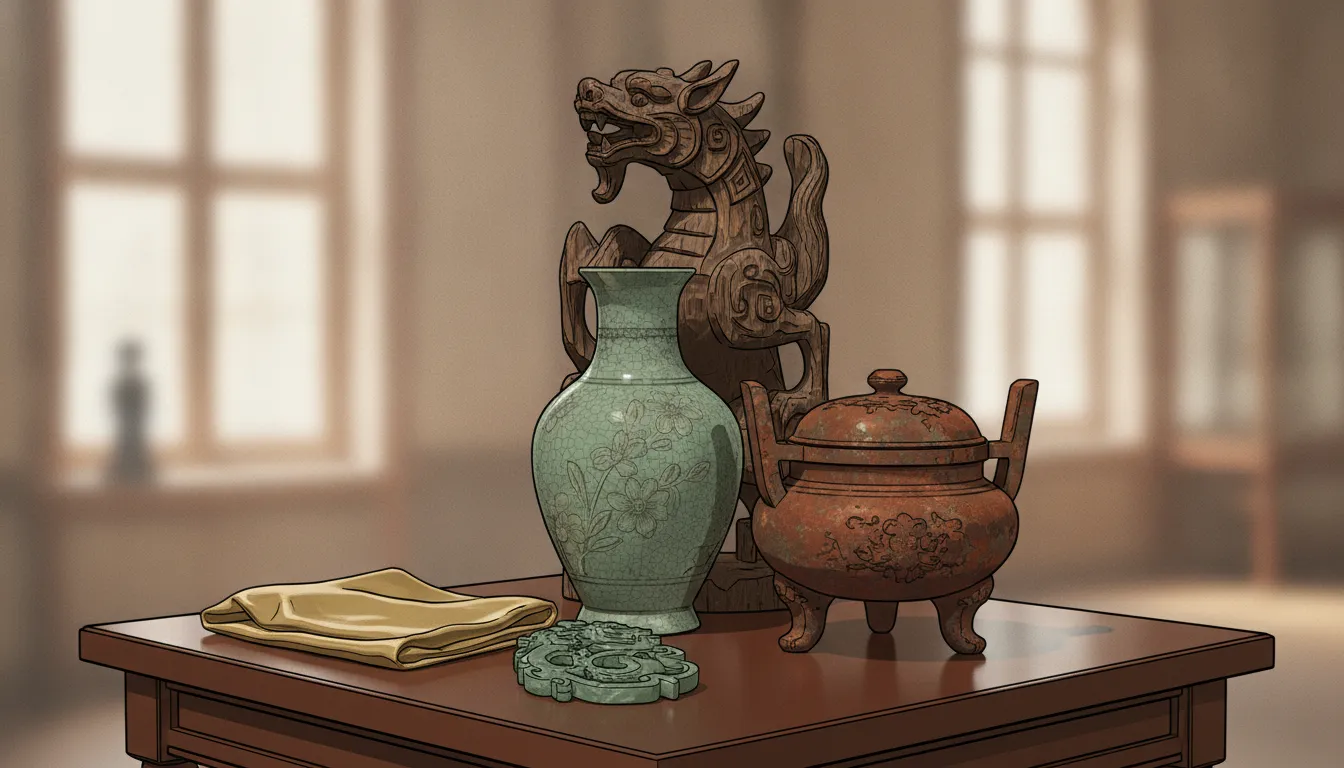
Begin with evidence.
Finding an Asian antique is only the beginning. You may be examining an inherited vase, comparing a local dealer, or considering an auction lot. Responsible research starts with the object itself: its materials, form, marks, condition, ownership history, and evidence supporting its age.
When researching asian antiques near me, use proximity as one filter, not proof of expertise. Compare a specialist’s knowledge, inspection process, documentation, auction or sales terms, and pickup or shipping options. Photos and online descriptions can guide your questions, but they cannot replace hands-on examination or a formal appraisal.
For Florida collectors and families managing collections, a nearby gallery may make inspection easier, while remote bidding and coordinated logistics can widen the search. Begin by identifying what you have and why it merits closer study, then build a research record that keeps facts separate from assumptions.
Discuss your Asian antiques with Lion & Unicorn
What Counts as an Asian Antique Worth Researching?
Asian antiques can take many forms, and the first useful step is to identify what you are looking at before drawing conclusions about age, authenticity, or value. A piece may be important because of its material, workmanship, origin, intended use, condition, or documented history. A visual impression alone is not enough to certify any of those points.
Start with the material and object type
Chinese porcelain and pottery are broad categories that may include tableware, vessels, figures, and decorative forms. Japanese ceramics and art can include both functional and display objects. Jade and hardstone carvings deserve attention to the stone, carving style, surface, and construction. Cloisonne and other enamelwork are defined in part by their materials and decorative techniques. So inspect how the elements are made rather than relying only on a color or motif.
Recognize specialty categories
Satsuma pottery and Imari porcelain are distinct categories that collectors may encounter in Asian collections. Decorative objects may also include carved, enamelled, or ceramic pieces created for display or use. Coins and jewelry require a different research lens from a large vessel or sculpture, including attention to their construction, markings, and intended purpose. Historical objects and memorabilia can carry additional questions about context and documentation.
Build a research description
Record what can be observed without treating the notes as a conclusion. Write down the apparent material, object type, dimensions, construction, visible marks or inscriptions, and any features that suggest how the piece was intended to be used. Photograph the object from several angles, including the base and details that may be easy to overlook. Note repairs, additions, missing components, or areas that cannot be examined.
Origin is another research question, not an assumption. Consider whether family records, receipts, prior appraisals, collection notes, or other provenance documents provide context. If an object was inherited, record what relatives said about it and distinguish that account from documented evidence. Online descriptions and photographs can help you organize questions, but they do not replace hands-on examination or a formal appraisal.
This approach is useful whether you are researching a collection at home, comparing an auction lot, or looking for Asian antiques near me. It creates a clear description for a specialist to review and helps separate the object itself from claims about age. Authenticity, rarity, or value that still require appropriate evidence.
How Do Condition and Provenance Affect Your Research?
Condition and provenance help you understand what an object is, what has happened to it, and how confidently its history can be documented. They do not, by themselves, prove age, authenticity, or value. Instead, they give a specialist better evidence to evaluate alongside the object’s materials, form, marks, measurements, and market context.
Read the condition report as a record
A condition report is a written account of an object’s observed state. It may note repairs, restoration, chips, cracks, losses, replacements, surface wear, discoloration, loose parts, or other damage. It should also help you judge completeness. For example, check whether a lid, mount, handle, finial, pair, stand, or original component is present. A repaired or incomplete object is not automatically unimportant, but those details need to be part of your research before you compare it with similar pieces.
Review the report with every available photograph. Look closely at rims, undersides, edges, joins, painted surfaces, and areas where damage or replacement may be less visible. Note measurements, since scale can be difficult to judge online. Lot photography and descriptions support research, but they do not replace hands-on examination. If a report is brief or unclear, ask specific questions rather than assuming that an unmentioned defect is absent.
Build a documented ownership history
Provenance means the documented history of ownership and movement. Family history, receipts, dealer invoices, prior appraisals, exhibition or collection records, and other provenance documents can connect an object to a place, person, or transaction. A complete chain is not always available. Record what is known, what is reported by a family member, and where the gaps begin. Lot numbering can help keep photographs, documents, and notes connected to the correct object when researching several pieces at once.
Provenance should be assessed for its quality and traceability, not treated as a guarantee. Compare names, dates, descriptions, marks, measurements, and images across the available records. If an auction listing provides provenance information or a condition report, preserve the lot number and the original listing with your research file. The documented focus of Lion & Unicorn includes Chinese porcelain and pottery, Japanese ceramics and art, jade and hardstone carvings. Cloisonne, enamelwork, Satsuma pottery, and Imari porcelain, so material and category expertise can help frame the right questions.
Quick inspection checklist
- Save the lot number, full description, and all available photographs.
- Record measurements and inspect marks, signatures, labels, and the underside.
- Ask directly about repairs, restoration, chips, cracks, losses, replacements, and wear.
- Confirm whether accessories, pairs, mounts, lids, or other parts are complete.
- Gather family history, receipts, prior appraisals, and provenance documents.
- Separate documented facts from assumptions, oral history, and unresolved gaps.
How Can You Prepare for an Asian Antique Appraisal?
A well-prepared appraisal begins with clear information, not a guess about what an object is worth. Before contacting an appraiser, gather the details that can help them understand the object, its history, and the purpose of the valuation. This is especially useful for inherited collections, items being considered for sale, insurance documentation, or estate planning.
- State the intended use. Explain why you need the appraisal and how the report may be used. A valuation prepared for insurance, charitable contribution, estate settlement, or a potential sale may require different scope and documentation. Ask the appraiser whether their experience and current qualifications fit that intended use.
- Take clear photographs. Photograph the front, back, sides, top, and underside of each object in even light. Include close views of decoration, damage, repairs, unusual construction, and any attached components. For a group of objects, identify each piece consistently so the images match your inventory.
- Record dimensions and materials. Measure height, width, depth, and, where relevant, diameter or weight. Note the apparent material, such as porcelain, pottery, jade, hardstone, metal, lacquer, or enamelwork. Do not polish, clean aggressively, remove mounts, or alter an object before examination. Those actions can obscure evidence or cause damage.
- Document inscriptions and marks. Transcribe or photograph marks, seals, signatures, labels, stickers, and inscriptions without assuming what they prove. Include a scale in detail photographs when helpful. A mark can be relevant research evidence, but a visual checklist alone cannot authenticate an object or establish its age.
- Write down the object history. Record where the item came from, who owned it, when your family acquired it, and any known movement between homes or countries. Gather purchase records, receipts, auction invoices, collection inventories, prior appraisals, gallery paperwork, and provenance documents. Preserve gaps in the history rather than filling them with assumptions. Provenance is evidence to evaluate, not a guarantee of authenticity or value.
- Choose and verify the appraiser. Look for relevant specialty experience and confirm current credentials, affiliation, and the report’s intended-use fit. Lion & Unicorn states that it offers certified antique appraisals, with USPAP-compliant valuation practices and an accredited International Society of Appraisers member on staff. Ask what examination, research, photographs, and documentation the assignment will require. An article cannot authenticate or appraise your specific object, so a qualified professional’s examination remains essential.
How Should You Compare Asian Antiques Near Me?
Proximity can make research easier, especially when you want to examine a piece in person, discuss its history face to face, or arrange pickup. It should not be your only filter, however. A specialist may offer stronger category knowledge from outside your immediate area. While remote options can let you review lots, ask questions, and bid by telephone, absentee, proxy, or mobile access.
Compare the buying environment with the object and your experience level in mind. A Chinese porcelain vessel, Japanese ceramic, jade carving, cloisonne object, or Satsuma or Imari piece may require different questions than a general decorative purchase. The table below shows the practical tradeoffs to investigate, not ratings for one option over another.
| Source | Category expertise | In-person inspection | Documentation | Access | Logistics |
|---|---|---|---|---|---|
| Specialist auction house | May organize focused lots and provide specialist descriptions. | May offer a gallery preview or inspection by appointment. | Review lot numbers, photographs, descriptions, provenance information, and condition reporting. | Often combines live and online bidding with telephone, absentee, proxy, or mobile options. | Ask about payment, pickup, packing, shipping, insurance, and storage before bidding. |
| Specialist dealer | Can focus on particular regions, materials, or collecting categories. | May allow direct examination and discussion of an item. | Ask what is documented, what is known about ownership, and how condition or restoration is described. | May support local visits plus phone or online communication. | Confirm delivery, returns, insurance, and responsibility for transit damage. |
| General antique shop | May offer variety, but the depth of Asian-art knowledge can vary. | Usually allows an in-person look at available stock. | Ask which records, marks, measurements, and ownership history accompany the piece. | Access is commonly tied to store hours and local inventory. | Clarify whether you or the shop handles packing, transport, and insurance. |
| Online marketplace | Listings may span many categories and sellers with different expertise. | Usually limited to supplied images and any independent inspection service. | Check descriptions, lot or listing details, photographs, seller answers, and return terms. | Broad geographic access, often with online or timed bidding. | Confirm shipping method, cost, insurance, packaging, delivery timetable, and claims process. |
For an auction, read the lot presentation closely and compare photographs with the written condition information. Images support research, but they do not replace hands-on examination. Ask specifically about repairs, restoration, completeness, marks, and measurements rather than assuming an attractive photograph answers those questions.
Remote access can be useful when a local search produces too few relevant objects or when travel is impractical. Before participating, learn how to bid at an auction, confirm the current conditions of sale, and decide how the object will reach you. The best comparison is the one that gives you enough evidence, access, and logistical clarity to make a responsible decision.
What Should You Check Before Buying at Auction?
Start with the lot itself, not the excitement of bidding. Read the complete description and study every available image, including views of the underside, back, base, fittings, and areas that may show wear. Note the stated dimensions and materials, then compare them with what you can see. Images and descriptions are useful for initial research, but they cannot replace a hands-on inspection or a formal appraisal.
Next, read the condition report carefully. Look for chips, cracks, hairlines, repairs, replaced parts, restoration, losses, staining, rubbing, or other issues that could affect use and collectability. If the report is brief or unclear, ask the auction house specific questions before bidding. For example:
- Are there repairs, restorations, replaced components, or hidden damage?
- Are marks, inscriptions, labels, and measurements documented accurately?
- Is the provenance based on receipts, family history, prior sales records, or other supporting documents?
- Does the authenticity language describe a confirmed attribution, an opinion, or simply what the object appears to be?
- Can additional photographs, a video, or an in-person viewing be provided?
Pay close attention to the wording. Terms such as “in the manner of,” “attributed to,” “school of,” or “style of” may communicate uncertainty about maker, date, or attribution. They should not be treated as a guarantee of age or authenticity. Provenance can add useful context, but a partial ownership history or an appealing family story is not, by itself, proof.
Calculate the full cost before you bid
The hammer price is the winning bid before the auction house adds buyer charges. Lion & Unicorn’s documented current buyer’s premium is 30 percent of the hammer price. Florida state and county sales tax may also apply. Because auction charges and procedures can change, review the current conditions of sale and verify the live terms immediately before bidding.
Also confirm accepted payment methods, payment deadlines, and whether any additional administrative requirements apply. A bid limit that looks comfortable at the hammer-price level may not reflect the final amount owed once the buyer’s premium and applicable tax are included.
Plan collection, storage, and shipping
Ask when and where the lot can be collected, how long it may remain in storage, and whether storage fees or insurance conditions apply. If you cannot attend pickup, confirm whether the auction house releases property to a carrier or requires an authorized representative. Shipping depends on the object’s size, weight, and destination. Request a shipping estimate, packing plan, and insurance details before bidding, especially for fragile porcelain, stone, or enamelwork. Responsible buying means understanding the object, the terms, and the logistics before placing the bid.
A Practical Shortlist for Florida Sellers, Buyers, and Estates
Once you have compared services, specialties, credentials, and terms, narrow the field by matching the auction house to the job in front of you. A single valuable object, a focused collection, a complete household, and a remote purchase each require different questions. Use this checklist before sending photographs, signing consignment paperwork, or arranging collection.
- For an individual seller: Ask whether the house can evaluate the specific object, explain its proposed sale route, and document the item accurately. Confirm who handles pickup, packing, and transport, and ask what happens if the item requires custom crating or freight. The goal is a clear chain of responsibility from initial review through sale management, not simply a promise to list the object.
- For a specialty-collection seller: Request evidence that the team regularly handles the relevant category and can produce useful lot photography, descriptions, provenance information, condition reporting, and lot numbering. Discuss whether related pieces should be grouped or sold separately. If you are comparing florida auction houses, ask each one to explain how its cataloging and presentation plan fits your collection rather than accepting a generic estimate of value.
- For a complete estate or remote executor: Confirm that the proposed service covers inventory, appraisal, organization, pickup, packing, transport, and liquidation where appropriate. Ask how the house documents contents before moving them, how exceptions or unsold property are handled, and whether storage and insurance terms are written down. A provider that can coordinate the full process may reduce the number of vendors an executor must manage, but the scope should still be itemized in writing. For broader background, review how auction houses work before comparing proposals.
- For a buyer who needs shipping: Confirm whether Hollywood pickup, professional packing, custom crating, freight, white-glove delivery, or international shipping is available for the lot you want. Shipping costs depend on the item’s size, weight, and destination, so request a destination-specific estimate and ask when it will be due. Read the current buyer terms before bidding, then arrange collection only after you understand the carrier, insurance, and delivery responsibilities. See the guide to professional estate packing and transport for questions to raise.
Lion & Unicorn is one documented example of a full-service option. Its main gallery and production studio are in Hollywood, with stated Florida coverage including Palm Beach, Orlando, Miami, and Naples, as well as nationwide clients. Its documented services include appraisal, consignment, estate liquidation, pickup, packing, and transport. Estate transport materials also describe inventory documentation, climate-controlled vehicles, insurance during transport, and GPS tracking. Verify current availability, service scope, and written terms directly with any house you consider.
Compare your auction-house options with Lion & Unicorn
Frequently Asked Questions
How do I compare Florida auction houses for an estate?
Start with the estate’s needs: category expertise, appraisal and cataloging support, pickup and transport, bidding reach, written terms, and buyer or seller costs. Ask whether the house can manage the full collection rather than only its most valuable pieces.
What should I ask about an auction house’s specialties?
Request specific examples of comparable lots and ask who will research, describe, and value your items. Relevant specialties may include fine art, porcelain, art glass, coins, jewelry, Asian antiques, historical objects, or memorabilia, but expertise varies by house.
What does an auction buyer’s premium mean?
The buyer’s premium is added to the hammer price, which is the winning bid before buyer charges. For example, Lion & Unicorn documents a 30 percent buyer’s premium, while sales tax and other terms follow its current conditions of sale: review the conditions of sale.
Can I participate in a Florida auction remotely?
Many auctions support online, livestreamed, telephone, absentee, proxy, or mobile bidding, but you should confirm the available format for the specific sale. Also verify payment deadlines, pickup arrangements, and shipping before bidding.
How should I evaluate shipping and transport services?
Ask who handles pickup, packing, custom crating, freight, storage, and delivery, and whether insurance applies during transport. Shipping costs depend on the item’s size, weight, and destination, so request a written estimate for valuable or oversized pieces.
Ready to Compare Your Auction Options?
A thoughtful conversation can help clarify whether your art, antiques, collectibles, or estate needs align with a particular auction house’s services, expertise, and logistics. Contact Lion & Unicorn to discuss the situation and determine whether its approach fits your goals.
Contact Lion & Unicorn to start the conversation.
Free Consultation
Ready to Sell Your Estate or Collection?
Lion & Unicorn's expert team offers free appraisals and nationwide pickup service.
Over 30 years of experience — Florida's most trusted auction house.