
Free Consultation
Ready to Sell Your Estate or Collection?
Lion & Unicorn's expert team offers free appraisals and nationwide pickup service.
Over 30 years of experience — Florida's most trusted auction house.
Frederick Stuart Church
Painting Fantasy
He filled Gilded Age magazines with polar bears on ice skates and painted young women at ease with tigers and flamingos. Here is the story of the artist and the collectors who kept his work alive.
- 1842–1924
- Painter · Illustrator · Etcher
- National Academician
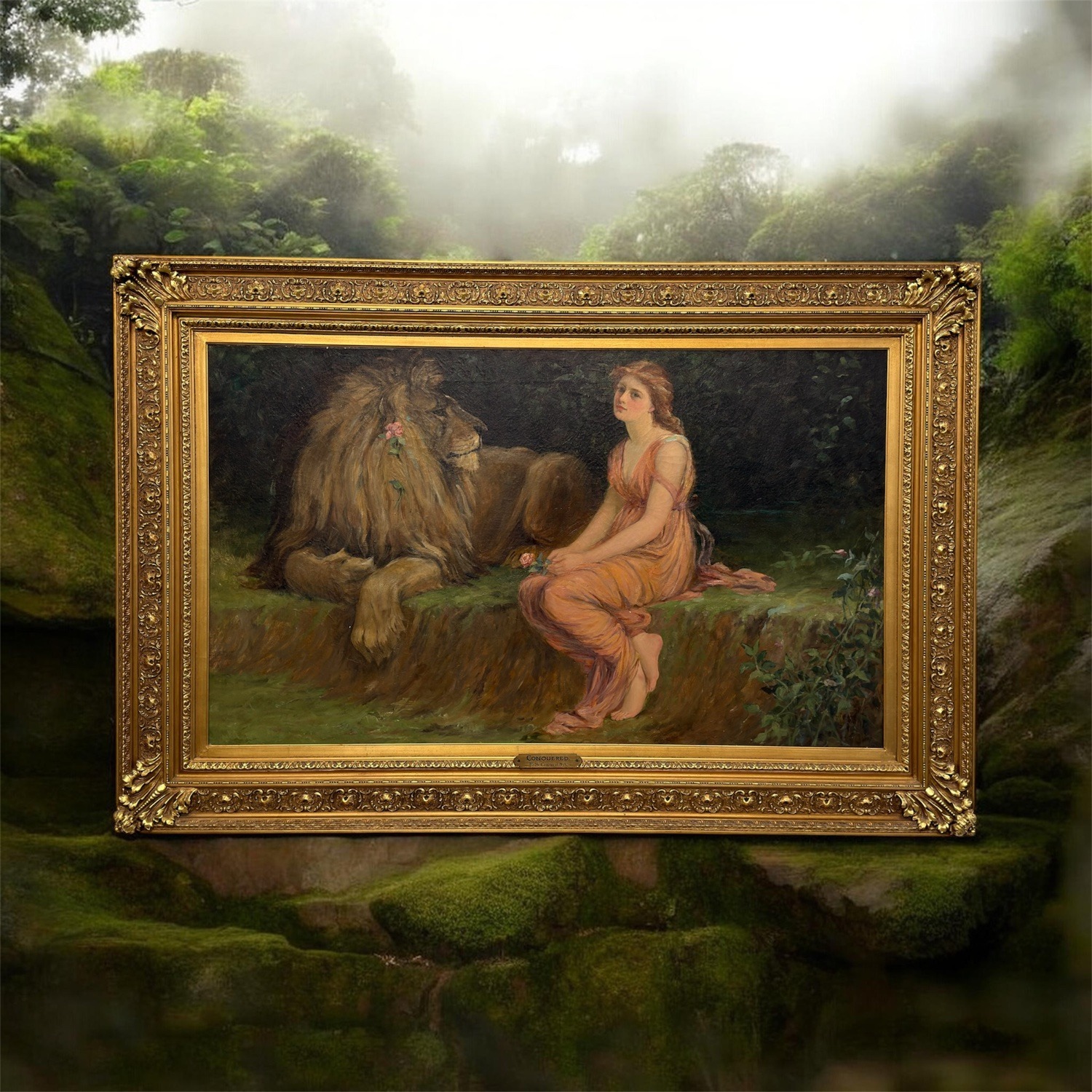
- 1842Born, Grand Rapids, Michigan
- 1885Full Academician, National Academy of Design
- 1924Died in New York City
- 27Church paintings in the Koehler collection
He did his research at the zoo
Frederick Stuart Church (1842–1924) did his research in unusual places. Sketchbook in hand, he was a fixture at the Central Park Zoo and at Barnum & Bailey’s headquarters, studying how animals move, rest and react.
Stories of his methods have him tossing a ball with an elephant and losing whole afternoons in front of a seahorse tank. The payoff was some of the most beloved art of America’s Gilded Age: animals with accurate anatomy and real personalities, drawn by a man who plainly adored them.
Frederick Stuart Church
Whimsical animals, fairy tales and polar bears on ice skates.
Frederic Edwin Church
Hudson River School landscapes such as Niagara and Heart of the Andes.
The two were contemporaries with nearly identical names, but their work could hardly be more different. Where Frederic Edwin painted mountains and volcanoes, Frederick Stuart painted polar bears on ice skates.
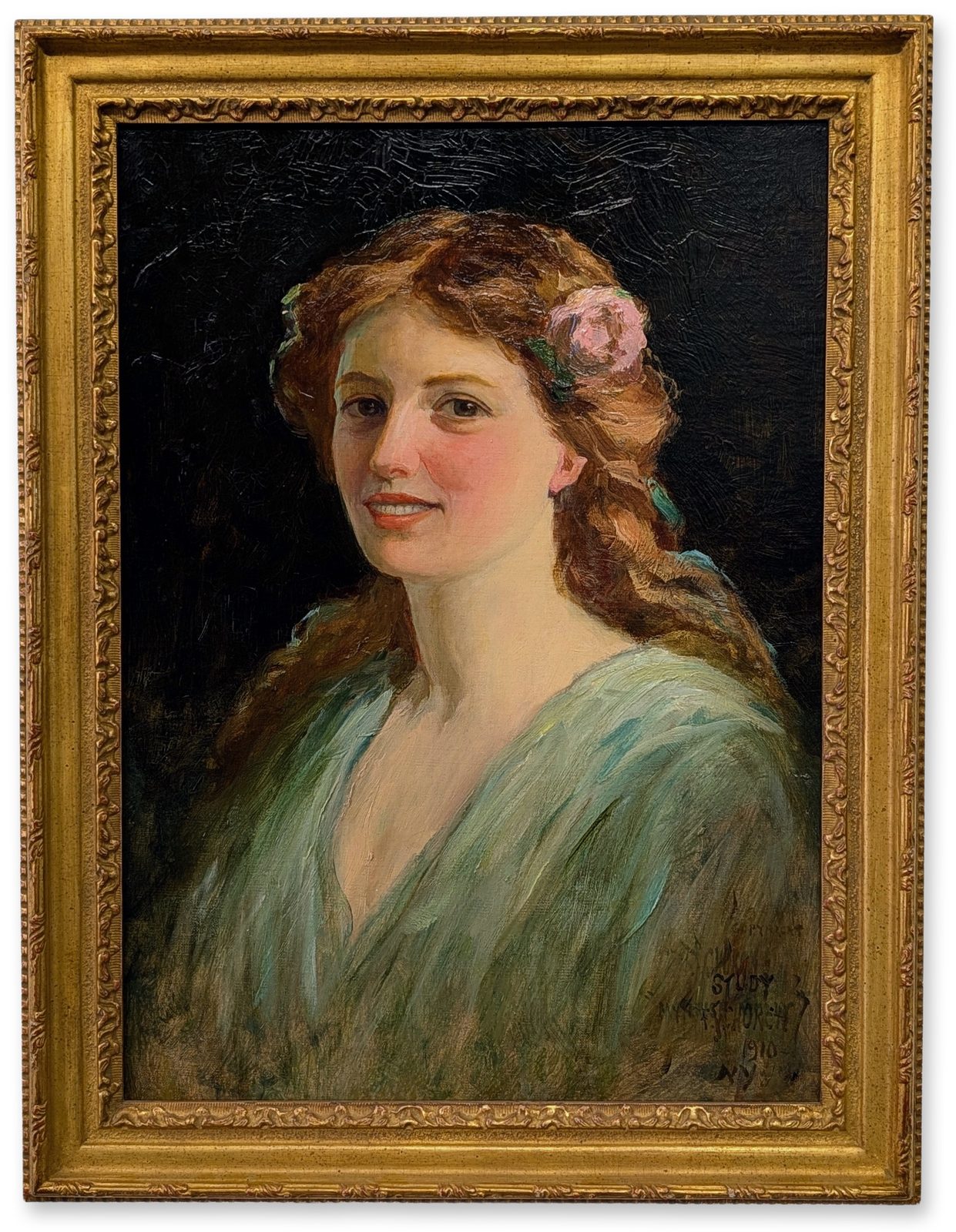
From American Express clerk to artist
Church was born on December 1, 1842, in Grand Rapids, Michigan. His father was a prominent lawyer and political figure, and his parents expected him to go into business. Illness kept him out of school for long stretches as a boy. He filled the time drawing animals and birds, the subjects that would define his career.
- Boyhood, Grand RapidsPays for lessons from Dutch landscape painter Marius Hartung with newspaper-route money.
- Age 13, ChicagoTakes a job as a clerk with the newly founded American Express Company.
- The Civil WarEnlists in the Union Army and serves three years in the artillery. He comes home resolved to be an artist.
- ChicagoStudies drawing under Walter Shirlaw at the Chicago Academy of Design.
- 1870, New York CityTrains at the National Academy of Design under Lemuel Wilmarth and joins the Art Students League. New York stays his home for life.
An American artist who didn’t need Europe
In Church’s day, ambitious American painters went to Paris, Munich or Rome to finish their training. Church never did. He believed firmly in academic training, but he saw no reason to get it abroad, and he only crossed the Atlantic late in life.
He was openly proud of American art and liked to say that foreign art had little to teach Americans. Around 1920, in a letter to a cousin, he grumbled about a room of modern French art at the Metropolitan Museum, joking that most of it would scare a dog away for good.
Polar bears on ice skates
By the mid-1870s, Church was one of the most sought-after illustrators in New York. His work ran in Harper’s Weekly, Harper’s Bazaar, Harper’s Young People, Frank Leslie’s Weekly, Century Magazine and the Ladies’ Home Journal. He was elected an Associate of the National Academy of Design in 1883 and a full Academician in 1885, and was also a member of the American Watercolor Society, the New York Etching Club and the Society of Illustrators.
His holiday illustrations are pure delight. A few favorites:
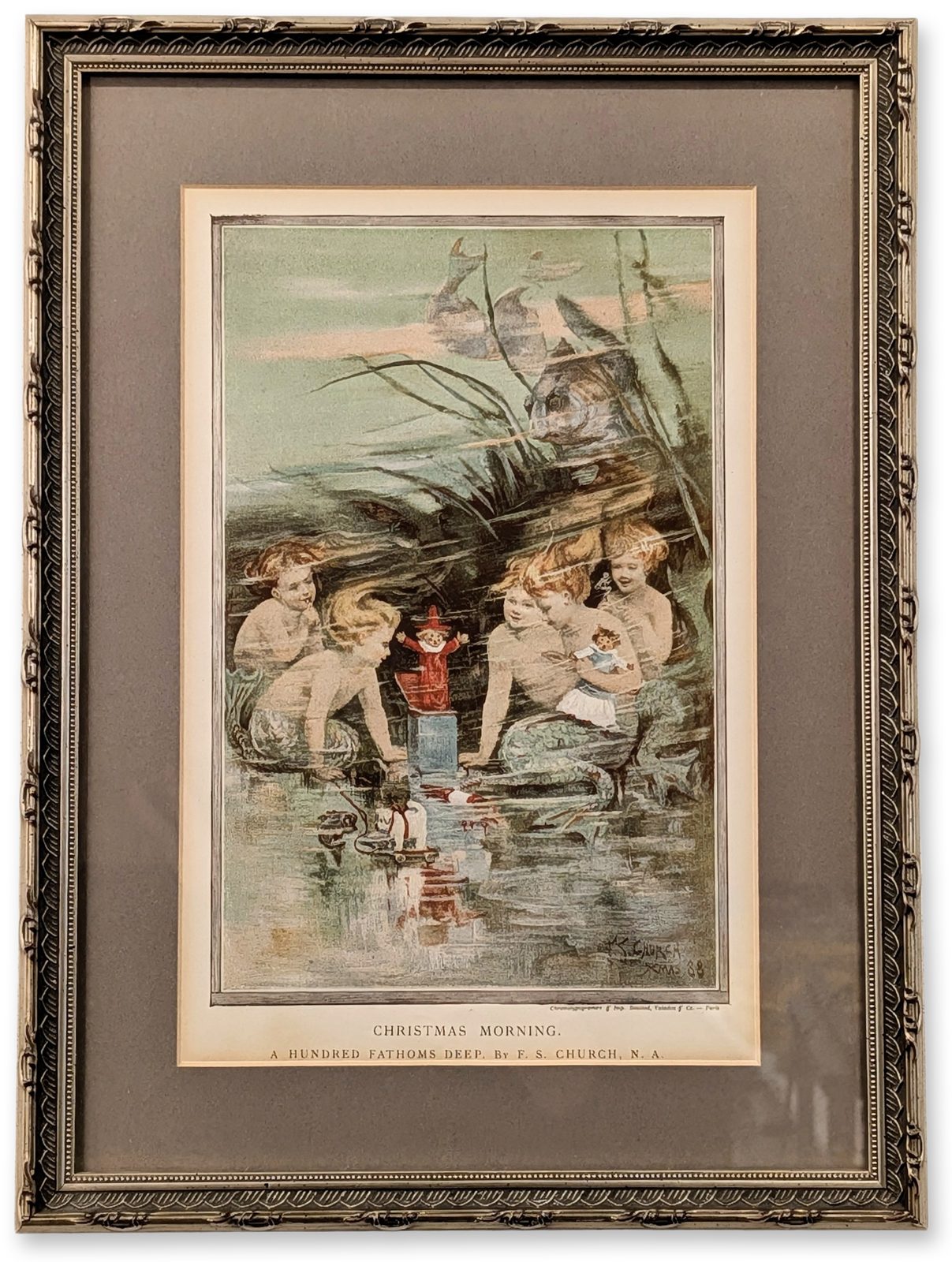
Christmas Morning: One Hundred Fathoms Deep
Little mermaids opening presents on the sea floor.
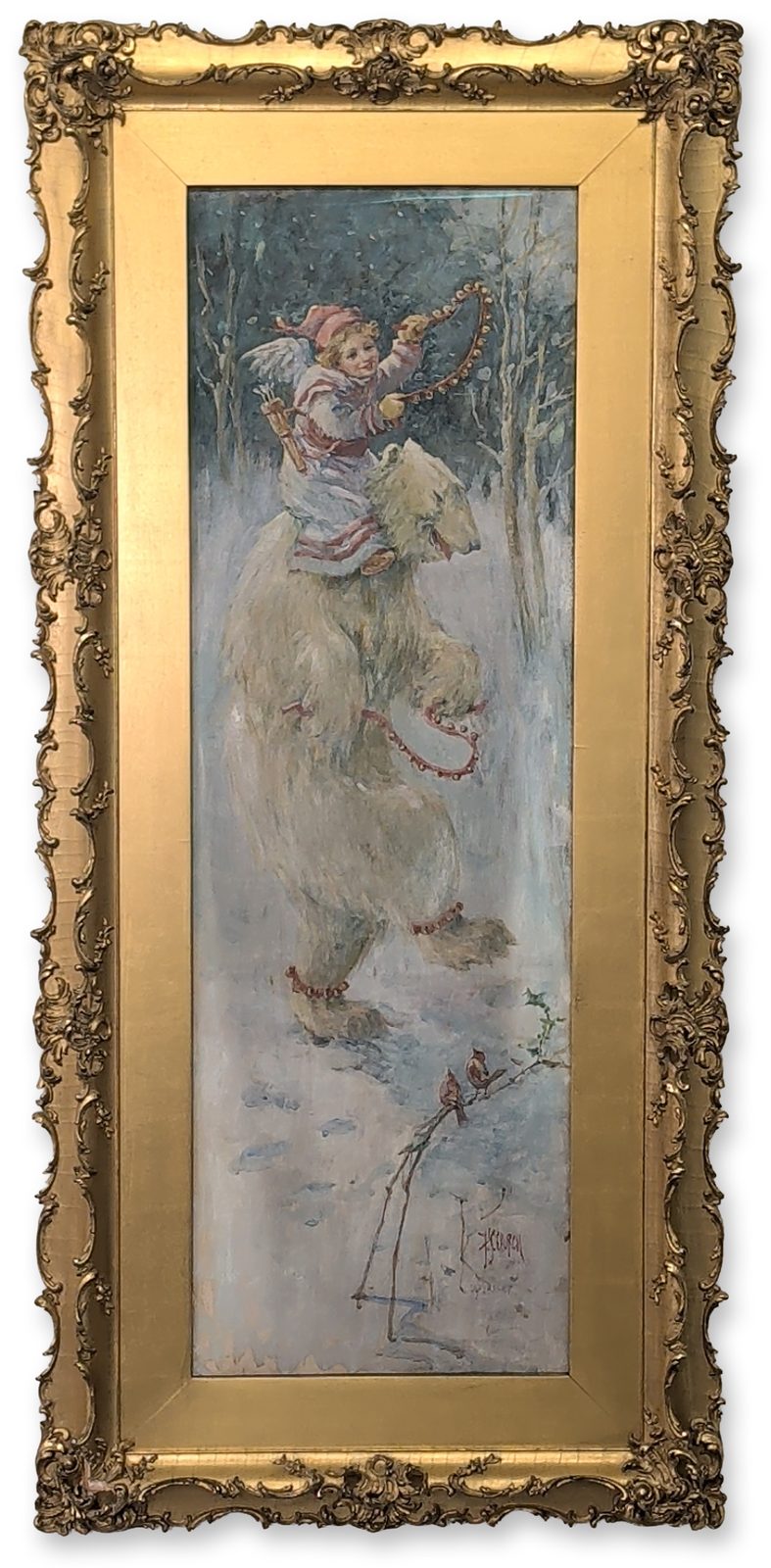
Bear and Cherub
A cherub in a pink holiday cap steers a garlanded polar bear through a snowy wood. Watercolor and gouache, signed in red.
- Harper’s Weekly · Dec 1875
Opening of the Season at the North Pole
Polar bears out on ice skates.
- Harper’s Weekly · Dec 1892
Flapjacks
A small bear holds the griddle while a young woman cooks breakfast for a crowd of hungry bears.
- Harper’s Bazaar · Dec 1898
Santa’s Cake Walk
Santa conducts a polar bear band from his sleigh while dozens of bears dance in top hats.
Church also took commercial work. He illustrated the Elgin National Watch Company’s almanac and designed an 1881 Christmas card for Louis Prang & Company, the firm that popularized Christmas cards in America. His illustrated edition of Aesop’s Fables, with a picture for every fable and an elaborate cover, is often called his finest book work.
He was a gifted etcher too. In 1884 he contributed four etchings to The Hawthorne Portfolio, and his etching The Mermaid appeared in The American Art Review.
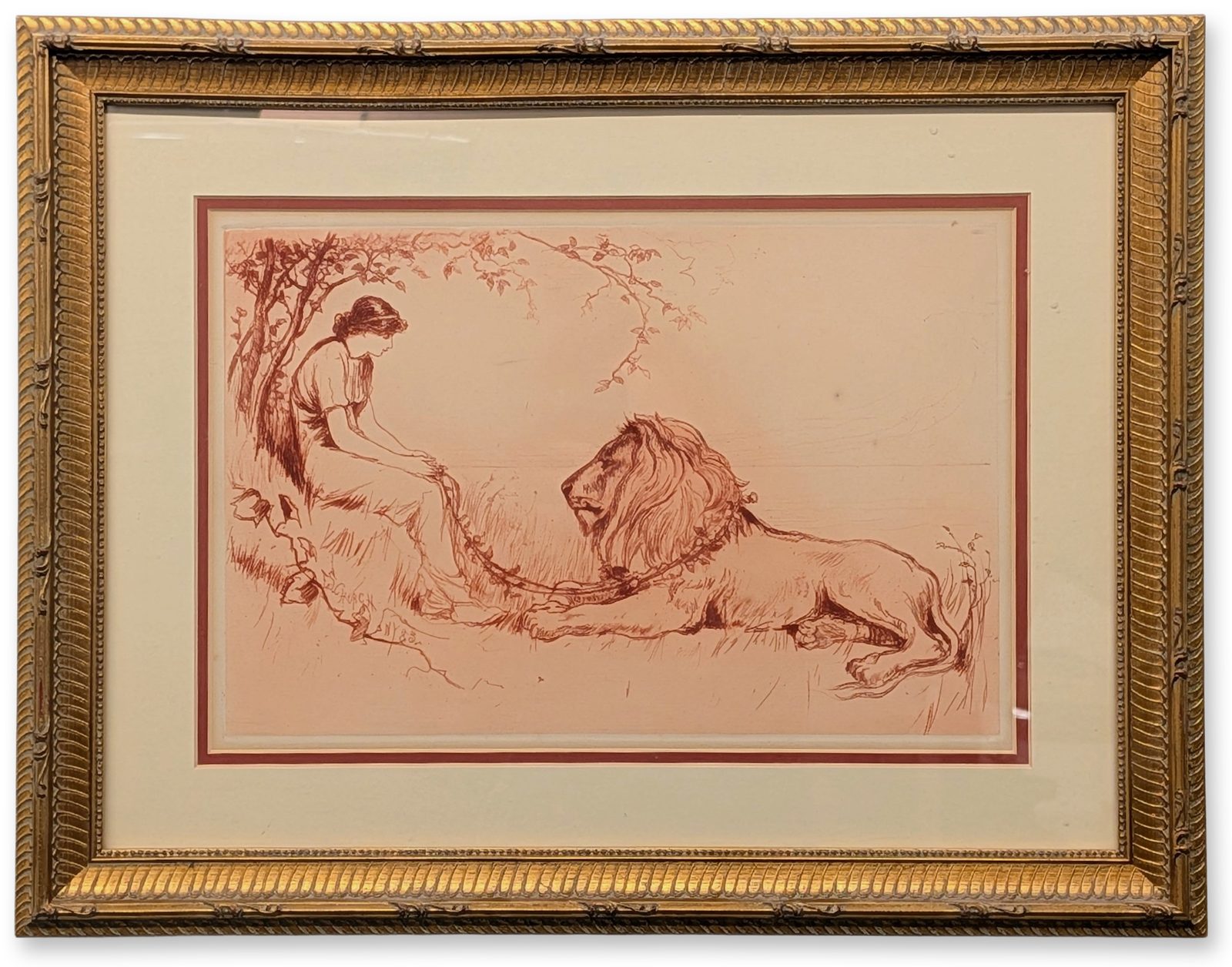
Women and wild beasts
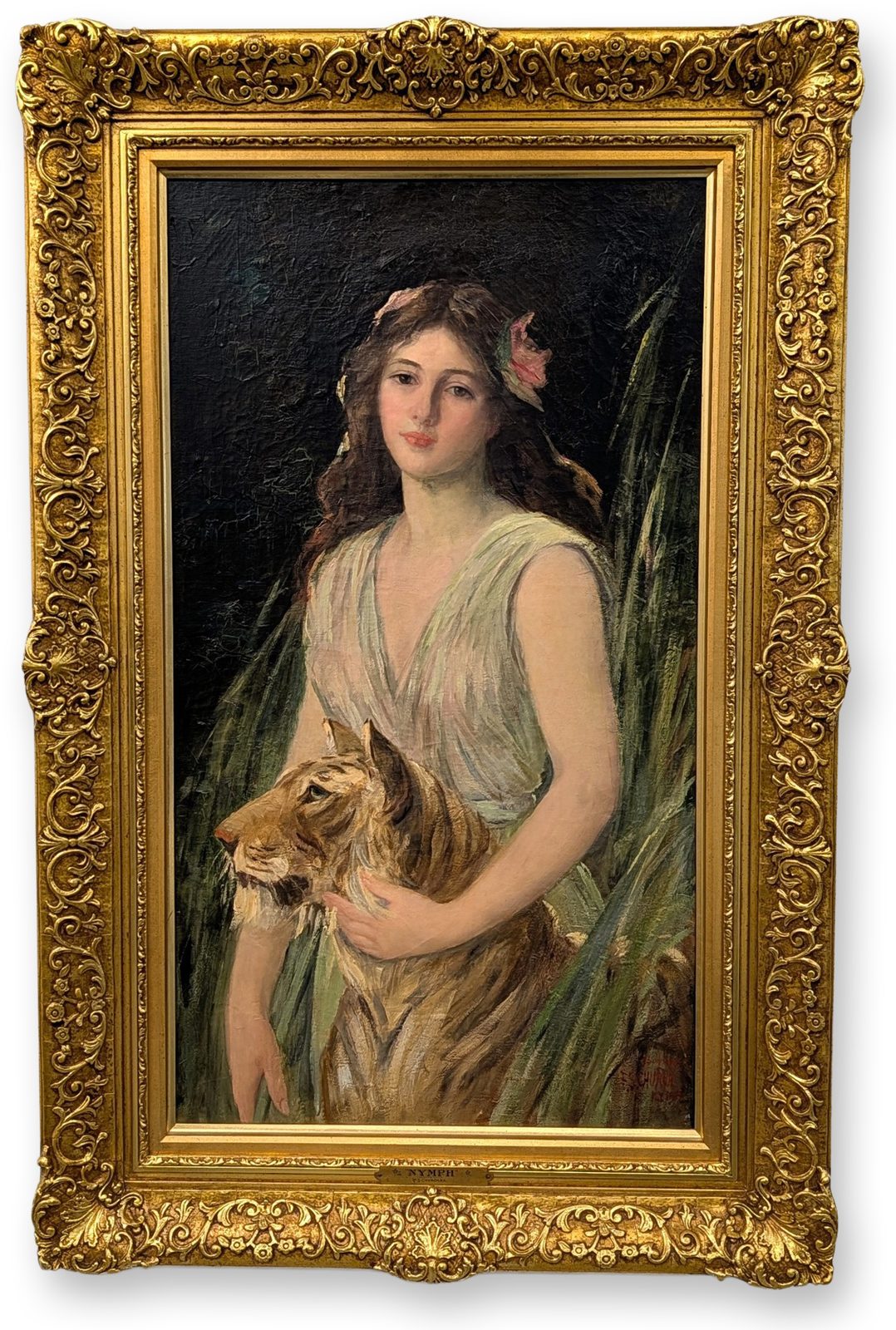
Church’s paintings return again and again to one dreamlike idea: a serene young woman at perfect ease with a wild animal.
Tigers lie at her feet. Bears help her with chores. Flamingos and swans gather around her like attendants. Nothing is ever threatening. The beasts are gentle, sometimes a little comic, and always on her side. Those years of sketching show here. Because he knew how each creature moved and what its expressions meant, he could give his animals moods and personalities without losing their anatomy.
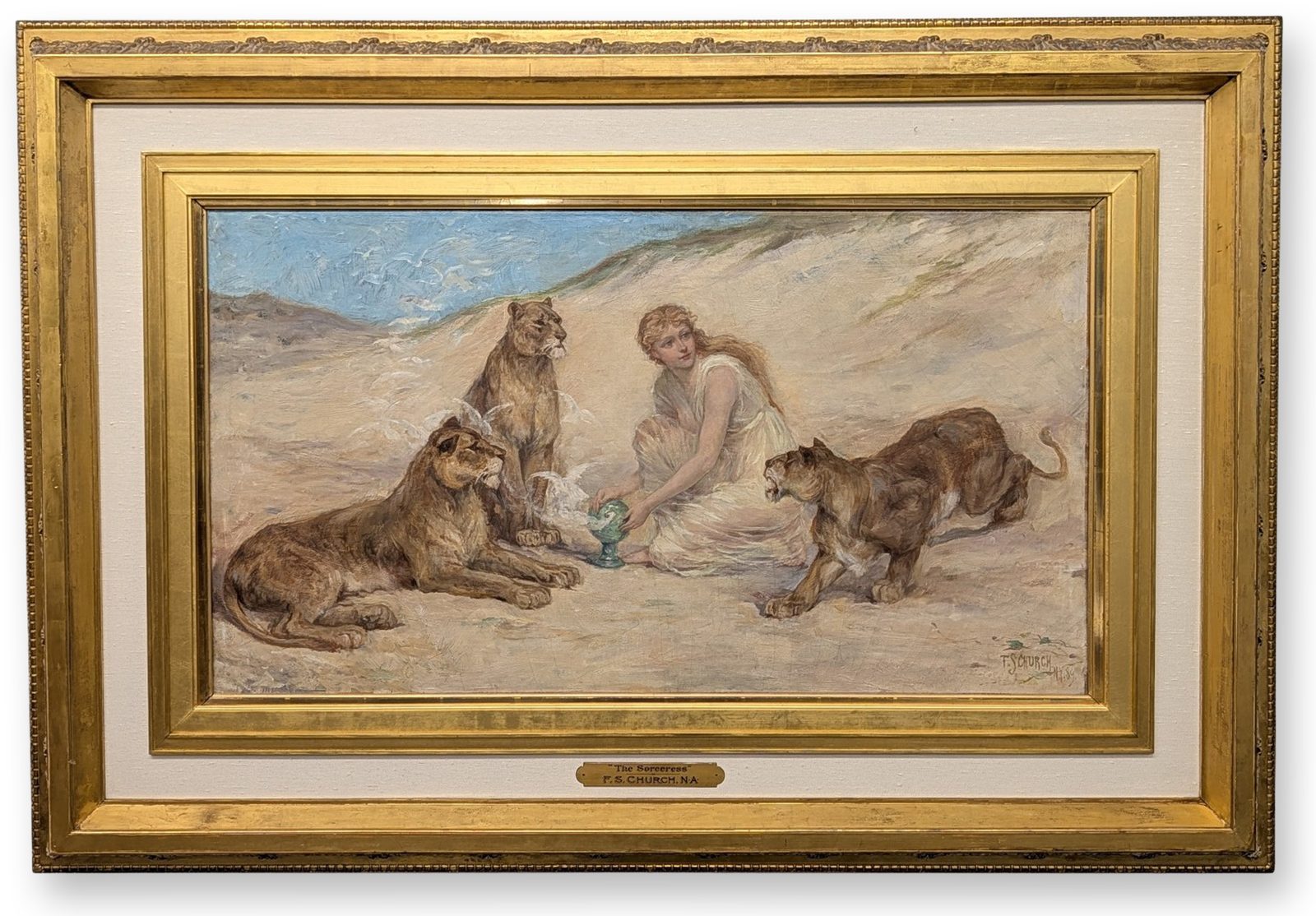
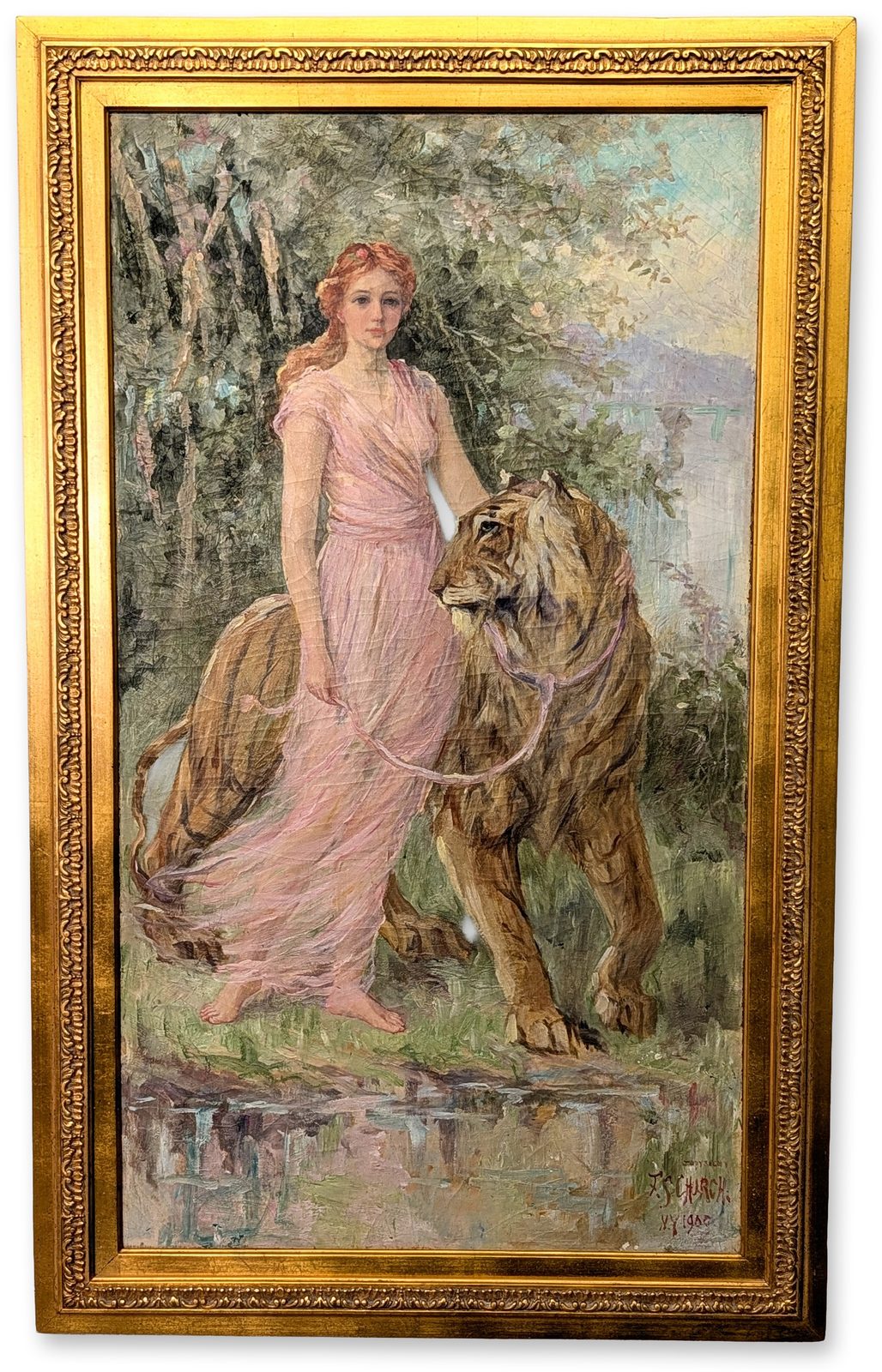
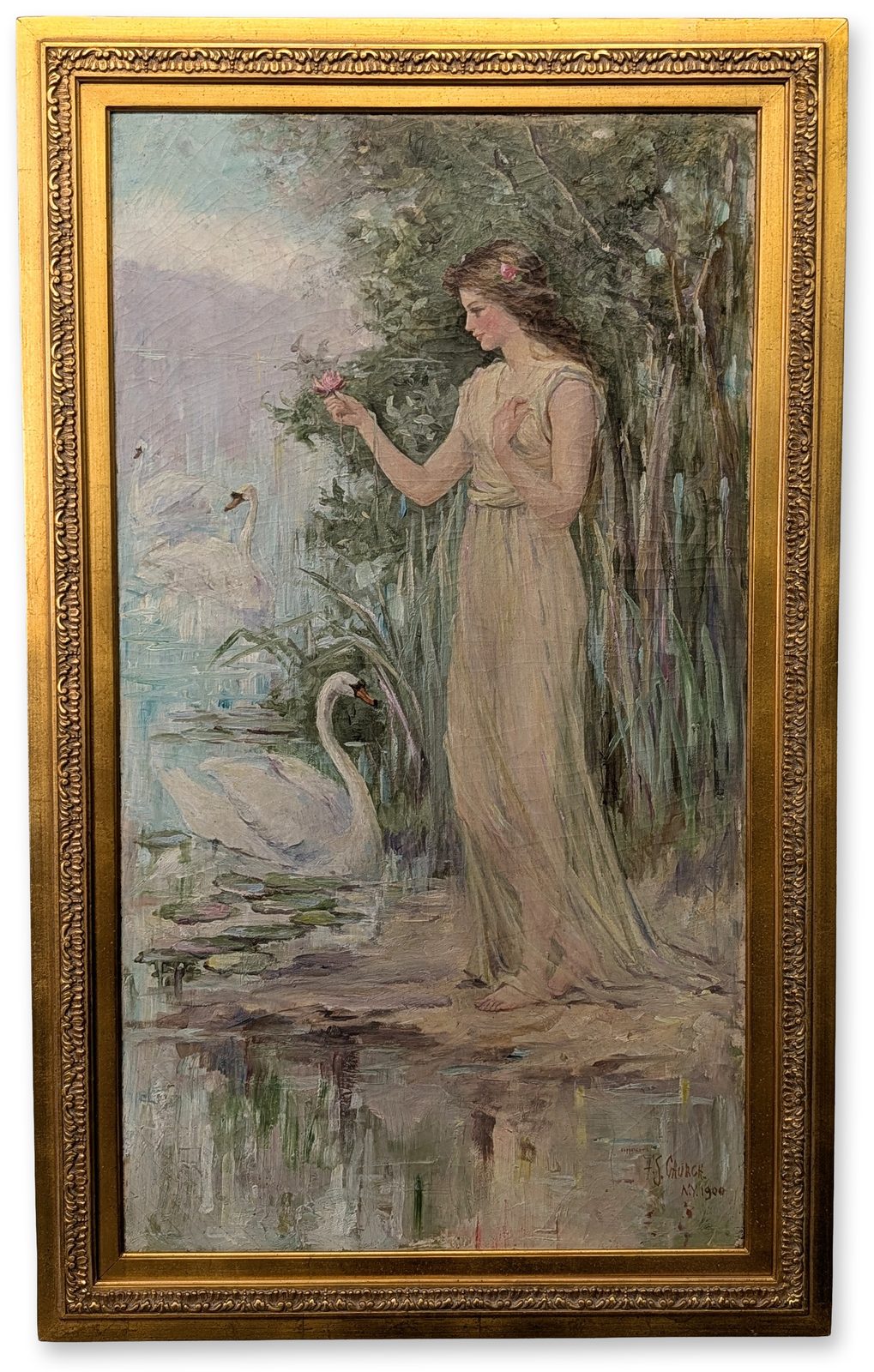
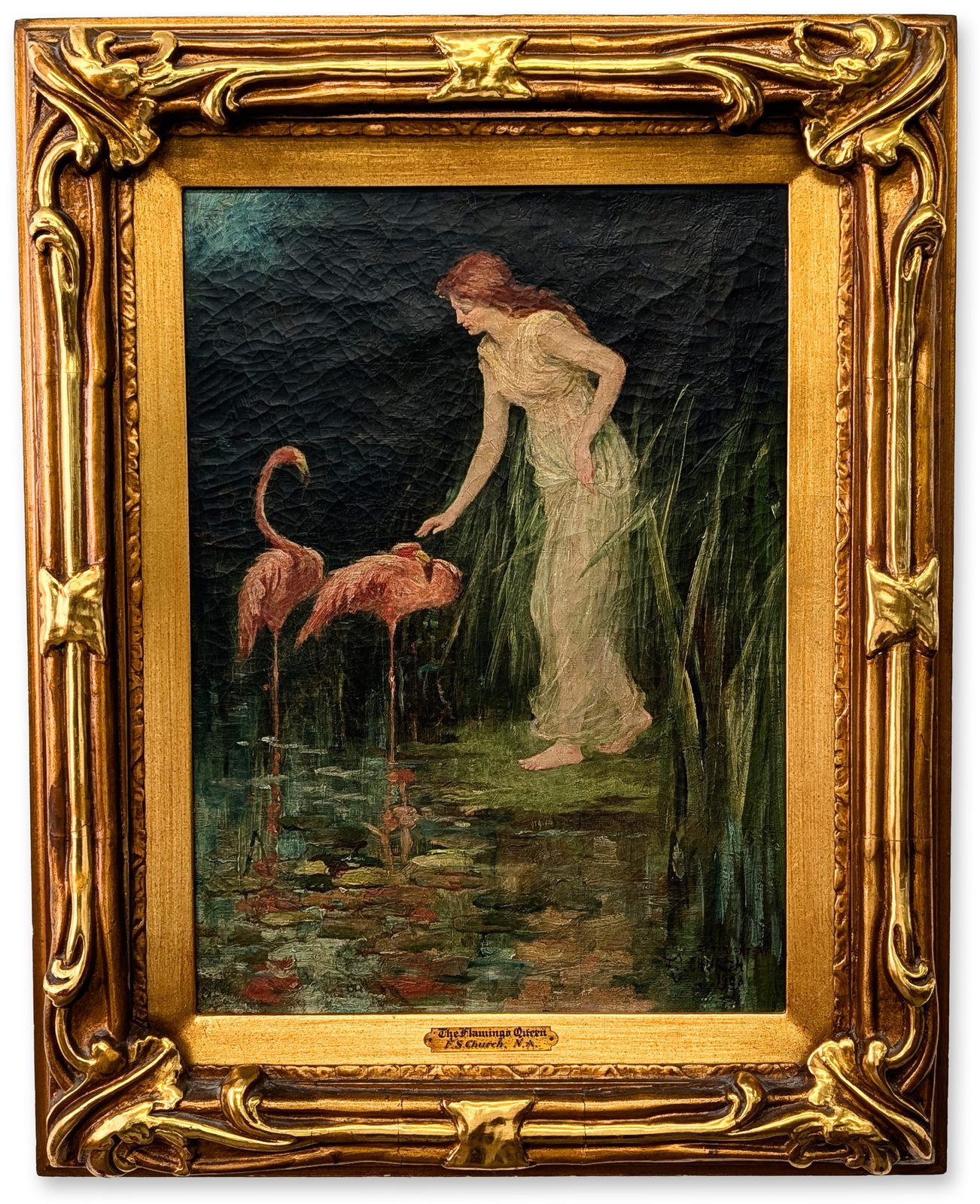
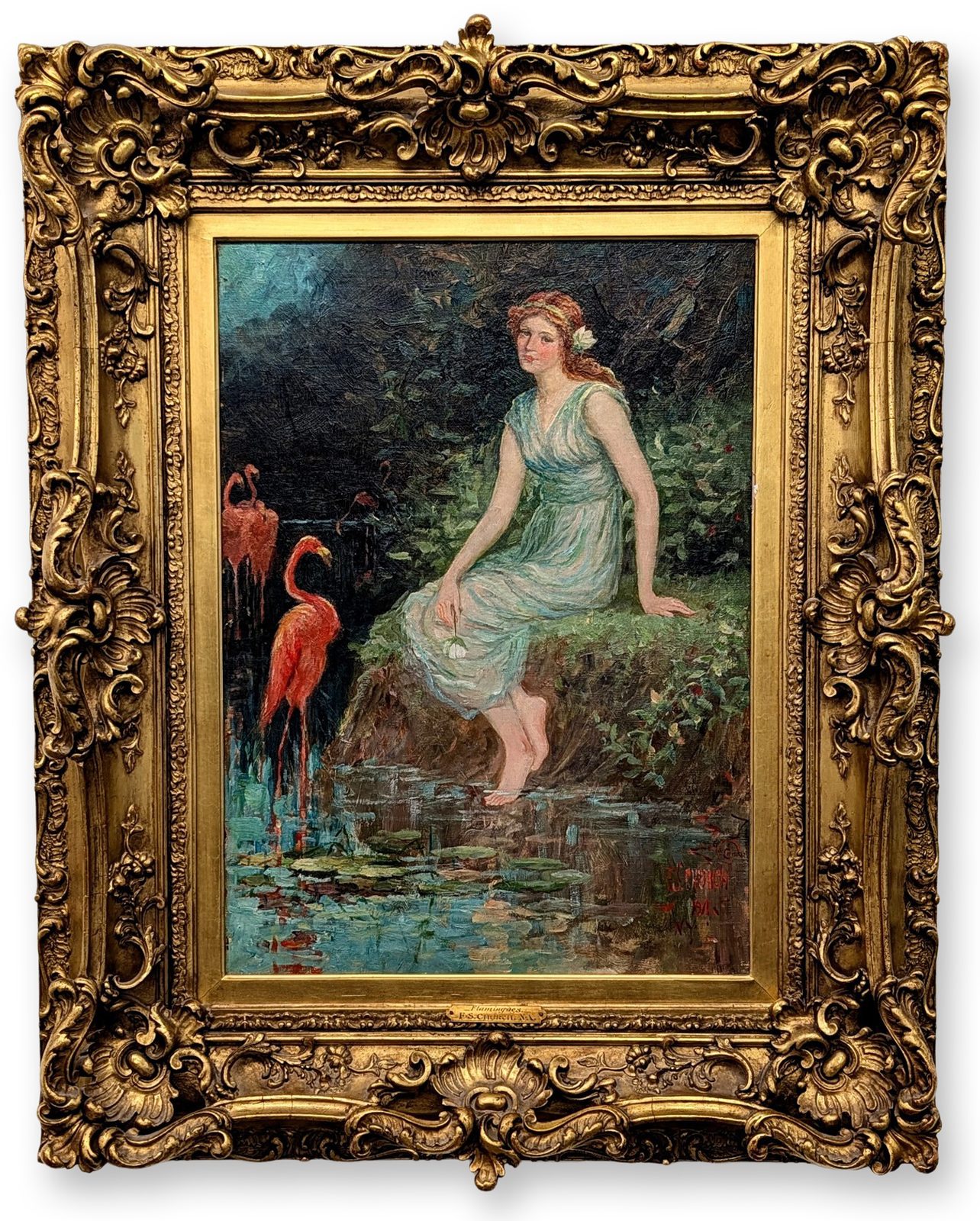
The Smithsonian American Art Museum holds several of these paintings:
- The Viking’s Daughter 1887
- Supremacy 1887
- Girl with Rabbits 1886
- Circe 1910
Later in his career he painted a run of flamingo pictures, such as Maiden with Flamingos (1916). Scholars have noted that his decorative style of the 1880s anticipated the Art Nouveau movement of the following decade.
Letters full of bears
Church couldn’t write a note without drawing in it. His letters to friends, patrons and fellow artists are full of sketches: a bear strumming a guitar, a flamingo, little cartoons in the margins. Today they’re collected in their own right. The National Academy of Design, the Morgan Library, the New-York Historical Society and the Smithsonian’s Archives of American Art all hold examples.
Some of the warmest went to Mary Leland Bloomer, known as Mollie, who modeled for him regularly. The two shared a running joke about “buckwheat pancake eaters,” and Church sometimes signed his letters to her “Buckwheat Pancake Church.”
The collectors who kept him alive
Church’s career, and his reputation today, owe a great deal to a small circle of devoted collectors.
Grant B. Schley
A New York banker, he built Church a studio on his estate, Froh Helm, in Far Hills, New Jersey.
John Gellatly
Collected Church’s paintings and corresponded with him for years. In 1929 he gave his collection to the Smithsonian, which is why Girl with Rabbits and The Viking’s Daughter hang in the Smithsonian American Art Museum today.
William T. Evans
Presented Church’s The Enchantress to the national collection in Washington.
Charles Lang Freer
The Detroit industrialist who founded the Freer Gallery of Art also supported him.
These collectors did more than buy pictures. They cared for them, lived with them, and eventually passed them on. That is how a painter of whimsical bears ended up in a national museum.
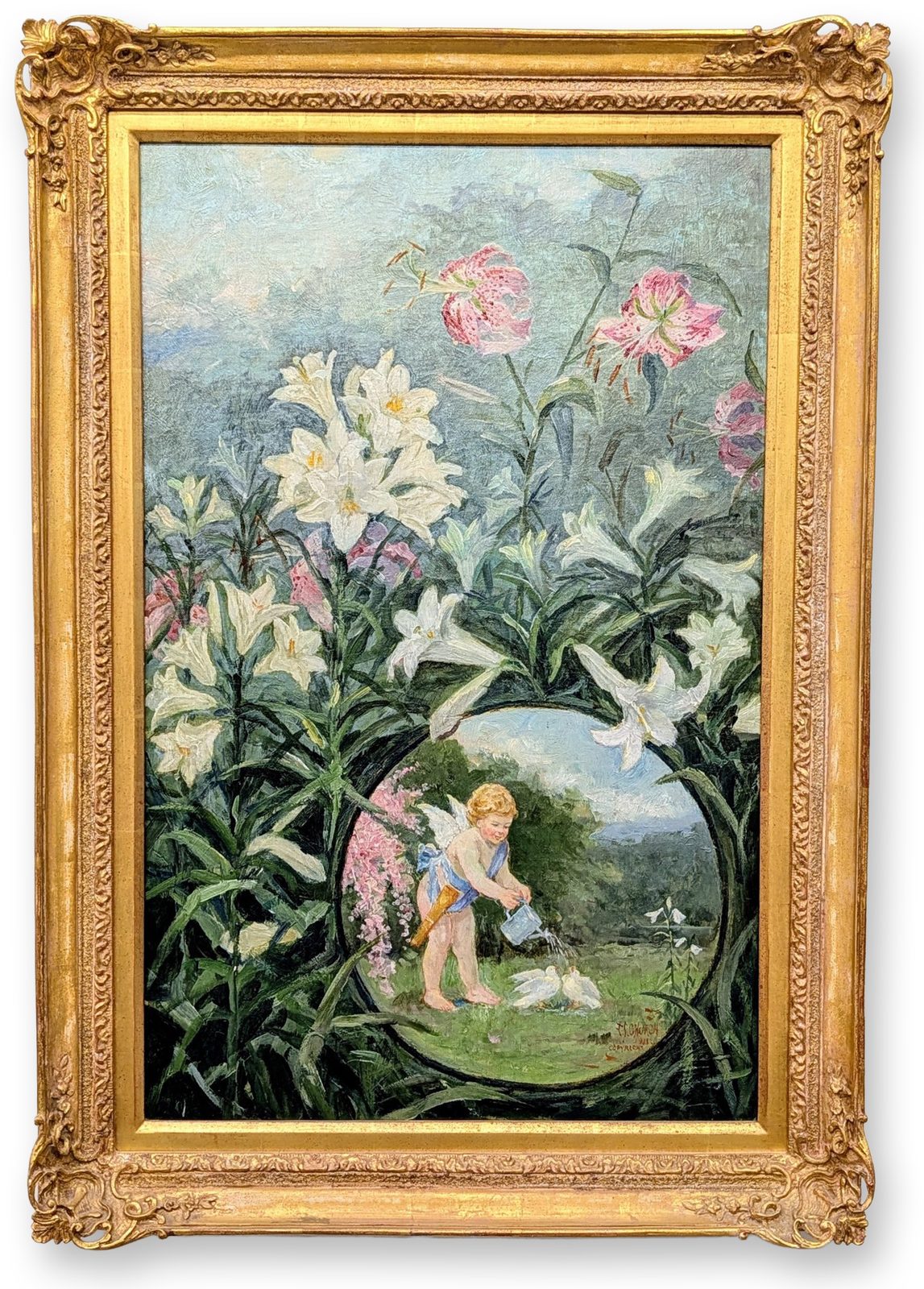
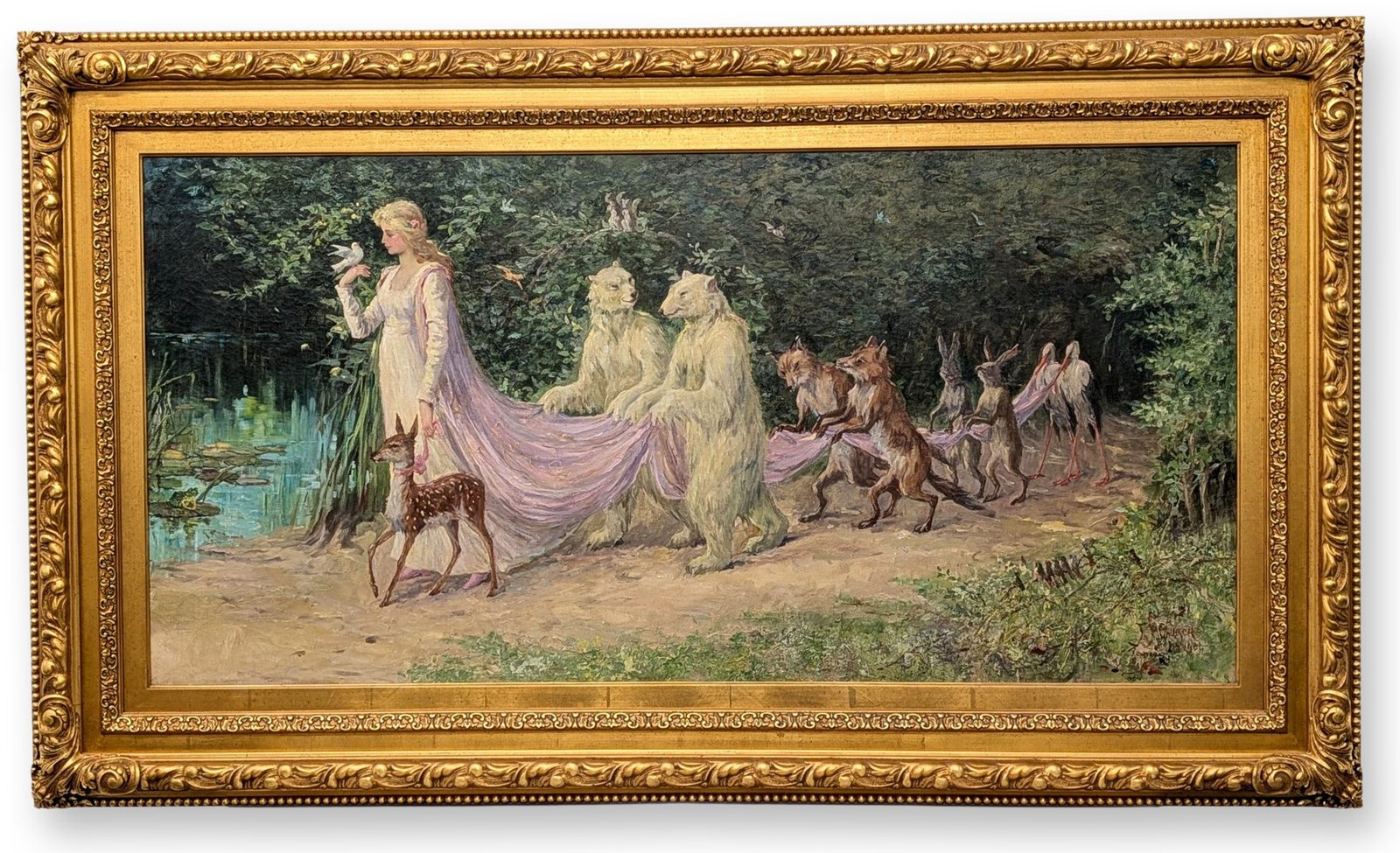
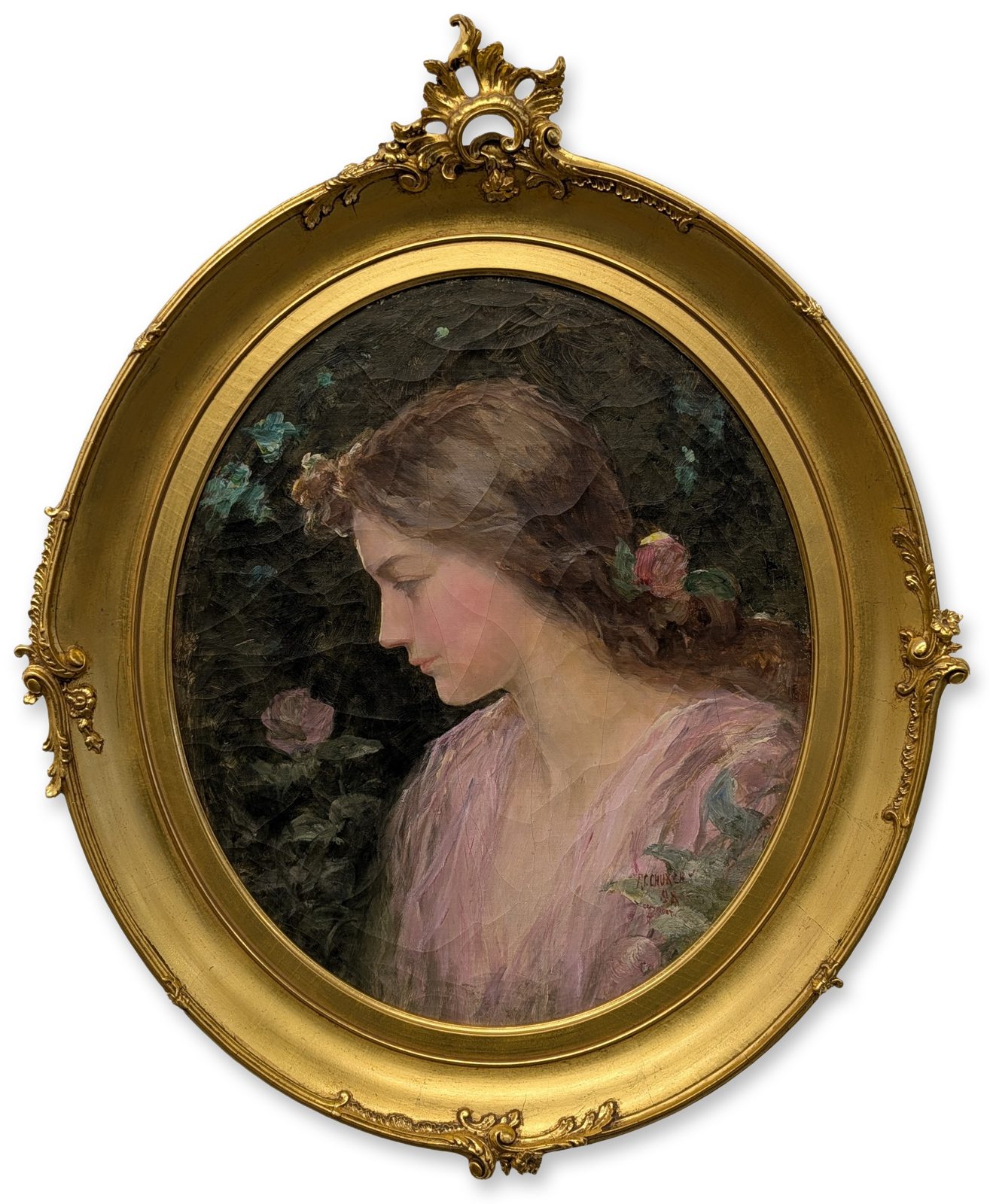
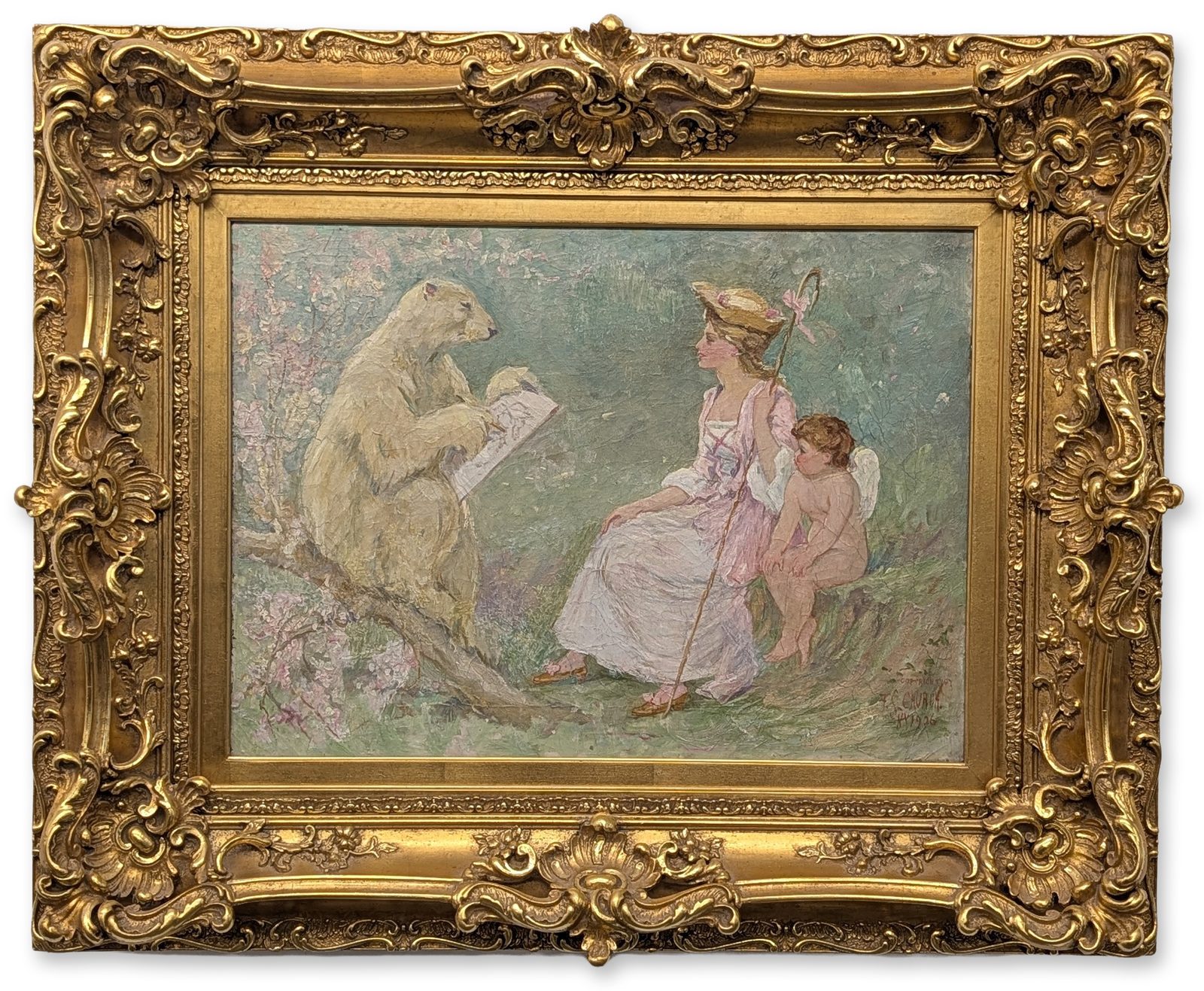
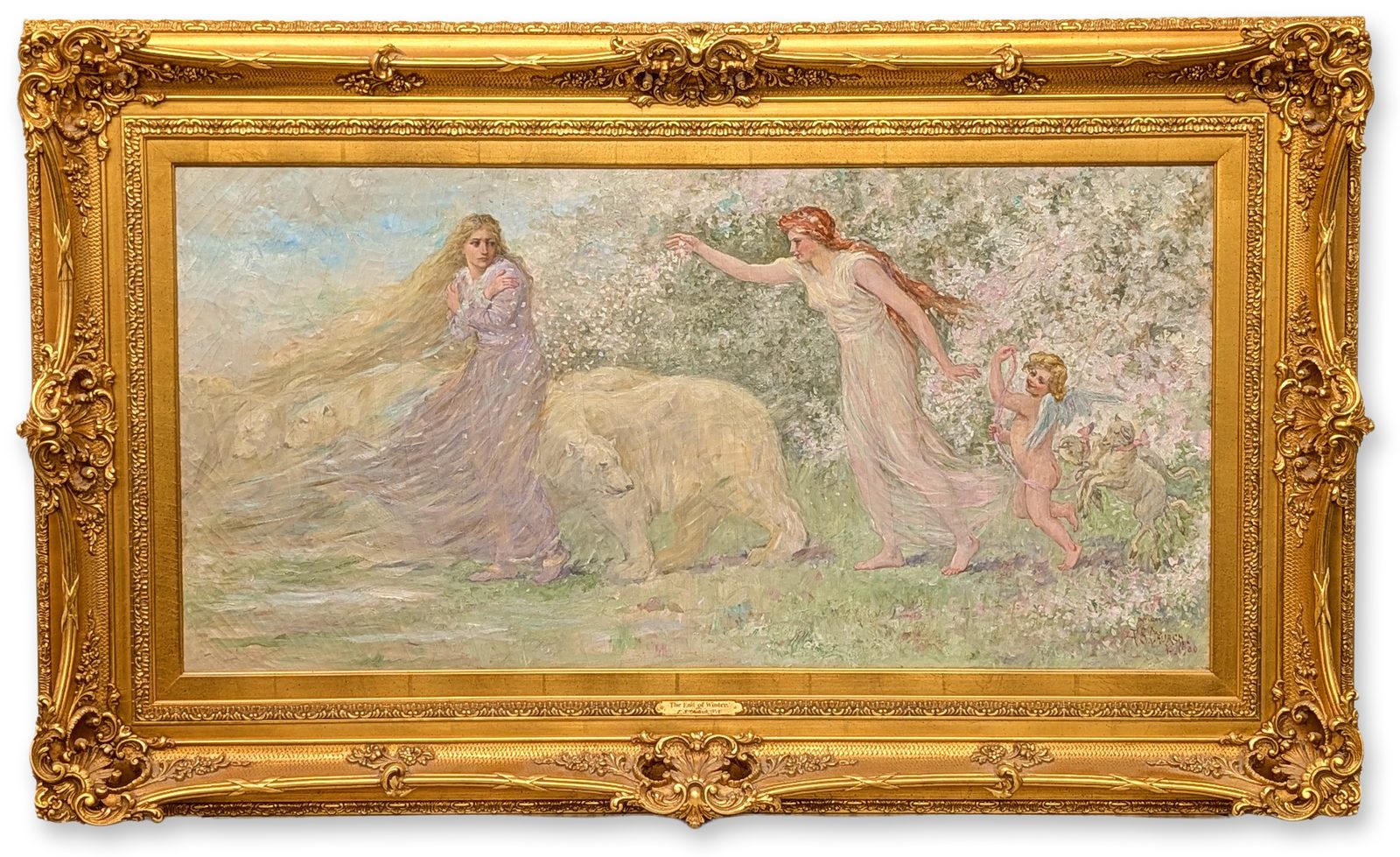
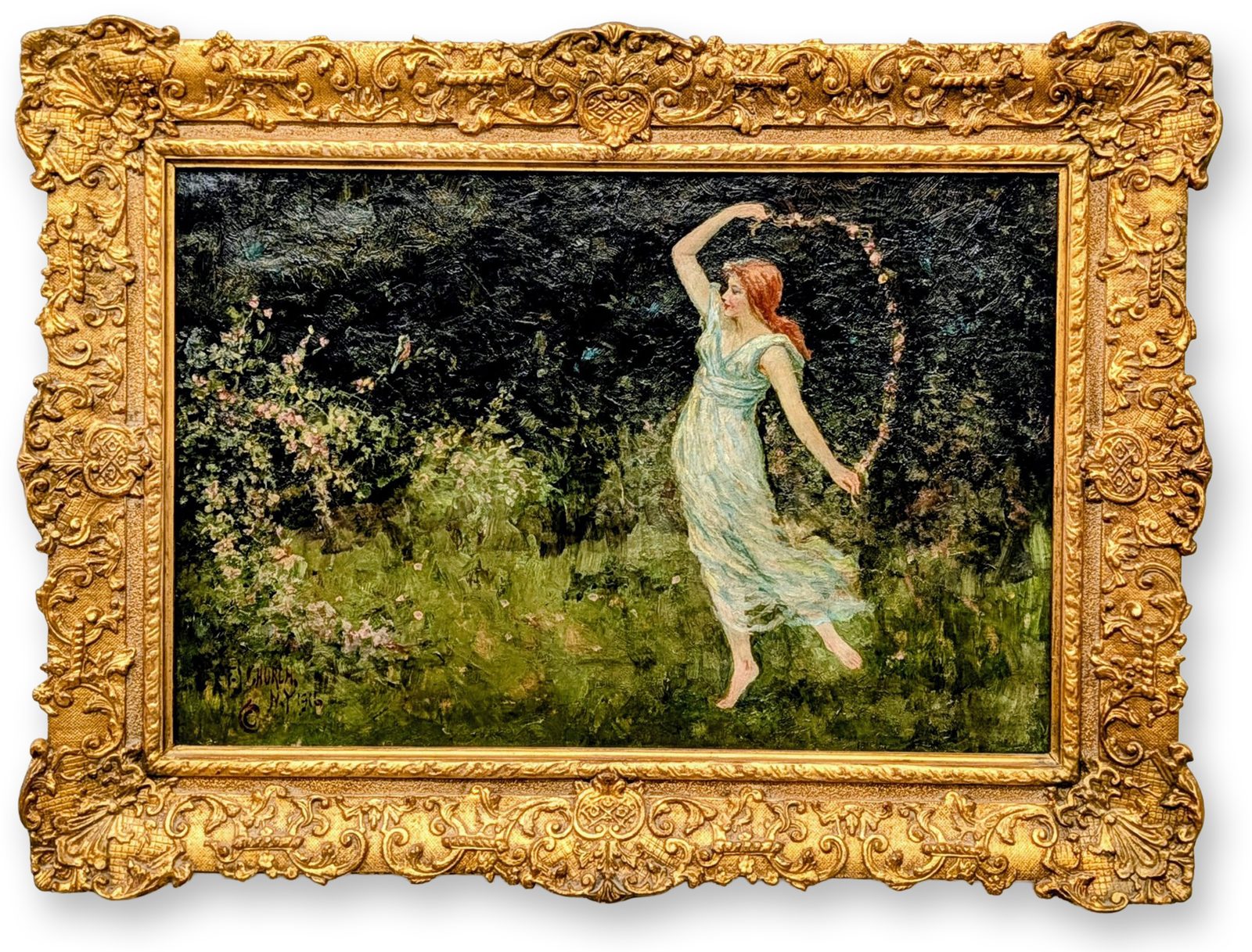
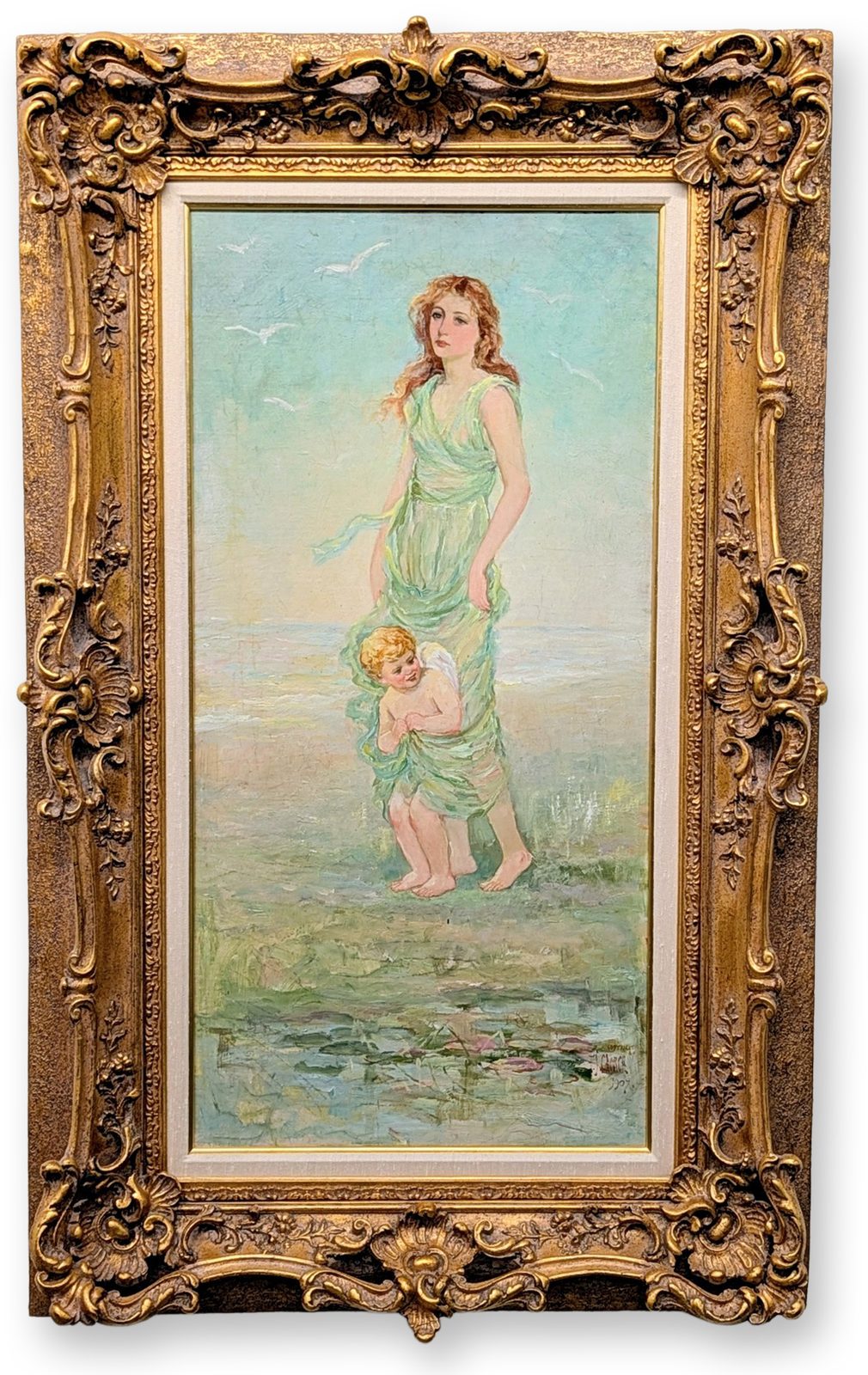
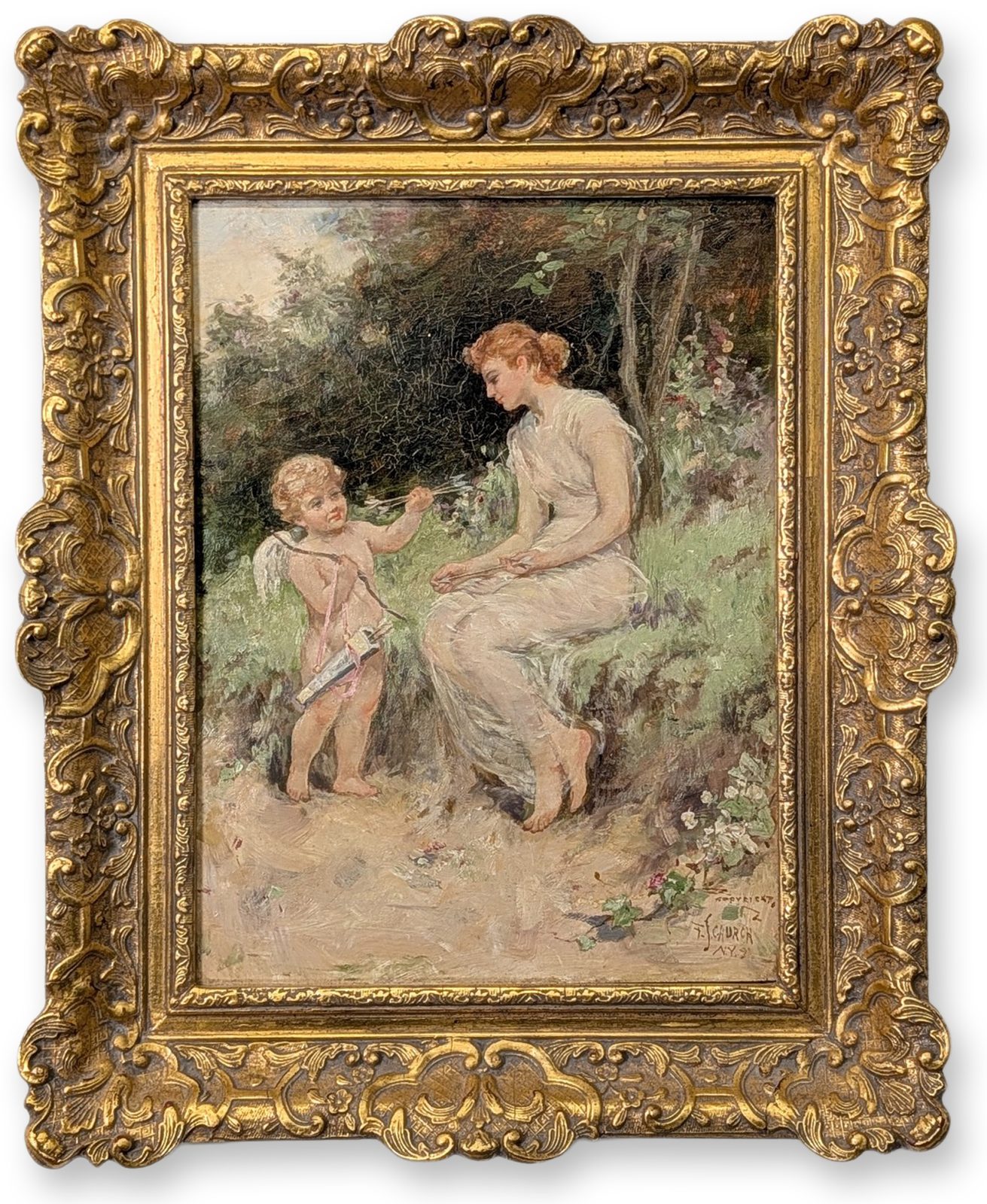
Works from the Jill Koehler collection
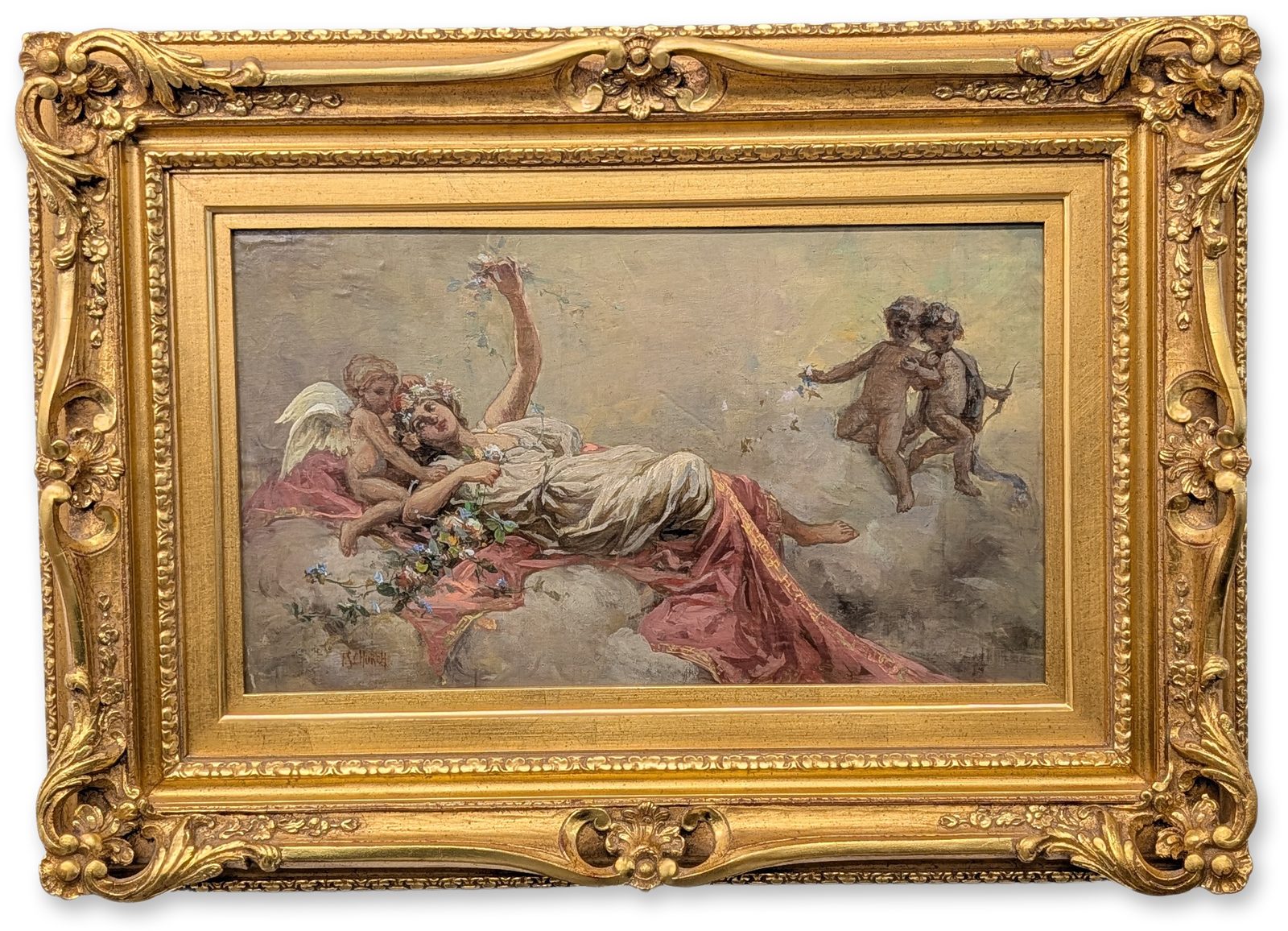
Twenty-seven Church paintings, from wild animals to fairy-tale fantasy to the changing seasons. A first look.
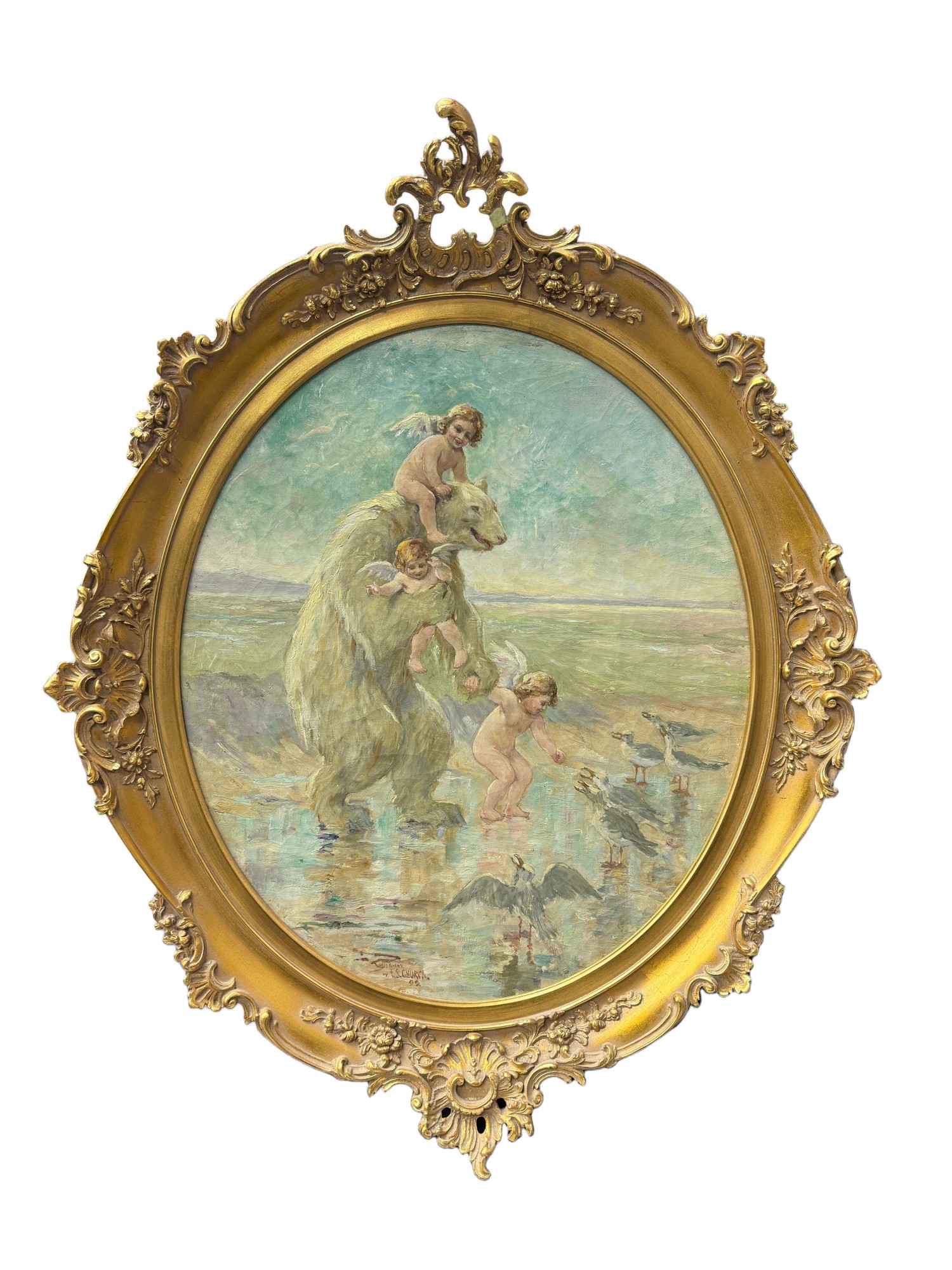
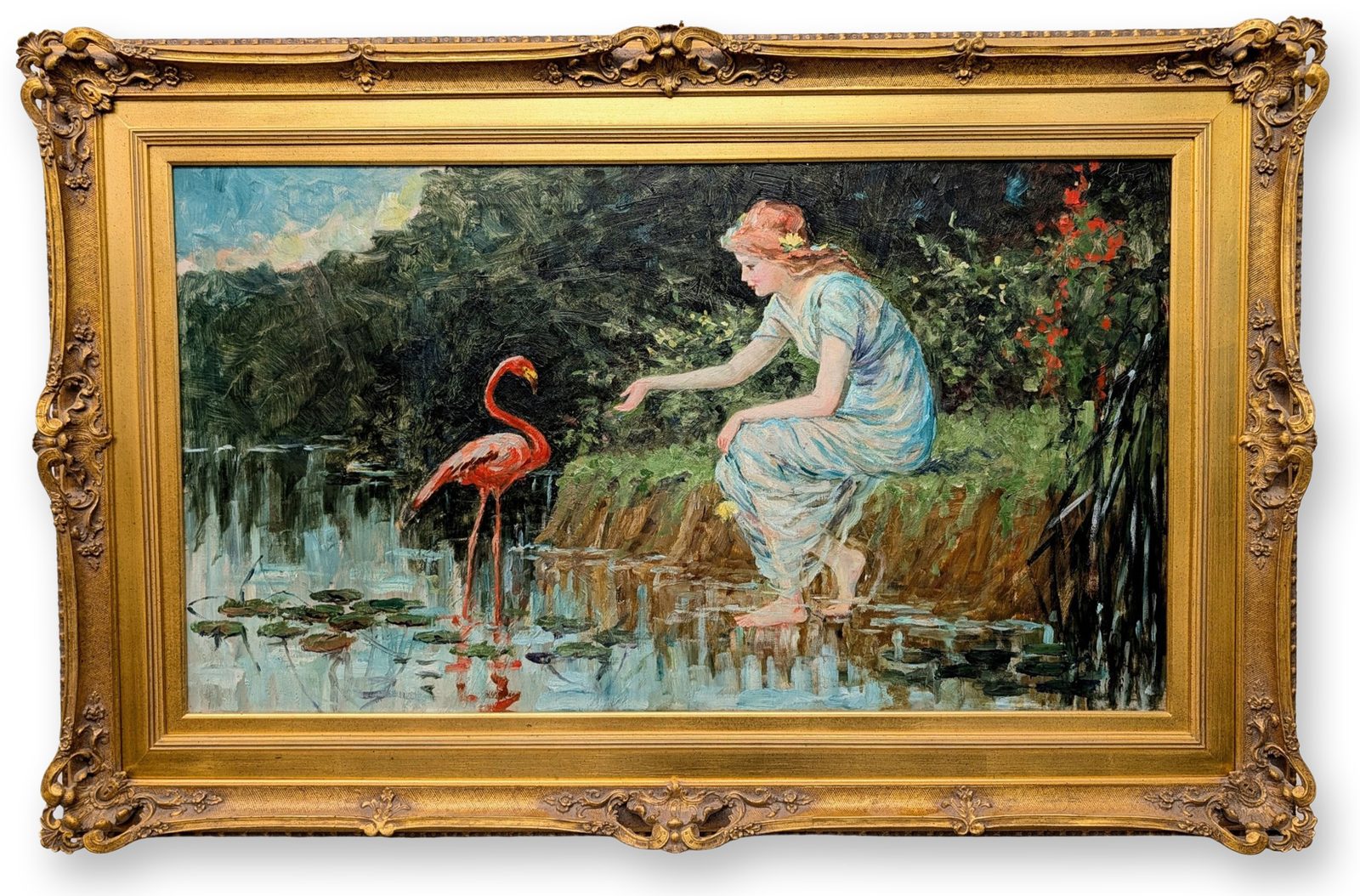
Jill Koehler
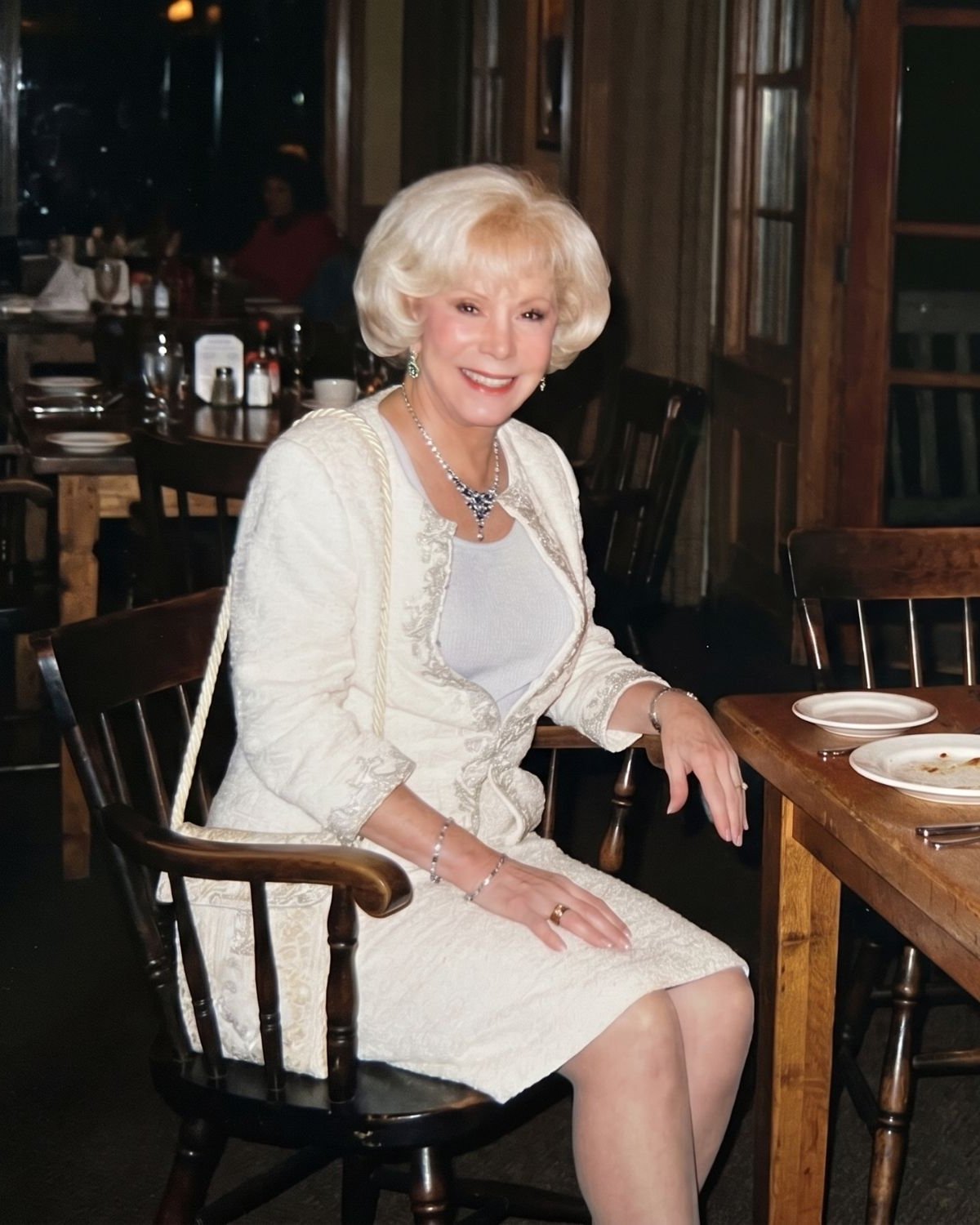
A century later, Church found another devoted collector: Jill Koehler of Ohio.
Koehler built a career in corporate finance, advising clients whose wealth often included art. That work confirmed something she had felt since high school in the 1950s: markets rise and fall, but a beautiful object made by a skilled hand holds its value as a piece of human culture. Over the decades she assembled a remarkable collection of English, Spanish, Hungarian and American porcelain, Tiffany lamps, and fine paintings.
She collected Church extensively. What drew her was the innocence of his world, where young women and wild animals live in perfect harmony and nothing is spoiled by modern cynicism. Her collecting motto, borrowed from Keats, could have been written about his work: “A thing of beauty is a joy forever.”
“I’m in love with whatever I’m looking at.”Jill Koehler
Now, like Gellatly and Evans before her, Koehler is passing her collection forward to a new generation of collectors. Twenty-seven of her Church paintings will be offered by Lion & Unicorn in the coming months.
Frequently asked questions
Who was Frederick Stuart Church?
Frederick Stuart Church (1842–1924) was an American painter, illustrator and etcher from Grand Rapids, Michigan, who worked in New York City. He is best known for whimsical and allegorical scenes of animals, often paired with young women.
Is Frederick Stuart Church related to Frederic Edwin Church?
No. Frederic Edwin Church (1826–1900) was a Hudson River School landscape painter. The two are unrelated and painted very different subjects.
What is F.S. Church known for?
His magazine illustrations for Harper’s and Century, his holiday scenes of polar bears and mermaids, his etchings, and his paintings of women with tigers, bears and flamingos.
Where can I see his work?
The Smithsonian American Art Museum, the National Gallery of Art, the Metropolitan Museum of Art, the National Academy of Design and the Washington County Museum of Fine Arts in Hagerstown, Maryland, all hold his work.
How does F.S. Church usually sign his work?
Most often “F.S. Church,” sometimes with “N.Y.” or a date.
Sources
- Smithsonian American Art Museum: Frederick Stuart Church
- National Academy of Design: Frederick Stuart Church
- Resource Library: Frederick Stuart Church, Holiday Illustrations from the Horst Collection
- The Met: Crowdsourcing the Letters of Frederick Stuart Church
- Archives of American Art: Frederick Stuart Church collection
- Art of the Print: The Hawthorne Portfolio etchings
- Wikipedia: Frederick Stuart Church
Ready to Sell Your Estate or Collection?
Lion & Unicorn’s expert team offers free appraisals and nationwide pickup service. Over 30 years of experience — Florida’s most trusted auction house.
Contact Us Today →Free Consultation
Ready to Sell Your Estate or Collection?
Lion & Unicorn's expert team offers free appraisals and nationwide pickup service.
Over 30 years of experience — Florida's most trusted auction house.