
Free Consultation
Ready to Sell Your Estate or Collection?
Lion & Unicorn's expert team offers free appraisals and nationwide pickup service.
Over 30 years of experience — Florida's most trusted auction house.
An estate sale is more than a weekend of tagged furniture and household goods. For heirs, executors, and families who are downsizing, it is a coordinated process. It turns personal property into organized sales while balancing value, timing, legal responsibilities, and practical logistics.
So, how do estate sales work? The usual process begins with deciding what must be sold and securing the right authority. A qualified professional can then inventory, value, sort, stage, market, and sell the property. Buyers shop under the company’s stated rules. The seller receives proceeds after agreed commissions, fees, and applicable taxes. Details vary by company, property, and local requirements, so a written agreement matters.
Understanding the sequence makes an emotional or time-sensitive situation easier to manage. It also helps you recognize where professional appraisal and careful planning can protect the estate’s interests. Clear communication matters as the sale moves from the first decisions to final closeout.
Request an antique appraisal to discuss your estate sale options with the Lion & Unicorn team.
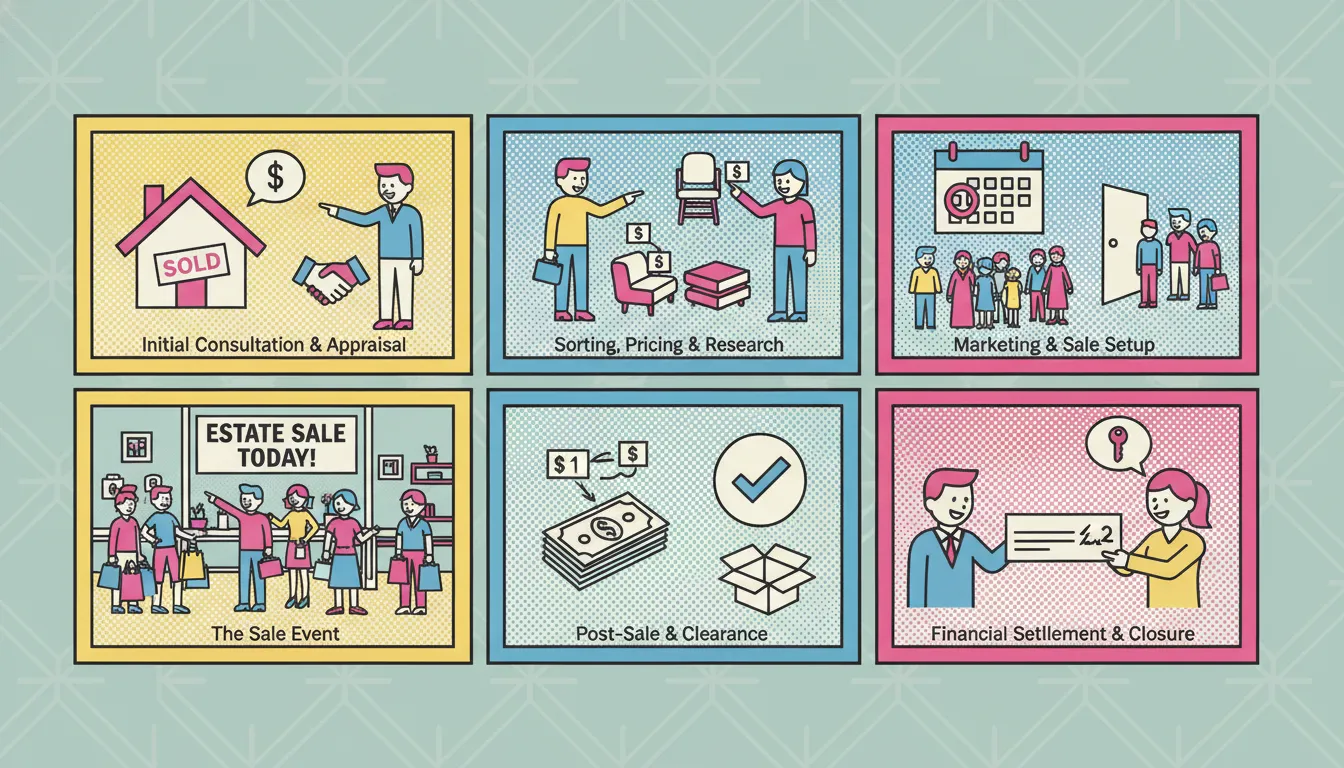
How do estate sales work from start to finish?
In practical terms, an estate sale turns the contents of a home into an organized public sale. It may follow a death, relocation, major downsizing, or a move into care. So the process often begins while a family is balancing emotional decisions with legal and logistical responsibilities. For a brief explanation of what an estate sale is, see our definition guide. The steps below focus on how the process usually unfolds. Exact practices, timelines, contracts, fees, and buyer rules vary by company and location.
- Decide what the family needs to accomplish. The owner, heirs, executor, trustee, or another authorized representative identifies the reason for the sale and the desired outcome. Before anything is removed, the family should separate personal keepsakes, important documents, items promised to beneficiaries, and property that may require special handling. The first practical step is sorting personal property and identifying what should be sold, rather than immediately pricing everything.
- Choose a sale partner and confirm authority. Families may manage a small sale themselves, but professional estate liquidators are commonly hired to sort items, assess and price assets, stage the home, and run the event. A company should receive clear instructions about who can authorize the sale, what is excluded, how proceeds will be handled, and how the agreement can end. Executors and administrators should also confirm that they have authority to deal with the relevant property.
- Inventory and evaluate the contents. The sale team reviews furniture, decorative objects, jewelry, clothing, collectibles, and other household property. Items are grouped, documented, and assessed for condition, provenance, rarity, and likely buyer interest. This stage helps identify pieces that deserve specialized research or a separate sales channel, while ordinary household goods can be prepared for the main event.
- Prepare, price, and present the home. Items are cleaned or arranged when appropriate, then displayed so shoppers can inspect them safely. Pricing should reflect current market evidence and the condition of each item, not simply the family’s sentimental value. Staging makes the selection easier to understand and can help buyers see how furniture and collections fit together. The sale company may also photograph items and promote the event through its established channels.
- Run the public sale and manage transactions. Shoppers browse the staged property, ask questions, and purchase according to the company’s rules. Depending on the format, prices may be fixed at first and adjusted later, but markdowns, negotiation, payment methods, sales tax, and access limits are not universal. Staff oversee traffic, protect the property, document transactions, and help coordinate the removal of purchased items.
- Close out the property and settle the account. After the public event, the company and family address unsold items according to the written agreement. That may include a final sale, donation, auction referral, consignment, removal, or return to the owner. The company then provides the agreed accounting, deducts authorized commissions or expenses, and transfers the remaining proceeds. A careful closeout also confirms that the home is left in the condition promised by the contract.
What happens before an estate sale opens?
The work begins well before shoppers walk through the door. Whether the sale follows a death, a move, or a major downsizing, preparation determines what can be offered. It also determines how property is presented and which items may need a different sales channel. Estate sales can include furniture, clothing, jewelry, and decorative pieces. The first task is bringing order to a wide-ranging collection. A state tax guide describes these sales as involving household goods such as furniture, jewelry, and clothing.
Family members identify keepsakes and paperwork
Before anything is priced or moved, the family, executor, or trustee should remove personal keepsakes and documents that are not intended for sale. That may include photographs, letters, legal records, financial papers, heirlooms promised to beneficiaries, and items with sentimental value. A clear separation at this point helps prevent confusion later, especially when several family members are involved. It also gives the estate representative a chance to confirm that the people handling the property have the authority to do so.
Inventory and appraisal establish a plan
Next, the remaining property is inventoried. A professional estate liquidator can record major furniture, artwork, jewelry, antiques, collectibles, and useful household contents while identifying pieces that need additional research. The process typically starts with sorting personal property and deciding what should be sold, donated, retained, or discarded. Professional liquidators are commonly hired to assess and price assets, stage the home, and manage the sale process, rather than treating the event like a small garage sale. See our guide to family estate liquidation services for more context on organizing this work.
Appraisal is especially important when an estate contains fine art, antiques, jewelry, or a significant collection. Research into current market conditions can help determine whether an item belongs in a traditional estate sale, a specialized auction, or another sales channel. The appraisal does not promise a particular result. It provides a defensible basis for decisions and helps distinguish ordinary household contents from items that deserve specialist attention.
Items are sorted, staged, cataloged, and marketed
After the inventory and valuation work, items are grouped by type and condition. The home is then staged so buyers can inspect pieces safely and understand how they relate to one another. Cataloging and photography may be added for higher-value or specialized items, while marketing communicates the sale details to likely buyers. This preparation can be particularly helpful for families managing a move or changing living arrangements. If downsizing is the reason for the sale, it may help to plan a senior downsizing estate sale around the person’s needs, available support, and decisions about what should remain in the home.
Only after these steps are complete is the property ready for opening day. The exact workflow varies by company, property, and jurisdiction, but careful preparation gives the sale a clearer structure and gives the family a documented starting point.
How are estate sale items priced and what fees apply?
Pricing starts with research, not guesswork. A professional liquidator may review current market values for individual items, considering condition, maker, provenance, demand, and how comparable pieces are selling. The goal is to set a price that reflects the item while still giving it a realistic chance to sell during the scheduled event. For unusual collections, obtaining antique appraisal services can provide a stronger valuation foundation before tags are printed.
Each item is then marked, displayed, and monitored as the sale progresses. In many estate-sale models, prices are firm on the opening day and may be reduced or become more negotiable later. A final-day discount, such as 50 percent off selected items, is an example of a possible strategy, not a rule every company follows. The right markdown schedule depends on the inventory, buyer response, event length, and the seller’s priorities. A liquidator must balance the opportunity to earn more with the practical need to move remaining property.
| Cost category | How it may work | What to confirm |
|---|---|---|
| Liquidator commission | A percentage of gross or net sale proceeds. One published industry example describes commissions commonly ranging from 30% to 50% of gross revenue. | Whether the percentage applies to gross or net sales, and what deductions are permitted. |
| Sale-management fee | A separate fee may cover the costs of organizing and holding the event in addition to a commission. | The amount, what services it covers, and when it is payable. |
| Taxes and transaction costs | Sales tax, payment-processing charges, hauling, cleaning, or disposal may apply depending on the arrangement and local rules. | Who collects tax, which expenses are deducted, and whether receipts are provided. |
Fee structures vary significantly by company, location, inventory, and the amount of work required. The 30% to 50% commission example should not be treated as a universal rate, and a company may use a different basis or combine services in another way. Ask whether the company is selling property in the owner’s name, as in a consignment arrangement, or in its own name. That distinction can affect the contract, accounting, and tax responsibilities.
Before work begins, request written terms that explain the pricing method, commission basis, markdown authority, unsold-item plan, payment schedule, and every additional charge. The agreement should also identify who handles sales tax and how the final settlement statement will show gross sales, deductions, and the amount paid to the estate. Clear terms make it easier to compare proposals and prevent misunderstandings when the sale is complete. Because tax and estate obligations vary by jurisdiction, consult the appropriate legal or tax professional about questions the contract does not answer.
What legal, tax, and probate issues should sellers consider?
Rules about probate, sales tax, income, and the authority to sell property vary by jurisdiction, estate structure, and the agreement with the sale company. This section is general information, not legal or tax advice. Before items are removed, consigned, or sold, confirm the requirements that apply where the estate is being administered with a licensed attorney and tax professional.
Confirm who has authority to sell
If the owner has died, the executor or administrator may be responsible for the estate’s money, property, and possessions during the administration period. That responsibility generally continues from the date of death until assets are distributed to beneficiaries. In some situations, a personal representative must complete probate before dealing with certain assets. So an heir should not assume that possession of an item is the same as authority to sell it.
Ask counsel whether the estate needs probate, whether the will or trust gives the representative authority to liquidate personal property, and whether beneficiaries must approve the proposed sale. Keep an inventory and retain records showing what was sold, when it was sold, and where the proceeds went. A professional sale company can organize and document the process, but it does not replace the executor’s legal responsibilities.
Account for debts and tax questions
Estate administration may include paying debts left by the deceased. Depending on the assets and the transaction, tax questions can also involve retail sales tax. Income generated by estate assets, or gains from the sale of investments or property. A state revenue department may place responsibility for collecting and submitting retail sales tax on the estate seller. But that example does not establish the rule in every state or for every type of transaction:
Review the relevant state revenue guidance, then ask a tax professional how the sale should be recorded. Do not assume that proceeds from household items, an auction, a consignment arrangement, or a high-value collection receive identical tax treatment.
Read the selling agreement carefully
An estate company may sell tangible personal property on behalf of the owner or estate. The agreement may describe a consignment sale, where property is sold in the owner’s name, or a structure where the company sells in its own name. Those choices can affect reporting, sales-tax handling, commissions, insurance, expenses, and the settlement statement. Ask who is the seller of record, who collects tax, how debts or approved expenses are handled, and when the estate receives its proceeds.
For estates with trusts, multiple beneficiaries, substantial collections, disputed ownership, or significant tax exposure, obtain local legal and tax advice before signing. A qualified appraiser or liquidation professional can help establish and document value. While your attorney and tax adviser can confirm what you are legally permitted to sell and how the transaction should be reported.
How do estate sales work for buyers?
For a first-time shopper, an estate sale can feel less like a conventional store and more like a temporary marketplace inside a home. The selection may include furniture, jewelry, artwork, clothing, and decorative items, often arranged in the rooms where they were used. The exact policies vary by company, so read the sale announcement and ask questions before you buy.
- Research the sale before you go. Check the listing for dates, hours, location, photographs, featured items, parking instructions, and any entry requirements. Some sales publish previews or accept appointments, while others open at a stated time and admit shoppers as space allows. If you are looking for a particular type of item, review the photos carefully, but remember that pictures may not show every available piece.
- Plan for the opening and entry process. Many traditional estate sales are first-come, first-served, and shoppers may arrive early to secure a place in line. Some companies use numbers, timed entry, or another queue system instead. Bring patience and follow the staff’s instructions. A sale staged inside a private home may have limits on bags, children, food, photography, or which rooms buyers can enter.
- Inspect items before committing. Examine furniture, art, collectibles, and household goods for condition, repairs, missing parts, odors, wear, and signs of restoration. Ask whether staff can provide any available provenance or background, but do not assume that every item has been formally authenticated or appraised. If an item is valuable or fragile, ask how it should be handled and whether it can be held while you continue shopping.
- Understand the price and payment rules. Prices are often fixed on the first day, but a company may reduce prices or allow more negotiation as the sale progresses. Final-day discounts are common in some sales, not universal. Before shopping, confirm accepted payment methods, sales tax, buyer’s premiums, minimum purchase requirements, and whether checks or cards incur restrictions. These terms are house-specific, and posted prices may not include every applicable charge.
- Ask about negotiation at the right time. A respectful question is more effective than assuming every price is flexible. First-day negotiations may be declined when demand is highest. Later in the sale, staff may have more discretion, especially for unsold items or group purchases. Any discount should be confirmed before payment, and buyers should not remove tags or move items without permission.
- Arrange pickup before you pay. Buyers are usually responsible for taking purchases away by the deadline. Ask whether the company offers delivery, whether you must bring help or moving equipment, and whether furniture can be disassembled. Confirm the pickup window and protect floors, walls, and other merchandise while removing your items. Some companies may forfeit an uncollected purchase after the stated deadline.
Expect the experience to change from day to day: the first day may offer the widest selection, while a later day may bring discounts but fewer choices. For a practical checklist covering lines, payment, inspection, and pickup, read what to know before you attend an estate sale.
Estate sale, auction, or private sale: which fits?
The right format depends on the property, the people involved, and the kind of control you need. A traditional tag-style estate sale can work well when a home contains a broad mix of household belongings and local buyers can browse items in person. An auction may be better suited to antiques, fine art, jewelry, or a significant collection where specialist knowledge and access to a broader buyer market matter. An outright or private sale offers a different path when the owner prefers a more direct transaction.
Traditional estate sale
In a tag-style sale, items are displayed in the home, given individual prices, and sold during set hours. This format can make sense for furniture, clothing, household goods, and decorative pieces that will appeal to shoppers looking for practical purchases. Professional estate sale companies may sort belongings, stage rooms, research values, and manage the event. Estate sales are generally more extensive and professionally organized than a typical garage sale, but practices vary by company.
Local access can be a strength, especially when the home is easy for shoppers to reach. The tradeoff is that the result depends heavily on attendance, presentation, pricing, and the local market. Prices may be firm early in the sale and become more flexible later, but markdowns and negotiation policies should be confirmed in writing.
Auction
An auction can provide a structured way to offer individual lots to interested buyers, particularly when items need specialized identification, valuation, or marketing. A qualified auction house may combine appraisal, cataloging, photography, promotion, auction management, and buyer outreach. That expertise can be valuable when an estate includes items whose worth is not obvious from appearance alone. For a clearer overview, see how auction houses work.
Auction results are not guaranteed, and timing, reserve terms, buyer demand, and the quality of the catalog can all affect the outcome. Ask how the company will handle unsold lots, shipping, pickup, insurance, and settlement before signing an agreement.
Outright or private sale
An outright sale involves selling property directly to a dealer, collector, or company, while a private sale may match a specific item with an individual buyer. These approaches can offer greater control over who buys an item and may simplify the process when only a few pieces need to be sold. They may be less suitable for a large household that requires sorting, staging, marketing, and coordinated removal.
Before choosing, request a written explanation of the valuation method, sale format, commission or purchase price, expenses, ownership terms, and expected timeline. A professional appraisal is often the best starting point, particularly when family members need a defensible understanding of value before deciding how to proceed.
How should you choose an estate sale company?
The right company should make the process easier to understand, not ask you to surrender control without clear answers. Before signing an agreement, compare several providers and ask how each one would handle your particular home, collection, timeline, and legal authority.
Confirm experience and valuation methods
Ask who will inspect and price the property, and whether the company has experience with antiques, fine art, jewelry, collectibles, or other specialized items in the estate. A professional appraisal is an important foundation for responsible liquidation. The company should be able to explain whether it uses comparable sales, current market research, specialist opinions, an auction format, or another method. Professional liquidators commonly sort property, assess assets, stage the home, and manage the sale, but the depth of that service varies. Learn more about the typical estate sale process.
Read the agreement line by line
Request a written schedule of commissions and every additional charge. Commission structures may cover marketing, cataloging, photography, and buyer outreach, while some companies also charge sale-management or other service fees. Ask whether the percentage applies to gross sales or net proceeds, when payment is made, and how unsold items, refunds, discounts, taxes, and disposal costs are handled. There is no universal fee structure, so compare the total arrangement rather than focusing on one percentage.
Also clarify the scope of work. Will the company sort the home, stage rooms, photograph and catalog important pieces, advertise the event, manage visitors, process payments, supervise pickup, and clean out remaining property? Confirm who is responsible for security, damage, insurance, and access to the home. If the company will sell tangible property in its own name or in the owner’s name, the agreement should state that arrangement clearly. Local tax and probate requirements can also affect the process. For a complex estate, seek advice from a qualified local attorney or tax professional before authorizing a sale. Government probate guidance illustrates why personal representatives should understand their responsibilities for estate assets, though rules vary by jurisdiction.
Ask for proof of reliable follow-through
Request references from clients with similar estates, examples of marketing or catalog work, and a sample settlement statement. The final accounting should show what sold, the sale price, deductions, taxes or other agreed charges, and the amount payable to the estate. Ask how quickly statements are issued and how disputes are handled. A reputable provider should answer these questions directly and explain what happens when an item does not sell.
These checks can help you find a trusted estate liquidation company that matches the estate’s needs. Choose transparency, documented expertise, and a clearly defined service scope over promises of a guaranteed price or guaranteed timeline.
Request an antique appraisal to discuss estate sale and liquidation options with the Lion & Unicorn team.
Frequently Asked Questions
What is an estate sale?
An estate sale is an organized sale of household contents and personal property. Often held when a family is settling an estate, relocating, downsizing, or managing another major life change. It may take place in the home, online, or through an auction format, depending on the property and the company managing the sale.
How do estate sales work for sellers?
Sellers usually begin by deciding what must be kept, removed, donated, or sold. A professional company can then inventory the property, identify valuable items, research pricing, prepare the home, market the event, manage shoppers, and provide a final accounting. The exact services, timeline, and seller responsibilities should be stated in a written agreement.
How do estate sales work for buyers?
Buyers typically review the sale details, arrive during the published hours, and shop through staged rooms or an online catalog. Entry procedures, payment methods, pickup requirements, and return policies vary by sale. Inspect an item before purchasing because many estate-sale purchases are final, and never assume that one company’s rules apply to another.
How are items priced at an estate sale?
Pricing may consider condition, provenance, current demand, comparable sales, and the time available for liquidation. A company may use fixed tags, negotiated prices, an auction, or scheduled markdowns. There is no universal pricing formula, so ask how values were determined and how unsold property will be handled.
What percentage do estate sale companies charge?
Many companies use a commission based on sales, while others may add management, hauling, advertising, or specialty-service fees. Rates and deductions differ substantially, so do not rely on a standard percentage. Review the agreement for the commission basis, expenses, payment schedule, cancellation terms, and the form of the final settlement statement.
Need help understanding your estate sale options?
If you are sorting a family collection, preparing for a move, or deciding how to handle an estate, an informed valuation can help clarify the next step.
Request an antique appraisal to discuss estate sale and liquidation options with the Lion & Unicorn team.
Free Consultation
Ready to Sell Your Estate or Collection?
Lion & Unicorn's expert team offers free appraisals and nationwide pickup service.
Over 30 years of experience — Florida's most trusted auction house.