
Free Consultation
Ready to Sell Your Estate or Collection?
Lion & Unicorn's expert team offers free appraisals and nationwide pickup service.
Over 30 years of experience — Florida's most trusted auction house.
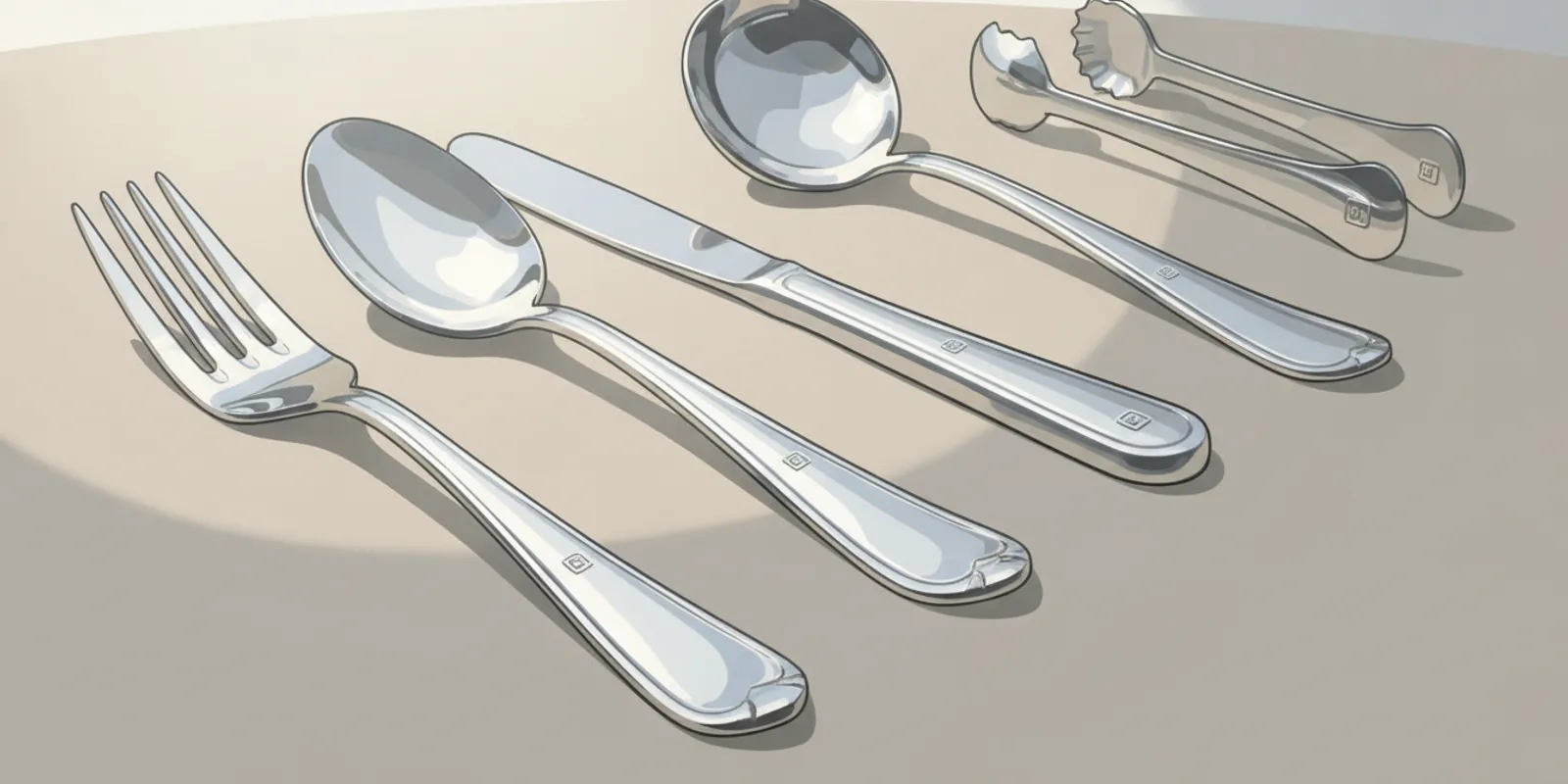
If you are asking, how much is my sterling silver worth? start by separating its metal value from its value as a collectible. Sterling silver contains 92.5% silver by weight, but the final resale price can be higher or lower than a basic melt estimate depending on the maker, pattern, condition, and buyer demand. A useful estimate requires identification, careful weighing, and current market evidence—not a guess based on age or appearance.
Explore appraisal and auction options if you are weighing a sale or need help deciding what to do next.
What does sterling silver value actually mean?
There is no single price that applies to every sterling silver object. People may mean one of several different values when they ask what a piece is worth:
- Metal or melt value: an estimate based on the silver content and a current silver price. It does not automatically equal an offer or sale price.
- Resale value: what a buyer may pay through a particular sales channel, after considering demand, condition, and selling costs.
- Collector value: a premium that may apply to a sought-after maker, pattern, form, or complete set.
- Insurance or estate appraisal value: a value prepared for a stated purpose and date. It may not predict what a seller will receive in a sale.
These figures answer different questions. A metal estimate can provide a starting point, while a market-based appraisal or comparable auction results may better address a specific selling decision. Before comparing numbers, ask what kind of value each one represents and whether it describes a retail asking price, an actual completed sale, or an estimate.
How can I estimate the silver content?
Begin by confirming that the object is sterling rather than silver-plated or another silver alloy. Look for marks such as “Sterling,” “925,” or “.925.” A mark is useful evidence, but it is not a complete appraisal: it does not identify every maker, establish condition, or prove that a piece has collector demand. If a mark is worn or unclear, photograph it in good light rather than polishing aggressively or trying an at-home chemical test.
Sterling is 92.5% silver by weight. In a simplified calculation, the estimated fine-silver content is the sterling object’s weight multiplied by 0.925. The resulting amount can then be compared with a current silver price quoted for a stated unit and time. Make sure the units match before calculating. A troy ounce, often used for precious metals, is not the same as an ordinary avoirdupois ounce.
This calculation is only a metal-content estimate. It does not account for buyer deductions, refining costs, shipping, transaction terms, or the possibility that the object is worth more intact. Some pieces include non-silver components, weighted bases, steel blades, or other materials. Those parts should not be counted as sterling silver. Do not dismantle a piece simply to get a more precise weight; doing so can damage it and reduce its appeal.
A simple example, not a quote
Suppose a group of confirmed sterling pieces has a combined weight of 100 grams, excluding known non-silver parts. Multiplying 100 grams by 0.925 gives an estimated 92.5 grams of fine silver. To express that content in troy ounces, divide by the number of grams in a troy ounce, then multiply by a current price per troy ounce. That result is a theoretical metal benchmark, not a guaranteed selling price. An actual offer may reflect the buyer’s costs and terms, while a collectible set may have a different market value.
Silver prices change. If you calculate a benchmark, record the date, price source, unit, and weight used. Avoid treating an old online price, a dealer’s advertised retail price, or a single unsourced estimate as proof of today’s value.
What details can raise or lower the value?
Metal content is only one part of the assessment. Record the following details before searching for comparable sales or asking for an opinion:
- Maker and marks: Photograph all stamps, symbols, and signatures. A clear maker’s mark can help narrow the identification, but marks should be interpreted with the form and construction.
- Pattern and date clues: Identify the pattern name when possible. Look for matching pieces and note whether the group appears to be a complete or partial service.
- Form: Flatware, hollowware, presentation pieces, and decorative objects can attract different buyers. Record exactly what you have rather than describing everything as silverware.
- Condition: Note dents, cracks, repairs, deep scratches, monograms, missing components, and evidence of heavy polishing. Do not assume that every sign of age is damage.
- Completeness: List counts by type and identify serving pieces, storage cases, or related components. A carefully documented set is easier to compare than an uncertain total.
- Provenance: Keep receipts, family notes, prior appraisals, and ownership records if available. Treat these as supporting evidence; a story alone does not establish value.
Cleaning can change the surface and remove useful evidence. Avoid polishing marks away, using abrasive products, or making repairs before documentation. Photograph the pieces as they are, including close views of marks and any condition issues. If an object appears fragile or has a significant finish, seek advice before cleaning it.
How do I find useful sterling silver comparisons?
Search for completed sales of the same or closely comparable objects. Try to match the maker, pattern, form, number of pieces, and condition. A listing price shows what a seller hopes to receive; it does not prove that anyone paid that amount. Prefer completed transactions with enough description and photographs to judge whether the item is genuinely comparable.
Keep a short record of each comparison: the sale date, description, quantity, condition, result if disclosed, and any stated buyer charges. Compare similar groups, not a single spoon against a large complete service. If a set has been divided, note that too; the result for an intact group may differ from results for individual pieces.
Use multiple examples where possible. One unusually high or low result may reflect a special buyer, an incomplete description, condition, or sale-specific circumstances. If you cannot find a close match, say so rather than stretching an unrelated result into a precise valuation. A specialist can help assess whether the object should be compared by metal content, maker, pattern, or another feature.
For general background on consumer information about precious-metal product claims, consult the Federal Trade Commission. Its consumer guidance is a place to review how precious-metal representations are addressed; it is not an appraisal of an individual object or a current price quote.
How do melt value and collector value compare?
Use the comparison below as a decision aid, not a promise of what a buyer will pay. Actual offers depend on the object and the terms of a particular sale.
| Consideration | Melt-value approach | Collector-market approach |
|---|---|---|
| Main evidence | Confirmed silver content, weight, and a dated metal-price reference | Maker, pattern, form, condition, completeness, and relevant completed sales |
| Best suited to | Understanding a metal-content benchmark | Testing whether the object may interest buyers as a usable or collectible piece |
| Important limitation | The benchmark does not equal a guaranteed offer or net proceeds | Comparable sales can be difficult to find and may not match the exact object |
| Before deciding | Exclude non-silver parts and confirm units and date | Document marks and condition; compare like with like |
Do not assume that a collectible premium is always present, or that a melt calculation is always the best route. A desirable pattern may attract a collector, while damaged, mismatched, or less sought-after pieces may be evaluated mainly for metal content. The right comparison depends on the specific objects and the audience for them.
Should I sell sterling silver as a set or by the piece?
Consider the collection’s completeness, condition, and likely buyers before separating it. A matching service with a useful selection of components may be easier for a collector to evaluate as a group. On the other hand, a mixed assortment may contain pieces with different makers or patterns, and separate lots could make those distinctions clearer. There is no universal rule that one format brings a better result.
Make an inventory before deciding. Group objects by maker and pattern only when the identification is supported by marks or reliable documentation. Count each type, note any mismatches, and photograph the entire group alongside close-ups. Ask how the proposed selling route handles catalog descriptions, sale timing, fees, shipping, and unsold property. Get the terms in writing and compare the likely net outcome rather than focusing only on a headline estimate.
If the collection is part of a larger estate, review the broader asset-sale considerations and decide whether the silver should be assessed alongside other property. A specialist auction or consignment route may be worth considering when identification and buyer interest matter; a direct metal buyer may instead focus primarily on silver content and its own transaction terms.
What should I prepare before requesting an appraisal?
A clear submission helps an appraiser understand what needs review. Gather the items in a safe place and prepare:
- A written inventory, with counts and dimensions for unusual pieces.
- Photographs of the full group, each maker’s mark, pattern details, and visible damage.
- Approximate weights only when you can measure without including unrelated materials. Label the measurement method and units.
- Any previous appraisal, receipt, family record, or sale documentation.
- The reason for the valuation, such as planning a sale, dividing an estate, or documenting property, and the relevant date if one matters.
Ask the professional what the appraisal covers, what assumptions it uses, and whether it is intended as a sale estimate or for another purpose. A sale estimate and a formal appraisal are not interchangeable. Ask about the fee and scope before proceeding; do not assume an initial evaluation is free. Lion & Unicorn’s guide to choosing appraisers in Florida offers questions to consider when selecting an appraiser.
For broader context about selling antiques and collectibles, see the selling antiques resource page. You can also review the auction house’s main site and its collectibles coverage to understand the kinds of material it handles. These pages are starting points, not substitutes for an assessment of your specific silver.
How should I compare selling routes?
The best route depends on what you want to sell, how much identification work the collection needs, and how involved you want to be. A direct buyer may offer a simpler transaction but may focus largely on metal content. A private sale gives you control over presentation and timing, but you take on the work of finding a buyer, answering questions, arranging delivery, and assessing payment and return risks. An auction can expose a described lot to competing bidders, but results are not guaranteed and the seller’s terms, fees, timing, and handling arrangements matter.
Before choosing, ask each prospective buyer or service provider the same questions:
- What evidence will be used to identify the pieces and estimate their value?
- Will the pieces be offered together or divided into separate lots, and why?
- What fees or deductions could affect the amount you receive, and when are they due?
- Who is responsible for insurance, packing, shipping, and unsold property?
- What happens if the result differs from the estimate or you decide not to proceed?
For auction purchases, the stated bid is not necessarily the complete buyer cost. Lion & Unicorn lists a 30% buyer’s premium; review the current conditions of sale for terms on taxes and any other charges. As a seller, ask for your own written agreement and do not infer a seller’s commission from a buyer’s premium. Compare the likely net proceeds and service obligations, not just an estimate or advertised price.
Ask about auction services before choosing a selling route for an individual piece or collection.
Frequently asked questions
Is every object marked 925 sterling silver?
The 925 mark is a clue that an object is represented as 92.5% silver, but it cannot answer every question about authenticity, maker, date, or value. Consider the mark together with construction, form, and other evidence. If the mark is unclear or the object is important, seek a qualified assessment rather than relying on a single stamp.
Does sterling silver always sell for more than its melt value?
No. Collector interest may add value in some cases, but it depends on the maker, pattern, condition, completeness, and buyer demand. A metal-content calculation is a benchmark, not a guaranteed floor for every transaction; selling terms and buyer costs can affect the amount received.
Can I estimate value from weight alone?
Weight can help estimate metal content when the object is confirmed sterling and non-silver components are excluded. It cannot identify collector demand, verify a maker, or predict the amount a buyer will pay. Use weight as one piece of evidence alongside marks, condition, and comparable sales.
Should I polish my silver before having it assessed?
Document the pieces before cleaning. Aggressive polishing can alter surfaces or marks, and some condition details may matter to an assessment. Avoid abrasive treatment or repairs unless a qualified professional recommends them for that specific object.
Make your next step evidence-based
Start with clear photographs, accurate identification, and a dated metal-content estimate, then compare those findings with completed sales for similar objects. If the evidence points to collector interest or the collection is complex, ask an appraiser or auction professional what review fits your purpose and confirm the terms before making a decision.
Discuss a possible auction or appraisal path when you are ready to review the next step.
Free Consultation
Ready to Sell Your Estate or Collection?
Lion & Unicorn's expert team offers free appraisals and nationwide pickup service.
Over 30 years of experience — Florida's most trusted auction house.