


Sell Antiques Near Me: A Guide to Your Best Options
Free Consultation
Ready to Sell Your Estate or Collection?
Lion & Unicorn's expert team offers free appraisals and nationwide pickup service.
Over 30 years of experience — Florida's most trusted auction house.
A family heirloom may be worth more than expected. Selling an inherited cabinet, a collection of porcelain, or a single heirloom also raises a difficult question: what is it worth in today’s market? An online asking price, insurance figure, and sentimental attachment may all point in different directions.
To sell antiques near me with realistic expectations, begin by separating fair market value from replacement and sentimental value, then document condition, provenance, and authenticity before choosing a sales channel. Recent auction results and a qualified appraisal can provide stronger evidence than comparable listings alone, because market demand changes.
That groundwork helps you decide whether speed, convenience, local visibility, or access to specialist collectors matters most. It also gives any dealer, appraiser, auction house, or consignment professional the information needed to assess your items responsibly, starting with the evidence behind the valuation.
Sell your antiques and collectibles to learn about available selling and appraisal options before choosing a route.
How to Sell Antiques Near Me: Start With a Realistic Valuation
Before you decide where to sell, establish what kind of value you are trying to measure. An heir may think about what an object meant to a parent, while replacement value focuses on the cost of buying a comparable item. A buyer, however, is usually assessing what the item could reasonably bring in the current market. Those are different questions, and confusing them can lead to unrealistic pricing or disappointment.
Separate market value from replacement and sentimental value
Fair market value is generally the price an item might bring in an open-market transaction between a willing buyer and a willing seller. Neither party is forced to act. It is not necessarily the same as replacement value, which concerns the cost of buying a comparable item, or sentimental value, which reflects personal and family meaning. The National Park Service explains the distinction between fair market value and replacement value in its appraisal guidance.
That distinction matters when you search for how to sell antiques near me. A local buyer is evaluating a potential transaction, not the memories attached to the object.
Sentimental value can be completely genuine while having little effect on a sale price. Set it aside temporarily when researching your options. If an item has family significance, decide whether the financial result of selling is worth giving up the personal connection before you commit to a channel.
Look beyond age and appearance
Antique valuation is not based on age alone. Condition, provenance, current demand, and authenticity all influence what knowledgeable buyers may consider. Provenance is the documented history of ownership. Records connecting an object to a notable collector, estate, exhibition, or historical event can strengthen its interest and help establish authenticity. Save receipts, family records, old photographs, certificates, exhibition references, and any previous appraisal documents. Even incomplete history may be useful when combined with other evidence.
Condition deserves equally careful attention. Original labels, paint, hardware, and parts can matter to collectors. Repairs, missing components, refinishing, or restoration should be disclosed rather than concealed. In some categories, a restored or refinished piece may be less desirable than one in original, unrestored condition. Do not aggressively clean or alter an item simply to make it look newer. Improper cleaning can damage an antique and reduce its value, so consult a qualified professional before attempting restoration.
Research comparable sales, then know when to seek help
Start with focused research rather than relying on the highest asking price you find online. Review current and past sales, paying attention to genuinely comparable objects, condition, maker, size, materials, and completeness. The Getty Research Institute recommends browsing appraisal information, researching current and past sales, and contacting an appraiser when appropriate: its appraisal research guide is a useful starting point. Past auction results can be more informative than unsold listings because they show what buyers actually accepted.
Seek professional appraisal help when authenticity is uncertain, the item may be rare or valuable, the collection is substantial, or you need formal documentation. Identifying fakes, reproductions, and pieces described as “in the style of” an artist or maker can require specialist knowledge. Ask any appraiser about credentials, experience with your category, and fee structure before proceeding. A formal report should identify the object, describe its condition, explain the basis for the valuation, and state the report’s intended use.
For a qualified second opinion before choosing a sales route, request a free antique appraisal. A realistic valuation gives you a stronger basis for comparing a quick buyout, consignment, estate sale, or specialty auction without promising a price the market may not support.
Which Selling Option Fits Your Antiques?
The right sales channel depends on what you own, how quickly you need a result, and how much work you want to manage. A dealer buyout can be straightforward when speed matters. A shop or consignment arrangement may give distinctive pieces time in a physical showroom. Online marketplaces offer broad reach, but they place nearly every selling task on you. Estate sales suit household liquidation, while a specialty auction can put rare or high-end pieces in front of collectors who already understand their category.
Use the comparison below as a starting point. The best fit can change from one item to the next, especially when a household contains ordinary furnishings alongside valuable or specialized antiques.
| Option | Speed | Seller effort | Audience | Often fits |
|---|---|---|---|---|
| Dealer buyout | Usually fastest. | Low | One dealer’s buying network. | Immediate liquidity or a small, straightforward group of items. |
| Local shop or consignment | Moderate | Moderate | Local shoppers and showroom visitors. | Display-friendly pieces that may benefit from in-person viewing. |
| Online marketplace | Variable | High | Potentially broad, depending on the platform. | Items you can photograph, describe, pack, ship, and answer questions about. |
| Estate sale | Moderate to scheduled | Moderate to high unless managed for you | Local buyers seeking varied household contents. | Liquidating a home or a broad collection. |
| Specialty auction | Scheduled | Lower with a full-service auction house | Targeted collectors and a wider bidding audience. | Rare, high-end, or category-specific antiques. |
Speed is only one part of the decision
A dealer buyout may provide faster liquidity than consignment, but the convenience of one immediate offer can come with less exposure to competing buyers. That does not make a buyout wrong. It may be sensible when a move, estate deadline, or financial need makes certainty and speed more important than managing a longer sale process. Ask what the offer includes and whether the dealer is evaluating the group as a whole or selecting only particular pieces. Condition, provenance, and current market demand can all affect what a buyer is willing to offer.
Consignment and online selling can preserve more control over individual listings, but they also require clear decisions about pricing, storage, communication, packing, and unsold items. Physical antique malls and consignment shops can be useful when an object is difficult to convey through photographs or benefits from being viewed in person. Read the agreement carefully before committing, including commission, transport, insurance, and the timeline for payment. Those responsibilities should be defined in writing, not assumed. Auction platforms may also apply a buyer’s premium, so understand how the final price and your net proceeds are calculated.
When specialized reach matters
An estate sale is often practical for an entire home because it attracts local buyers looking for a wide variety of contents. A specialty auction is different: its targeted marketing can help rare or high-end items reach collectors who are actively interested in that niche. A professional auction and consignment service can also coordinate valuation, marketing, and logistics, reducing the number of tasks you must handle yourself.
For a closer look at the tradeoffs, read about auction-house advantages. When you are ready to discuss the collection, you can sell your antiques and collectibles through a route matched to the items and your timeline.
Prepare Your Antiques Without Damaging Their Value
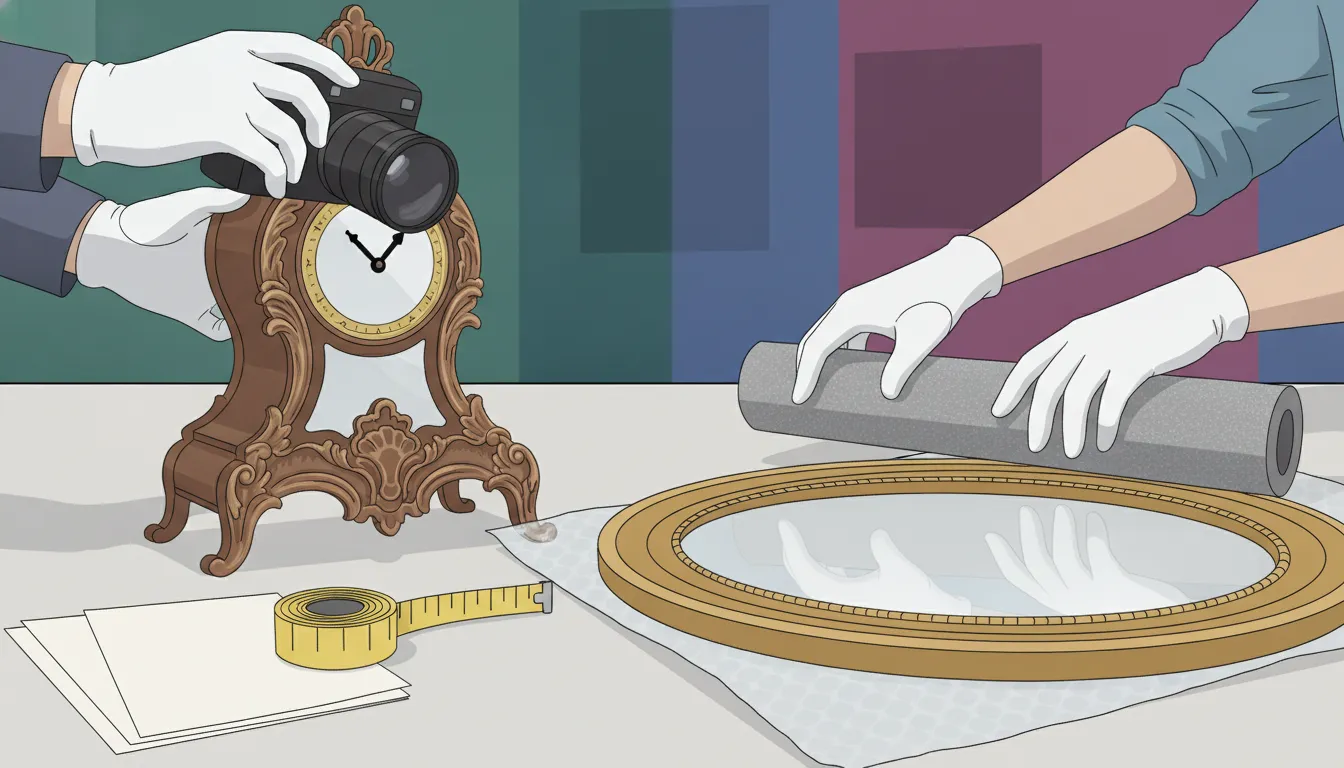
Good preparation gives an appraiser, auction house, or buyer the clearest picture of what you own. It also helps protect details that may be easy to overlook when a collection is being packed, moved, or divided. Work through this checklist before requesting an appraisal or agreeing to a sale.
- Gather provenance and supporting paperwork. Collect receipts, prior appraisals, certificates, family records, auction invoices, and any notes about where an item came from. Provenance means an object’s ownership history, and documentation can help establish authenticity and context. The National Park Service recommends organizing items and gathering supporting documentation before an appraisal visit, including provenance, receipts, and past appraisals: National Park Service appraisal guidance.
- Photograph each item before moving it. Take clear photographs from several angles, including the front, back, underside, interior, hardware, signatures, maker’s marks, labels, and any damage. Use natural or even lighting and include a close-up when a detail is important. Photographs can help a specialist review a collection remotely, but they should document the object as it is rather than conceal wear or repairs.
- Create an inventory that matches the photographs. Give each piece a simple number and record its type, maker, approximate dimensions, materials, quantity, and location. For sets, note whether all components are present. An inventory is especially useful when a collection is spread across several rooms or buildings. It reduces confusion during review and makes it easier to identify missing pieces before transport.
- Keep original labels, parts, and finishes intact. Do not discard labels, tags, packing materials, replacement parts, keys, handles, or other components that came with an object. Record whether paint, upholstery, hardware, or other elements appear original. Condition details matter in valuation, and collector preference is often for original, unrestored condition. In some cases, refinishing or restoration can reduce appeal rather than improve it. See the Smithsonian American Art Museum guidance on object value for additional context.
- Do not aggressively clean or restore anything. Avoid polishing, stripping, repainting, reglazing, repairing, or using household chemicals simply to make an item look newer. Improper cleaning can cause permanent damage and lower value. If an object needs attention, ask an experienced appraiser or professional conservator what is appropriate before taking action. Gentle dusting may be reasonable for some pieces, but when in doubt, preserve the current condition.
- Write a candid condition record. Note chips, cracks, stains, fading, scratches, repairs, replaced parts, missing pieces, instability, and signs of previous restoration. A condition report describes the physical state of an item and supports accurate valuation while helping prevent misunderstandings later. Include the date of your notes and refer to the matching photographs. Do not assume a flaw is too minor to mention.
- Clarify transport, insurance, commission, and payment terms. Before handing over property, ask who will pack and move it, when responsibility transfers. How it will be insured in transit and while stored, what commission or other charges apply, and when payment is expected after a sale. These points should appear in a signed agreement. Contracts should clearly define commission, transport, insurance responsibilities, and the payment timeline, as outlined by Lion & Unicorn’s auction information: auction terms and buyer information.
Preparation is not about making every antique look perfect. It is about preserving evidence, describing condition honestly, and making the collection easier to evaluate and handle safely.
How to Find a Reputable Antique Buyer Near You
When you search for someone to buy antiques near you, start with more than a convenient address. A reputable buyer should be able to explain what they know, how they evaluate items, and what happens after you agree to move forward. Local business listings can help you identify established shops and dealers, but treat the listing as a starting point rather than proof of expertise. Look for a clear business identity, a history of handling the category you own, and a process that does not pressure you to accept an offer immediately.
Category expertise matters. A dealer who understands mid-century furniture may not be the right specialist for signed artwork, porcelain, jewelry, coins, or historical objects. Ask how often they handle similar pieces and whether they can explain the factors affecting value, including condition, authenticity, provenance, and current demand. Researching past auction results can also give you a more realistic reference point than comparing your item with online asking prices. Which are not the same as completed sales. The Getty Research Institute recommends researching current and past sales as part of appraisal research: reviewing past sales can help establish market context.
Know whether you need a buyer or an appraiser
A buyer is evaluating an item for a potential purchase. An appraiser is providing an opinion of value for a defined purpose, such as sale planning, insurance, estate administration, or division of property. Those roles can overlap, but they are not automatically interchangeable. If you need formal documentation, ask whether the professional provides a written report that identifies the object. Describes its condition, explains the basis for the valuation, and states the intended use. For specialized or high-value pieces, subject-matter expertise is essential. The National Park Service notes that photographic documentation may sometimes allow a specialist to evaluate objects without an initial physical visit. Provided the images and supporting information are sufficient.
Before accepting an offer or signing a consignment agreement, ask practical questions in writing:
- Is the value based on a dealer buyout, fair market comparisons, recent auction results, or another method?
- What commission, buyer’s premium, service charge, or other deductions could affect the net payment?
- Who arranges and pays for packing, transport, pickup, and storage?
- When are the items insured, and who is responsible if an item is damaged or lost?
- What is the expected timeline from inspection to sale and payment?
- Will you receive an inventory, condition notes, settlement statement, and copies of relevant sale records?
A written agreement should define commission, transport, insurance responsibilities, and the timeline for payment. Do not rely on a verbal promise when a collection is valuable or emotionally significant. If you are handling an inherited home or a large group of items, a buyer alone may not address the packing, sorting, and property-clearance work involved. Review estate liquidation guidance to understand when broader support may be appropriate. For a separate valuation before choosing a sales route, you can also request a free antique appraisal. The right professional should make the next step clearer, not leave you guessing about value, fees, or responsibility.
What Happens When You Sell Through an Auction or Consignment Service?
A professional auction or consignment service gives you a defined path from first inquiry to final settlement. The exact timing and result depend on the items, market demand, and terms you agree to. But you should know what happens at each stage before handing over property.
- Initial inquiry: Start by describing what you have, where it is located, and your general timeline. Include clear photographs and any useful background, such as ownership history, receipts, prior appraisals, signatures, labels, or known damage. If you are researching how to sell your antiques and collectibles, ask whether the service handles individual pieces, complete collections, or estate contents. Confirm whether the first review is complimentary and what information is needed before an in-person or remote assessment.
- Item review and valuation: The auction house or consignment specialist reviews the photographs, documentation, condition, and category of each item. Rare or high-end pieces may be a better fit for a specialized auction because targeted marketing can reach collectors who understand that niche. Rather than placing everything in a general sale. Valuation is an informed estimate, not a promise. Current demand, provenance, authenticity, condition, and timing all affect what buyers may ultimately offer. Ask whether the valuation reflects an expected auction range, a reserve recommendation, or another purpose.
- Agreement and responsibilities: Before anything moves, read the consignment agreement carefully. It should state the commission, any other charges, the handling of unsold items, transport arrangements, insurance responsibility, and the expected payment timeline. These terms should be documented in writing. Also ask who can authorize repairs, whether a reserve or minimum price is available, and what happens if the item does not sell. A buyer’s premium may be added to the hammer price, so clarify how that affects the buyer’s final cost and your net settlement.
- Cataloging and photography: Accepted items are identified, described, measured, and recorded for the sale catalog. A condition report should disclose repairs, damage, missing parts, or other details that could affect a buyer’s decision. Review how names, dates, dimensions, provenance, and condition will appear before publication when that review is offered. Professional photography gives bidders a practical way to study the piece, but photographs do not replace accurate written disclosures.
- Marketing and bidding: The service promotes the sale to its established audience, which may include collectors beyond your local area. Specialized positioning can be especially useful for niche material. Ask where the sale will be advertised, when the catalog goes live, and whether bidding is online, in person, by phone, or through multiple methods. Market cycles and seasonal demand may influence scheduling for categories such as furniture or seasonal decor, so ask how the proposed sale date fits the item.
- Settlement and logistics: After bidding closes, the auction house processes the transaction under the agreed terms. Confirm when your settlement statement will be issued, which deductions will appear, and when payment is expected. Ask how unsold items are handled and who coordinates pickup, shipping, or return. For a large collection, clarify whether the service will pack and transport items. Whether those costs are separate, and how insurance applies while property is in transit or storage. Keep your own inventory and copies of the agreement until every item and payment is accounted for.
Auction and consignment services can simplify valuation, cataloging, marketing, and logistics, but the written agreement remains the foundation of the relationship. Take time to compare the proposed route with your timeline, the character of the collection, and the level of involvement you want.
When Is an Auction House Better Than a Quick Cash Sale?
A quick cash sale can be practical when your main priority is immediate liquidity. A dealer buyout is generally faster than consignment, but the convenience may come with a lower overall return than selling individual pieces through an auction. That tradeoff matters most when the collection includes items that could attract competing interest from collectors.
An auction house may be the stronger fit when you have a large group of antiques. Valuable individual pieces, or a collection that would be difficult to price and market on your own. A professional auction house can streamline valuation, marketing, and the sale process, while presenting the material to a broader collector audience. Lion & Unicorn describes its auction and consignment services as offering expert valuation and access to a global market of collectors. Learn more about auction and consignment services.
Consider the size and character of the collection
Collection size is often a practical dividing line. Selling a few ordinary items for cash may be straightforward, especially if you already know what you want to accept and how quickly you need payment. A full household collection, inherited group, or estate with many categories can require more sorting, research, photography, and buyer outreach than one seller can reasonably manage. An auction house can coordinate those steps instead of asking you to create separate listings or negotiate with multiple buyers.
Rarity is another important factor. Rare or high-end pieces often benefit from specialized auctions because targeted marketing can put them in front of the collectors most interested in that category. A general consignment setting may not provide the same focused audience. A broader collector reach does not guarantee a particular price, but it can create a more appropriate marketplace for distinctive objects than a single immediate buyout.
Match the timeline to your priorities
If you must clear a property immediately, a cash offer may be worth considering because speed can outweigh the possibility of a longer marketing period. If your timeline allows more planning, an auction gives the house time to research, position, and promote the collection. Timing can also matter for certain categories. Seasonal demand and broader market cycles may influence when furniture, seasonal decor. Or other antiques receive the most attention, so selling immediately is not always the only sensible option.
Decide how involved you want to be
A quick sale typically means less seller involvement, but it also leaves fewer decisions about presentation and audience. An auction route may involve reviewing recommendations, discussing which items belong together, and understanding the sale schedule. In return, the auction house handles much of the marketing and sale administration. Before agreeing to any route, request written terms that explain commissions, transport, insurance, and the expected payment timeline. Auction platforms may also charge a buyer’s premium based on the hammer price, so ask how that structure affects the transaction and your expected net proceeds.
Sell your antiques and collectibles to start a professional conversation about whether an auction, consignment arrangement, or faster sale best matches your collection and timeline.
Frequently Asked Questions
What is the best way to sell antiques near me?
Start by identifying the item’s condition, history, authenticity, and likely market. Then compare a dealer buyout, consignment, estate sale, online marketplace, and specialty auction. Past auction results can provide a more realistic reference point than current asking prices, which are only prices sellers hope to receive. Choose the route that matches your timeline, collection size, and willingness to manage photographs, inquiries, packing, and shipping.
Where can I sell my antique furniture near me?
Consider an established antique dealer, furniture consignment shop, estate sale company, or auction house that regularly handles furniture. Ask how the provider evaluates condition, manages transportation, sets terms, and reaches buyers. Large or unusual pieces may benefit from professional photography, cataloging, and access to a broader collector audience rather than relying only on walk-in traffic.
Do antique dealers buy individual items or whole collections?
Many dealers and auction professionals will review either individual pieces or complete collections, but their interest depends on category, condition, authenticity, and demand. Send clear photographs and dimensions before arranging transport. If you are clearing a home, ask whether the provider can evaluate related household contents and coordinate the logistics instead of separating items without a plan.
Should I clean or restore antiques before selling them?
Use caution. Aggressive cleaning, refinishing, or repairs can remove original surfaces and reduce value. Improper cleaning can damage an antique and lower its value. So consult an appraiser or conservator before attempting restoration, especially for furniture, paintings, metalwork, and objects with delicate finishes. Document existing damage and preserve labels, receipts, and provenance records.
Is an auction house better than a quick cash sale?
Neither option is best for every seller. A dealer buyout may provide faster liquidity, while an auction or consignment process can offer broader collector exposure and more time for competitive bidding. Review the agreement carefully, including commissions, buyer premiums, transport, insurance, reserves, timing, and settlement terms. Lion & Unicorn offers auction and consignment services with valuation and access to a global collector market: learn about the auction process.
Ready to Take the Next Step With Your Antiques?
A thoughtful review can help you understand which selling route fits your collection, timeline, and goals before you decide how to proceed. Lion & Unicorn can review the items you are considering and explain the next step for auction or consignment.
Sell your antiques and collectibles to begin the conversation.
Free Consultation
Ready to Sell Your Estate or Collection?
Lion & Unicorn's expert team offers free appraisals and nationwide pickup service.
Over 30 years of experience — Florida's most trusted auction house.