


How to Sell Sports Memorabilia: A Seller’s Guide
Free Consultation
Ready to Sell Your Estate or Collection?
Lion & Unicorn's expert team offers free appraisals and nationwide pickup service.
Over 30 years of experience — Florida's most trusted auction house.
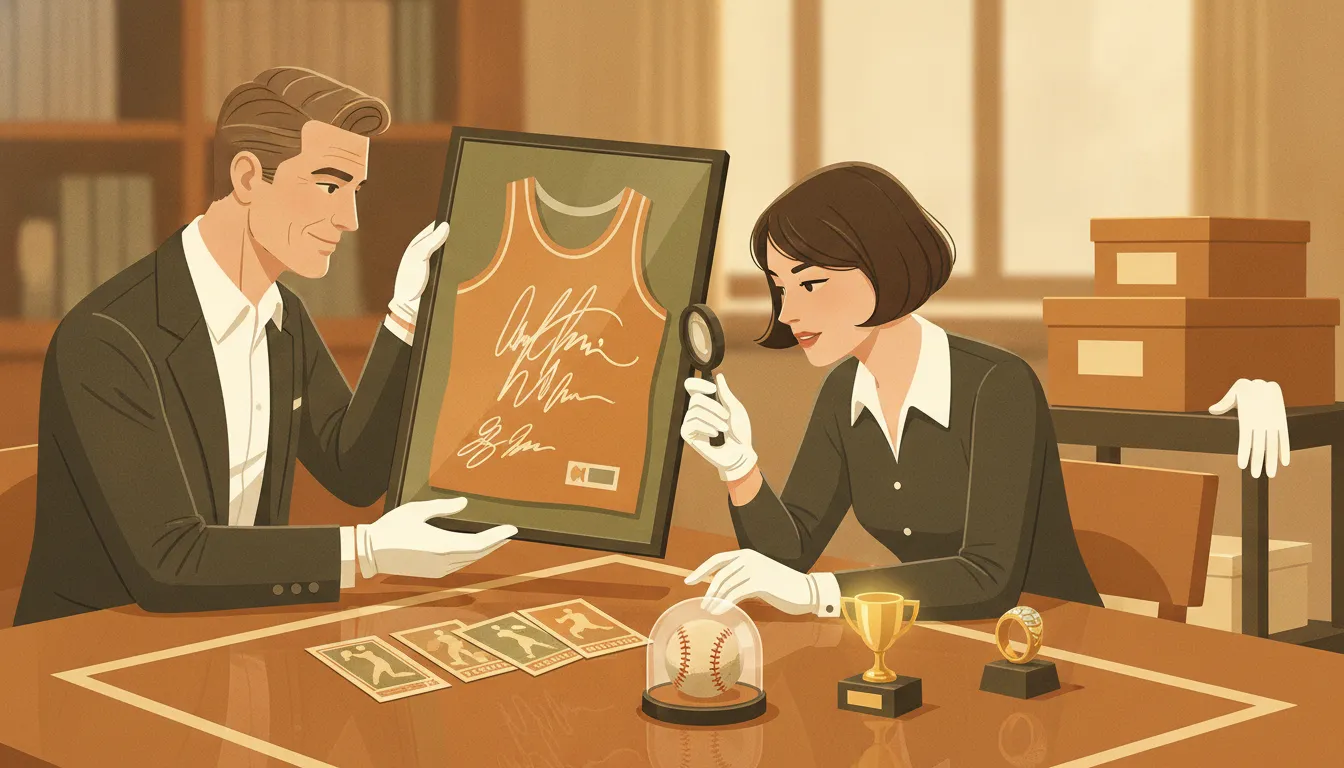
A signed jersey, game-used bat, championship ring, or vintage card can carry real value, but the right selling path starts with evidence rather than enthusiasm. Before listing an item or accepting a cash offer, document what you own. Preserve its condition and gather any records that connect it to a player, team, event, or previous owner.
Start with a professional review of your collection before you choose where to sell sports memorabilia.
To sell sports memorabilia responsibly, begin with an item audit, then verify authenticity, assess fair market value, and compare dealers, online marketplaces, and specialist auction houses based on your priorities. Authentication, provenance, condition, rarity, and historical significance can all affect buyer confidence and the eventual result.
The best outlet depends on whether you value speed, personal support, collector reach, or a professionally managed sale. A careful audit makes those tradeoffs easier to evaluate and gives the next valuation conversation a stronger foundation.
How to Sell Sports Memorabilia: Start With an Item Audit
Before you choose a marketplace, dealer, or auction house, establish exactly what you have. An item audit turns a loose group of jerseys, cards, autographs, or game-used equipment into an organized collection that can be evaluated responsibly. It also helps separate items with strong documentation from items that need additional research.
Build an inventory before you move anything
Assign each piece an inventory number and record a plain-language description. Include the athlete, team, sport, item type, approximate date if known, and any identifying marks. For cards, note the player, year, set, card number, and grade if one has already been issued. For autographs, identify the signed object and the location of the signature. For jerseys, bats, balls, caps, or other equipment, note whether the item is represented as game-used, practice-used, or simply team-related.
Photograph the front, back, sides, labels, signatures, serial numbers, manufacturer marks, and existing display materials. Use even lighting and a neutral background. Do not clean, polish, flatten, or otherwise alter an item simply to make it look better. A well-intentioned repair can change the condition and make later evaluation more difficult.
Record your goals and the item’s history
Your preferred selling route depends partly on what you need from the transaction. A seller managing an estate may prioritize an orderly process and accurate records. A collector may be willing to wait for the right audience. Someone downsizing may want to sell selected pieces while retaining items with personal significance. Write down your timing, whether you are considering the whole collection or only certain pieces, and any decisions that are not negotiable.
Next, gather provenance, which is the history of ownership. Look for purchase receipts, auction invoices, correspondence, old photographs, team or event information, and notes from the person who acquired the item. Keep certificates of authenticity and grading documents with the corresponding piece. Records of authentication, provenance, and purchase history can help an evaluator understand what is being offered and give prospective buyers better information. A document does not replace independent due diligence, but missing paperwork should not be confused with proof that an item is worthless.
Describe condition honestly
Note stains, fading, tears, scratches, dents, missing components, loose stitching, trimming, restoration, repairs, and storage damage. For paper items and cards, inspect corners, edges, surfaces, creases, and discoloration. For signed pieces, record whether the ink is smudged, faded, or affected by the surface. If an item is framed or mounted, document the frame and any visible damage without disassembling it.
Keep the inventory, photographs, and supporting records together in a digital folder and a physical file when appropriate. This preparation makes the next conversation more productive. It allows a specialist to focus on authentication, condition, rarity, and market context rather than first reconstructing the collection. The result is not a guaranteed value, but a clearer and more defensible starting point for deciding how to sell sports memorabilia.
What Makes Sports Memorabilia Valuable?
Two items connected to the same athlete can have very different values. The difference is usually not the name alone. Buyers and appraisers look at the item’s condition, scarcity, story, documentation, and current demand as a complete picture. A signed ball with a clear chain of ownership may be more compelling than a similar-looking item with no supporting records. A game-used jersey tied to a documented event may also warrant closer attention than a mass-produced replica.
Condition and rarity create the starting point
Condition is one of the clearest value factors. Inspect the item for stains, fading, tears, scratches, dents, loose components, repairs, and restoration. For cards, centering, corners, edges, and surface condition matter. For photographs, programs, jerseys, bats, and balls, handling marks and alterations can affect desirability. A condition report should describe imperfections plainly rather than hide them. Guidance from the IRS on valuing collectibles identifies physical condition as a major consideration in fair market value.
Rarity is more than an item being old. It can relate to production numbers, a short-lived team issue, an unusual variation, or how rarely comparable examples appear for sale. Scarcity matters most when collectors also want the object. A common item from a popular player may not compete with a less common piece connected to a significant moment.
Historical significance, authentication, and provenance
Historical significance can strengthen demand when an item is connected to a championship, record, milestone, notable game, or important period in an athlete’s career. The connection should be supportable. Authentication documentation, such as records from a reputable third-party service, can improve buyer confidence and help establish that a signature, material, or game-used claim deserves consideration. It does not remove the need for careful review. The sports memorabilia valuation guidance emphasizes authentication, rarity, condition, and provenance together.
Provenance means the history of ownership. Keep purchase records, correspondence, event details, receipts, photographs, certificates, and any transfer history associated with the item. Licensing and official branding may also help when evaluating commemorative merchandise. The FBI has warned that counterfeiters can exploit fan excitement around major sporting events. A seller should not treat a certificate, logo, or attractive story as proof without examining its source and consistency.
Fair market value is evidence-based, not guaranteed
Fair market value is an estimate of what an informed buyer and seller might agree on under appropriate conditions. The IRS describes comparable sales, physical condition, and professional appraisal opinions as factors in determining fair market value. Comparable sales are especially useful when they involve the same or a closely related item, similar condition, comparable documentation, and a recent market context. An asking price is not the same as a completed sale, and one unusually high or low result may not represent the broader market.
A professional appraisal can document an informed opinion for a defined purpose, such as insurance, tax reporting, estate planning, or sale preparation. It can explain the item’s characteristics, condition, supporting evidence, and valuation method. It cannot guarantee that an auction will reach a particular result, establish authenticity where evidence is inadequate, or predict future demand. Values can change as new information appears and market conditions shift. If you are preparing to sell sports memorabilia, a professional appraisal can help you understand what the available evidence supports before choosing a selling channel.
How Do You Authenticate Sports Memorabilia?
Authentication is a process of assembling evidence, not a quick visual impression. Before you sell sports memorabilia, examine the item itself, trace its history, and evaluate the documentation alongside the object. A credible review can improve buyer confidence, but no certificate, marketplace listing, or inspection should be treated as an absolute guarantee.
- Identify exactly what you have. Record the athlete, team, season, event, item type, and any distinctive details. A signed baseball, game-used jersey, championship program, and mass-produced commemorative item each require different questions. Photograph the front, back, signature, labels, stitching, manufacturer marks, serial numbers, holograms, and areas of wear before handling the item further.
- Study the signature carefully. Look for consistency in letter formation, spacing, slant, ink flow, and the location of the autograph. Compare the signature with documented examples, but do not rely on a single internet image or a visual match alone. Consider how and when the item was signed. A signature with a credible chain of custody is more persuasive than an autograph offered with no history.
- Inspect materials and markings. Examine fabric, leather, wood, paper, ink, tags, stitching, manufacturer labels, and production details. Authentication reviews often include close inspection of signatures, materials, and manufacturing marks. Inconsistencies can raise questions, while matching construction details can support the item narrative. They do not, by themselves, prove that the object was used in a particular game or event.
- Trace the provenance. Provenance means the history of ownership. Gather purchase records, dated photographs, correspondence, event tickets, team or venue records, estate documents, and statements from previous owners. For game-used items, ask what connects the object to the claimed game, player, or season. Jerseys, bats, balls, caps, and autographs can all be counterfeited, and the FBI has warned that counterfeiters may exploit fan excitement around major sporting events. The FBI’s consumer warning explains why documentation and caution matter.
- Review certificates and licensing. Check the issuer, certificate number, matching hologram, item description, date, and whether the certificate can be verified independently. A certificate of authenticity is useful evidence only when its source and connection to the item are clear. For licensed or commemorative merchandise, inspect official branding and licensing details. The FBI specifically notes the risk of unlicensed items being sold as authentic commemorative merchandise.
- Check the source and seller. Research the seller’s identity, business history, return policy, references, and reputation. Ask direct questions about how the item was acquired and request supporting records in writing. Be cautious when a seller creates urgency, avoids specific answers, offers an unusually polished story without evidence, or refuses reasonable inspection. Due diligence is especially important when the item is rare, valuable, or tied to a major championship.
- Seek an appropriately qualified review. For a significant item or collection, use a specialist who can explain the examination, limitations, and supporting evidence. Ask whether the review addresses the signature, physical construction, provenance, and game-used claim separately. Keep every report, receipt, certificate, and communication with the item records. Heritage’s sports memorabilia guidance identifies authentication documentation, rarity, condition, and provenance as important considerations for collectors and sellers.
The result should be a documented level of confidence, with uncertainties disclosed rather than hidden. Clear records help a prospective buyer, dealer, or auction house assess the item fairly and decide what additional review may be appropriate.
Where Is the Best Place to Sell Sports Memorabilia?
The right selling outlet depends on what you value most: speed, personal support, control over the listing, or access to serious collectors. A signed jersey with clear provenance may need a different route than a mixed box of cards. A large inherited collection may require help with sorting, documentation, and transport. There is no single best channel for every seller.
Before choosing, gather the item’s authentication records, ownership history, condition details, and any information about its connection to a player, team, season, or event. Provenance and authentication can affect both buyer confidence and how an item is evaluated. For game-used jerseys, bats, balls, and caps, documentation deserves particular care because the FBI has warned consumers about counterfeit sports memorabilia and unlicensed commemorative items: review its guidance on counterfeit sports memorabilia.
| Selling outlet. | Speed. | Seller effort. | Audience. | Documentation. | Best fit. |
|---|---|---|---|---|---|
| Direct dealer. | Often quick. | Lower after review. | Dealer network. | Dealer sets requirements. | Convenience-focused sellers. |
| General online marketplace. | Listing is quick; sale timing varies. | High. Seller handles photos, copy, questions, shipping, and communication. | Broad online traffic. | Seller presents records, condition, and authenticity evidence. | Common items the owner can describe and ship safely. |
| Specialist auction house. | Planned process and scheduled sale. | Lower when the house manages cataloging, photos, and logistics. | Targeted collector audience. | Condition, provenance, authentication, and lot information support bidding. | Rare items or larger collections. |
| Private collector. | Timing depends on finding a buyer. | Seller manages outreach, verification, and transfer. | Narrow, interest-based audience. | Both parties review authentication, ownership, and condition. | Distinctive items with a trusted buyer. |
Match the outlet to the collection
A dealer may suit someone who needs a simple disposition and values speed over extended marketing. An online marketplace offers control, but that control includes responsibility for accurate descriptions, photographs, shipping, and buyer screening. A private collector can be a strong match for a specialized item, although identifying the right person and establishing trust may take time.
A specialist auction house can be useful when an item benefits from targeted exposure, formal cataloging, or a condition report. It may also make sense for an estate representative handling several items or categories at once. Auction results can help indicate current market activity for comparable memorabilia, but values remain subject to condition, provenance, authentication, and changing demand. To understand the process before consigning, read how auction houses work. The goal is not simply to list an item. It is to place well-documented memorabilia in front of the audience most likely to understand its significance.
How to Prepare Sports Memorabilia for Sale
Good preparation gives a prospective buyer, dealer, or auction house the information needed to assess an item fairly. It also helps protect the memorabilia from avoidable damage while it is being reviewed. Before you decide where to sell sports memorabilia, create a clear record of what you have and how each piece has been stored, used, and acquired.
Handle each item carefully
Use clean, dry hands and support fragile objects from underneath rather than lifting them by a frame, display case, strap, or loose attachment. Keep signed paper, cards, photographs, and jerseys away from moisture, direct sunlight, food, and unnecessary handling. Do not attempt to clean, polish, repair, or remove adhesive from an item before an evaluation. A well-intended alteration can change its condition and make the original state harder to assess.
Keep game-used items, autographed pieces, cards, equipment, and championship memorabilia separated while you inventory them. If an item already has a protective case or display frame, leave it in place unless a specialist asks you to remove it. Photograph or note any existing damage before moving the collection.
Gather provenance and authentication records
Provenance is the history of ownership. Write down where each item came from, when it was acquired, and any relevant connection to a player, team, event, or game. Keep receipts, correspondence, prior appraisals, authentication paperwork, certificates of authenticity, grading records, and photographs together with the matching item. Collectors are advised to maintain records of authentication, provenance, and purchase history for significant pieces.
Do not assume that a certificate alone settles every question about an item. Documentation is most useful when it can be matched clearly to the object, signature, serial number, or other identifying feature. For game-used memorabilia, preserve every detail that may help establish how the piece was obtained and why it is associated with a particular event or player.
Photograph and describe condition honestly
Take well-lit photographs from several angles, including close views of signatures, labels, markings, serial numbers, seals, cases, and certificates. Include images of flaws rather than hiding them. Note fading, stains, tears, scratches, dents, missing parts, repairs, restoration, loose stitching, and frame or case damage. A condition report informs potential buyers about imperfections or modifications, so complete disclosure builds trust and reduces confusion later.
Group items without losing their identity
Keep related pieces together when they share a documented history, such as a signed ball with its certificate or a team collection assembled by one owner. At the same time, assign every item or group a simple inventory number. Ask a prospective buyer or auction house how they prefer files labeled, whether items should be offered individually or as a collection. How authentication will be reviewed, and what condition information they need before making recommendations. Also ask about handling, storage, photography, transportation, timeline, fees, and the terms of any proposed sale or consignment. Clear questions at the beginning make it easier to compare selling options and choose the process that fits the collection.
When Should You Use an Auction House for a Sports Collection?
An auction house can be a strong fit when a sports collection is rare, mixed, difficult to value, or too large to manage item by item. For a broader explanation of how auction consignment works, review the selling process before selecting a route. This is especially true when the collection includes signed pieces, game-used equipment, cards, championship memorabilia, and related documents that appeal to different types of collectors. Rather than treating every item as a simple resale listing, a specialist can assess how authentication. Provenance, condition, rarity, and historical significance affect the way each piece should be presented.
When specialist marketing can make a difference
Rare items often need to reach the right audience, not just the largest general marketplace. Auction houses can use specialist descriptions, targeted marketing, professional photography, and online auction exposure to put a collection in front of collectors who understand its subject matter. A well-organized catalog gives potential buyers useful context, including the athlete or team associated with an item, its documented history, condition, and any available authentication.
This matters when a collection contains several categories of memorabilia. A signed baseball may attract a different buyer from a game-used jersey. While a group of championship programs or trading cards may be more useful when cataloged as a coherent lot. A specialist review can help determine whether pieces should be offered individually, grouped by player or team, or presented as part of a larger collection. The goal is informed positioning, not a promise of a particular result.
Why documentation and professional review matter
Transparent terms are essential before you consign. Ask how the auction house handles authentication review, cataloging, photography, condition reports, marketing, commissions, buyer terms, and settlement. A professional appraisal can also help establish a defensible opinion of value. Particularly when an estate needs records for asset liquidation or when several heirs need a clear explanation of what the collection contains. Lion & Unicorn describes its appraisal work as following USPAP-compliant standards, which provides a recognized framework for professional valuation.
Good records strengthen buyer confidence. Gather certificates of authenticity, purchase information, correspondence, photographs, and any evidence showing where an item came from. For game-used pieces, details about when and how the item was obtained can be particularly important. The auction house should explain what it can verify, what remains uncertain, and how those facts will appear in the catalog. Learn more about auction houses for sports memorabilia before choosing a selling path.
When collection logistics are the main concern
An auction house may also be appropriate when an estate executor is handling a large or mixed collection from a home, storage unit, or inherited property. Sorting, photographing, packing, and transporting valuable objects can be time-consuming and risky, especially when the seller is managing other estate responsibilities. A full-service firm may be able to coordinate pickup and transportation, review the collection on site, and organize items for cataloging and sale. Confirm the service area, handling process, insurance responsibilities, and timing in writing.
The seller journey generally begins with an inquiry and collection review. Next comes a discussion of authentication, appraisal, consignment terms, logistics, and the proposed sale format. If the arrangement is suitable, the auction house prepares the items for photography and cataloging. Markets the sale to its collector audience, conducts the auction, and provides the agreed reporting and settlement information afterward. For a broader overview of preparing and selling a collection, see how to sell antiques and collectibles.
Discuss your sports memorabilia collection with a specialist before choosing a selling outlet, appraisal path, or auction format.
Frequently Asked Questions
How do I sell my sports memorabilia?
Start by documenting each item, including its history, condition, signatures, markings, and any existing authentication paperwork. Then seek a professional valuation and compare selling channels. A dealer may prioritize speed and convenience, while an auction house or specialist marketplace can provide access to collectors who understand the item’s significance.
Do I need to authenticate sports memorabilia before selling?
Authentication is strongly recommended, especially for autographs, championship items, and game-used jerseys, bats, balls, or caps. A qualified review may examine the signature, materials, manufacturing marks, and supporting provenance. Keep certificates and ownership records together, but treat any documentation as part of a broader due-diligence process.
How can I tell if my sports memorabilia is valuable?
Value usually depends on authenticity, condition, rarity, historical importance, provenance, and current collector demand. Comparable sales and a professional appraisal can help establish fair market value. Photographs alone may not reveal restoration, damage, or questions about authenticity, so a specialist should review important or unusual pieces.
Is it better to sell sports memorabilia to a dealer or at auction?
The right choice depends on your priorities and the collection. A dealer can offer a direct transaction and a simpler process, but may price for resale. An auction house can be a better fit for rare items, larger collections, or estate liquidation when specialist marketing, cataloging, photography, and collector reach matter. Ask about the valuation method, documentation, handling, and seller terms before choosing.
Ready to Discuss Your Sports Memorabilia?
Authentication, condition, provenance, and the right selling outlet can all affect how a collection is presented. A professional review may help you understand practical next steps before choosing between consignment, auction, or another option.
Request a professional consultation or appraisal for your sports memorabilia and collectibles through Lion & Unicorn’s seller inquiry page.
Free Consultation
Ready to Sell Your Estate or Collection?
Lion & Unicorn's expert team offers free appraisals and nationwide pickup service.
Over 30 years of experience — Florida's most trusted auction house.