


Sell Football Memorabilia: A Seller’s Guide
Free Consultation
Ready to Sell Your Estate or Collection?
Lion & Unicorn's expert team offers free appraisals and nationwide pickup service.
Over 30 years of experience — Florida's most trusted auction house.
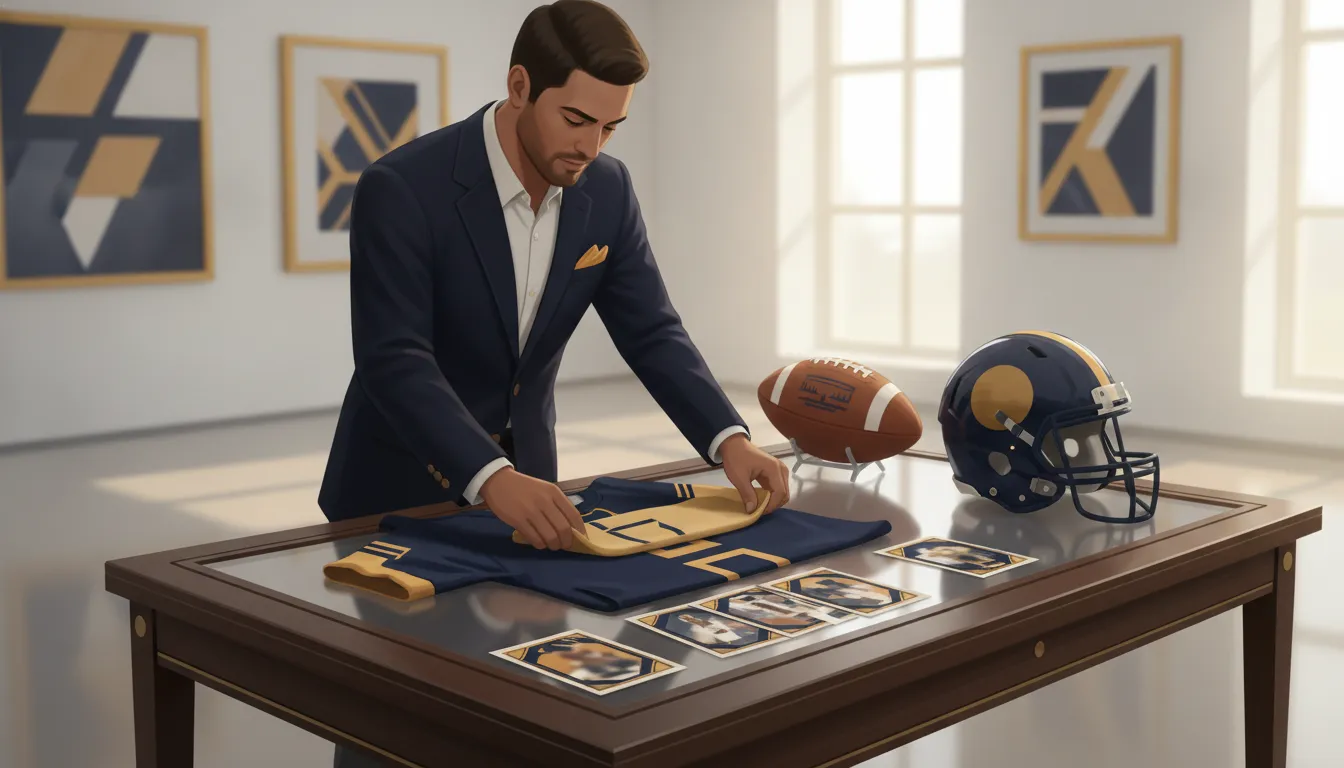
A football collection can hold far more than objects. If you plan to sell football memorabilia, a signed jersey may preserve a game-day memory, while a card, helmet, football, or championship item may carry a documented history that affects how buyers understand it. The first step is not choosing a sales channel. It is organizing the story, condition, and evidence behind each piece.
Request a professional review of your football collection.
To sell football memorabilia responsibly, begin with a simple inventory that records what you own, where each item came from, its condition, and any authentication or game-used documentation. Keep original packaging, certificates, purchase records, photographs, and correspondence together. Then compare the collection with recent market activity and seek a professional review before setting expectations. An estimate can guide a selling decision, but it is not a guaranteed result or a substitute for a formal appraisal when insurance or estate needs are involved.
This approach works across individual jerseys and trading cards, signed photographs and autographs, game-used equipment, and championship material. It also helps estate representatives and collectors separate sentimental importance from evidence that may support authenticity, condition, or historical significance. Careful preparation makes the next decision clearer, whether that means consignment, auction, direct sale, or holding an item for further research.
Before anything is listed or transported, protect the details that give each item meaning. A football-specific review starts by preserving provenance and building a reliable collection file.
How to Sell Football Memorabilia Without Losing Its Story
Football memorabilia rarely arrives with a complete, neatly labeled history. A jersey may have been passed through several family members. An autographed football may be tied to a particular season, game, or player memory. A card collection may include years of careful buying, trading, and preservation. When you sell football memorabilia, protecting that story is part of preparing the collection, not a sentimental extra.
Start by separating the items without discarding the information that came with them. Keep jerseys, helmets, footballs, cards, photographs, programs, and championship material together with any letters, receipts, certificates, photographs, or notes that explain where they came from. Provenance means the documented history of ownership. The U.S. Postal Inspection Service describes provenance as an important factor in establishing an item’s authenticity and value. Particularly in a market where an object’s history may be as important as its appearance. Learn more about provenance in sports memorabilia.
Build a collection file before you list anything
Create a simple record for each item or group. Include the acquisition date, who supplied or sold it, the price paid if known, prior owners, maintenance or repairs, and every authentication or grading record. Add the player’s name, team, season, and any known game or event connection. For cards, record set details and serial information. For a signed item, note when and where the signature was obtained, if that information is available. These details help a specialist understand the collection and help prevent an important connection from being lost during sorting.
Do not treat missing paperwork as proof that an item is worthless. Instead, label what is documented, what is remembered, and what still needs verification. That distinction makes the review more transparent. It also prevents an assumption about a jersey, helmet, or football from becoming an unsupported description in a future listing.
Give autographs and game-used claims extra care
Autographs deserve particular caution. Forged autographs are a common problem in the sports memorabilia market, according to the U.S. Postal Museum, so an unsigned memory or family story should not be presented as authentication. Preserve certificates and paperwork, but also review the reputation of the issuing organization or authenticator. A certificate is supporting evidence, not a substitute for careful evaluation. Read about forged sports autographs.
The same principle applies to claims that equipment was used in a game. Record the source of the claim and keep related photographs, team documentation, or correspondence with the item. Be precise when the history is uncertain. A clear description of what is known gives prospective buyers a more reliable basis for making decisions.
For the general auction process, review Lion & Unicorn’s broader sports memorabilia auction guide. That resource covers the wider category. This football-specific approach adds the player, team, season, event, and ownership context that can distinguish one football item from another and keep its story attached throughout the sale.
What Makes Jerseys, Cards, Autographs, and Game-Used Gear Valuable?
Football memorabilia does not have one universal value formula. Collectors look at the item itself, the story behind it, its condition, and the evidence that supports its authenticity. The same factors can also determine whether an item is ready for sale or needs further documentation before it is presented to buyers.
Jerseys: condition and game use
For a game-worn jersey, start with the integrity of the fabric. Stains, pulling, fading, repairs, and damage to sewn or applied logos can affect how collectors assess the piece. Examine the nameplate, numbers, patches, tagging, and seams without altering them. A jersey with credible evidence that it was worn in a particular game, season, or milestone has a stronger story than a similar retail jersey. That story should be supported by records or specialist review.
Keep any original packaging, tags, certificates, photographs, or correspondence with the jersey. Original documentation helps establish completeness and gives a future buyer more context. Lion & Unicorn’s guide to selling collectibles emphasizes that fabric and logo integrity are important considerations for game-worn apparel.
Cards: grade, scarcity, and identifying details
Condition is central to sports-card collecting. Professional grading can provide an objective assessment of a card’s condition, allowing buyers to evaluate it against a consistent standard. Centering, corners, edges, surface condition, print quality, and the integrity of the holder or label all deserve attention. Do not assume that a card’s age or player name alone determines its market position.
Modern cards may also have attributes that appeal to specialized collectors. A low serial number, a scarce insert, or a jersey-matched serial number can make a card more distinctive. Preserve the original packaging and all accompanying documentation, since serious collectors often value a complete presentation.
Autographs: the signature needs a credible trail
An autograph’s appeal depends on the player, item, condition, and circumstances of signing. Its documentation is equally important. Forged autographs are a known problem in the sports memorabilia market, so an item without a credible authentication history requires caution. The Postal Museum identifies forged autographs as a common concern, which is why reputable third-party authentication matters: review its guidance on forged autographs.
Game-used, championship, and historic items
Helmets, footballs, pads, photographs, and other game-used equipment should be accompanied by team documentation or records from a trusted professional authenticator whenever available. Photo-matching may also help connect an item to a documented game when clear, relevant images exist. Championship items and pieces tied to historical milestones can be especially desirable because they connect the object to a memorable event. That significance supports interest, not a guaranteed outcome.
Before you sell football memorabilia, organize acquisition details, authentication records, original packaging, and maintenance history. A transparent record lets an auction specialist evaluate the item on its evidence and condition rather than on assumptions.
How Should You Authenticate Football Memorabilia?
Authentication should be treated as a process, not a single sticker or signature. Counterfeit sports memorabilia is a documented concern, and forged autographs are especially common in the market. A careful review gives buyers more confidence and helps you present a stronger, more transparent case when you sell football memorabilia.
- Start with the item’s complete history. Write down who owned it, when and where it was acquired, how it was stored, and whether it has changed hands. Provenance, meaning the documented history of ownership, can help establish authenticity and value. Include receipts, correspondence, event details, photographs, and any prior appraisal or authentication paperwork. The Smithsonian’s National Postal Museum explains why provenance matters in its overview of sports memorabilia scams and schemes.
- Separate the item type from the evidence it needs. An autograph requires scrutiny of the signature and the authentication behind it. A game-used jersey, helmet, football, or pair of cleats may need team documentation, a trusted third-party certificate, or other evidence connecting it to a particular player or event. A certificate of authenticity can be useful, but its value depends on who issued it, what was examined, and whether the certificate can be matched to the item.
- Use reputable authentication and grading firms. Investigate the firm’s reputation within the collecting community before paying for an opinion. Look for an established track record, clear submission procedures, and documentation that identifies the item precisely. For trading cards, a respected grading service can provide an objective condition assessment and a tamper-evident holder. For autographs, do not rely on a generic certificate or an unfamiliar seller’s assurance. The National Postal Museum specifically identifies forged autographs as a recurring market problem.
- Consider photo-matching for game-used equipment. When an item is claimed to have been worn or used in a particular game, compare its distinctive characteristics with high-resolution photographs from that event. Look for marks, repairs, loose threads, placement details, wear patterns, and other features that remain consistent across images. Photo-matching can support an identification when relevant, but it should be presented as evidence for review rather than an automatic guarantee.
- Preserve the evidence after authentication. Keep the original certificate, submission record, receipt, photographs, and correspondence together with the item. Record any flaws, repairs, fading, or alterations, and avoid separating paperwork from the specific jersey, card, autograph, or equipment it describes. Store the item safely and use insured, professional shipping when it must be transported. A clear evidence file lets an auction specialist or prospective buyer understand both what is known and what remains uncertain.
Auction, Direct Sale, or Dealer: Which Route Fits?
The right way to sell football memorabilia depends on what you value most: audience reach, control, convenience, or specialist guidance. A single signed football may be manageable through a direct listing, while a collection of jerseys, cards, helmets, and game-used equipment may benefit from a more structured process. Compare the practical differences before you commit.
| Route | Best suited to | Seller responsibilities | Key tradeoff |
|---|---|---|---|
| Auction house | Collections or items that need a professional audience. | Provide item history, condition details, and agreed terms. | More guidance and reach, but fees and sale terms must be reviewed. |
| Direct marketplace | Sellers who want control over individual listings. | Create listings, answer questions, process payment, pack, ship, and handle disputes. | Greater control, but the seller manages the entire transaction. |
| Individual dealer | Sellers prioritizing a straightforward conversation or quick evaluation. | Share accurate details and assess the offer carefully. | Convenience may come with less exposure to the wider specialist market. |
When an auction house may make sense
Auction houses can provide a professional platform and access to a broader audience of serious buyers. That reach can be useful when an item has documented provenance, strong team or player relevance, or appeal to collectors beyond your local area. It can also simplify the work involved in photographing, cataloging, marketing, and coordinating logistics for multiple lots. For high-value liquidation, a specialized professional may offer more security and expertise than approaching individual dealers one at a time.
Ask how the house will present football-specific items, including game-used jerseys, signed helmets, cards, and championship material. The quality of the description and supporting documentation helps buyers understand what they are considering. It is also reasonable to ask whether a reserve is appropriate. A reserve is the minimum amount you are willing to accept, if the auction agreement includes one.
What to confirm before signing
Do not judge an auction route by the headline estimate alone. Request a clear explanation of the buyer’s premium, seller commissions, reserve terms, and any marketing or photography costs. The buyer’s premium is charged to the buyer, but it can affect bidding behavior and the final amount involved in the transaction. Fee structures and marketing expenses should be written into the agreement so you can understand potential net proceeds before committing.
Direct selling gives you more control over timing, asking price, and communication. It also means managing every operational detail yourself, from accurate listing photographs to payment, shipping, insurance, and post-sale disputes. If you are researching selling collectible items, use that comparison to clarify whether the convenience of control outweighs the time and risk of self-management.
For a mixed or high-value football collection, compare the service, documentation standards, audience, and total costs of each route. A careful review is more useful than assuming one channel is always best.
How to Prepare Football Memorabilia for a Professional Review
A thoughtful submission helps an appraiser or auction specialist understand what you have before handling begins. It also protects the item’s history. Whether the collection includes signed jerseys, trading cards, helmets, footballs, photographs, or championship material, prepare the evidence alongside the objects. The goal is not to make an item look newer than it is. The goal is to present its identity, condition, and chain of ownership clearly.
- Photograph each item from several angles. Use clear, high-definition images in good light. Capture the front, back, sides, signatures, labels, serial numbers, holograms, stitching, case or box, and any damage. Close-ups of stains, fading, pulling, creases, repairs, or chips are useful too. Multiple views help a reviewer assess condition accurately and reduce uncertainty before an in-person inspection. High-quality images are also essential if the item may later be cataloged for online bidders. Learn about Lion & Unicorn’s auction-house services emphasizes clear images from all sides for online sales.
- Assemble the collection records. Create a simple file for each item or group. Include when and where you acquired it, what you paid if known, prior owners, maintenance, exhibition or team documentation, certificates, grading reports, receipts, and correspondence. Do not discard original boxes, tags, letters, or certificates. Provenance means the documented history of ownership, and a well-organized collection file makes review and a later sale more transparent. Write down what is known separately from what is assumed.
- Write honest condition notes. Describe the item as it is, including repairs, fading, stains, odor, loose threads, surface marks, missing components, or altered signatures. Note whether a jersey is believed to be game-used, whether a card is graded, and whether an autograph has third-party authentication. Avoid presenting an informal belief as a verified fact. A candid condition report gives the specialist a better starting point and helps prevent misunderstandings later.
- Clean conservatively. Do not scrub, bleach, polish, wash, or attempt a home repair simply to improve photographs. Aggressive cleaning can alter an item’s original integrity and remove useful evidence. If cleaning appears appropriate, ask about professional treatment first. For textiles, paper, autographs, cards, and game-used equipment, preservation is usually more important than cosmetic improvement.
- Research the current market, not just your purchase history. Review recent auction results for genuinely comparable items, considering player, team, season, type, condition, authentication, and provenance. Your original retail price is historical information, not a current valuation. Bring the results as context, but allow the specialist to distinguish a market estimate from a formal appraisal. A professional appraisal is a separate, more formal service that may be needed for insurance or estate purposes. Explore professional appraisal options when that documentation is the actual goal.
- Pack and insure the submission appropriately. Keep cards flat and protected, support helmets and equipment so they cannot shift, and use archival protection where suitable. Photograph the packed contents before shipment. For valuable memorabilia, use a reputable carrier, tracking, and appropriate insurance. Professional handling of shipping and insurance helps reduce the risk of damage or loss during transfer to an auction house or buyer.
Bring the physical items, image files, records, and questions together before requesting a review. That preparation gives the specialist a fuller picture without promising a value before the evidence and condition have been assessed.
What Happens After You Submit a Football Collection?
Submitting a football collection should begin a conversation, not an automatic commitment to sell. The first stage is a review of what you have, how the items were acquired, their condition, and any supporting documentation. That context helps distinguish a signed jersey from a game-used jersey and a modern card from a historically important issue. It can also show whether family memorabilia is better handled as individual lots.
Review and valuation
Lion & Unicorn brings more than 30 years of experience to the review process, with roots in Florida and service available to sellers nationwide. The team provides expert valuation, estate liquidation, and consignment services. Where a formal valuation is appropriate, USPAP-compliant valuations can support a more structured assessment than an informal opinion. The review is still an evaluation of the items and available evidence, not a promise of a particular price, sale date, or result.
For an estate executor or family representative, this stage can also help organize a mixed collection. Jerseys, footballs, helmets, cards, autographs, photographs, and championship material may not all require the same presentation or selling approach. A clear review creates an opportunity to discuss which items appear suitable for consignment and what additional records or authentication paperwork would make the cataloging process more complete.
From accepted consignment to the auction process
If consignment is the right fit, Lion & Unicorn can provide the practical services needed to move items toward market. Its full-service capabilities include professional photography, cataloging, marketing, pickup, packing, and transport. These steps are designed to document the collection accurately, present condition and provenance clearly, and coordinate logistics for sellers who are local to Florida as well as those located elsewhere in the country.
Before proceeding, sellers should ask how the collection will be described, what terms apply, and which services are included in the agreement. Preserve every certificate, receipt, team letter, appraisal, photograph, and ownership record you have. Those materials give specialists more context and help create a transparent record for prospective buyers. If the collection is part of an estate, keeping the items and paperwork together can also make decisions easier for everyone involved.
Request a professional review or discuss consignment for your football collection
Frequently Asked Questions
What is the best place to sell football memorabilia?
The best route depends on the collection, your desired level of control, and the work you can manage. A specialized auction house can provide valuation, cataloging, photography, marketing, and access to serious buyers. A direct marketplace gives you more control, but you remain responsible for listing details, payment, shipping, and disputes. Before choosing, compare commissions, marketing costs, reserve terms, and the handling of insurance.
Is my football memorabilia worth anything?
Potential value depends on factors such as player or team significance, condition, rarity, championship or historical connection, documentation, and current demand. A jersey’s fabric integrity and intact logos matter, while cards may benefit from an objective grading assessment. Original packaging and authentication records can also improve completeness. Recent comparable auction results are more useful than the original retail price, and no final value should be assumed before review.
How can I authenticate signed football gear?
Start by gathering every certificate, receipt, team record, photograph, and ownership detail connected to the item. Autographs are especially vulnerable to forgery, and counterfeit sports memorabilia is a documented market concern. Use a widely respected third-party authentication or grading firm, and preserve its paperwork with the item. For game-used gear, photo-matching may provide additional support when suitable game images exist.
Are football cards easier to sell than jerseys?
Not necessarily. Cards can be easier to standardize when they have recognized grading and clear identifying details, but demand still depends on the player, issue, rarity, and condition. Jerseys require closer review of fabric, logos, alterations, wear, and game-use evidence. A well-documented jersey, autograph, card, or championship item may attract interest when its story and condition are clearly established.
Should I auction my collection or sell it directly?
An auction may suit distinctive or higher-value material that benefits from broader exposure and competitive bidding. Direct sale may suit sellers who prefer to set terms and manage each transaction themselves. Neither route guarantees a particular result. Ask for a written explanation of fees, buyer’s premium, reserve, marketing, shipping, insurance, and expected responsibilities before committing.
Ready to Discuss Your Football Memorabilia?
A professional review can help you organize what you have, understand which records matter, and choose a selling path that fits your collection. It also gives you a chance to ask practical questions about consignment before making a decision. Keep your authentication papers, provenance notes, and clear item photos nearby so the conversation can be focused and useful.
Contact us to request a professional review or discuss consignment
Free Consultation
Ready to Sell Your Estate or Collection?
Lion & Unicorn's expert team offers free appraisals and nationwide pickup service.
Over 30 years of experience — Florida's most trusted auction house.