

Antique Silver Hallmarks Identification: A Complete Guide
Free Consultation
Ready to Sell Your Estate or Collection?
Lion & Unicorn's expert team offers free appraisals and nationwide pickup service.
Over 30 years of experience — Florida's most trusted auction house.
Finding an old silver bowl or teapot in an estate can spark immediate curiosity. Knowing if your piece is precious sterling silver or simple silver plate is key to understanding its true value.
Antique silver hallmarks identification is the systematic process of reading stamped symbols on silver items to verify their metal purity, origin, and age. According to the UNT Libraries, hallmarks provide essential information about an antique silver object, including its fineness or purity, the place of origin or assay office, and the date of manufacture. These small stamps act as a historical record that prevents fraud and certifies quality. By learning to decode these marks. Collectors and estate executors can quickly separate solid sterling silver from common plated items and understand the true background of their family heirlooms.
Schedule your free silver appraisal today and let the certified team at Lion and Unicorn identify your hallmarks with precision.
Uncovering the history of your family heirlooms or estate finds starts with learning the basics of silver stamps. Before you can decipher the specific makers and dates on your items, you must answer one fundamental question: What Are Antique Silver Hallmarks?
Antique Silver Hallmarks Identification: What Are Antique Silver Hallmarks?
Antique silver hallmarks are official symbols stamped into silver objects to certify their metal purity, origin, and date of manufacture. Originating as a consumer protection system in 14th-century England. These marks allow collectors to verify that a piece is genuine sterling silver rather than a base metal replica or counterfeit.
Antique silver hallmarks are small official stamps struck onto precious metal items to verify their authenticity and standard. These markings offer deep insight into the history of a piece, making antique silver hallmarks identification a key step in evaluating its background and worth. A proper hallmark tells a complete story, showing the metal content, the place of testing, and the maker of the piece.
A Long History of Consumer Protection
The practice of stamping silver began as a way to protect buyers from fraud. In Britain, this early consumer protection system dates back to the year 1300 under King Edward I. To ensure honesty in the trade, the state required all silver items to meet a strict standard of purity. By 1478, a formal act set up the first assay office in London. Introducing a structured process to test and mark silver items before they could be sold to the public.
The Five Pieces of Information
When you look closely at a genuine silver piece, you will usually find a row of small symbols. These marks work together to provide a full record of the item. According to the University of North Texas Libraries, hallmarks certify the purity, origin, and date of manufacture of a silver object. A standard set of British marks includes the maker mark, the purity standard mark. The town or assay office symbol, a date letter, and sometimes a sovereign duty mark.
Decoding the Date and Maker Symbols
Each symbol in the row has a specific purpose. The maker mark shows who created the piece, usually using the initials of the silversmith. The purity mark confirms the metal standard, such as a lion passant for sterling silver. To find the exact year of production, collectors use the date letter. As noted by the Smithsonian Institution Libraries, a date letter is a hallmark used in many assay systems to identify the specific year an object was tested and marked.
What Are the 5 Standard Silver Marks on Antique Silver?
British sterling silver carries five standard hallmark symbols stamped in a row: the standard or purity mark. The assay office mark, the date letter, the maker’s mark, and the duty mark. Each conveys a different piece of information about the silver item’s quality, origin, and age.
How do you verify if an old silver item is real sterling silver or just a plated metal? Understanding British and international marking systems is the most reliable way to perform antique silver hallmarks identification. The traditional English system uses five distinct marks stamped into the metal to certify its quality, origin, and history.
- Standard or Purity Mark. The standard mark shows the purity of the metal. By law, sterling silver must contain exactly 92.5 percent pure silver mixed with 7.5 percent other metals. Look for the traditional lion passant mark or the decimal .925 mark, as detailed by the Library of Congress.
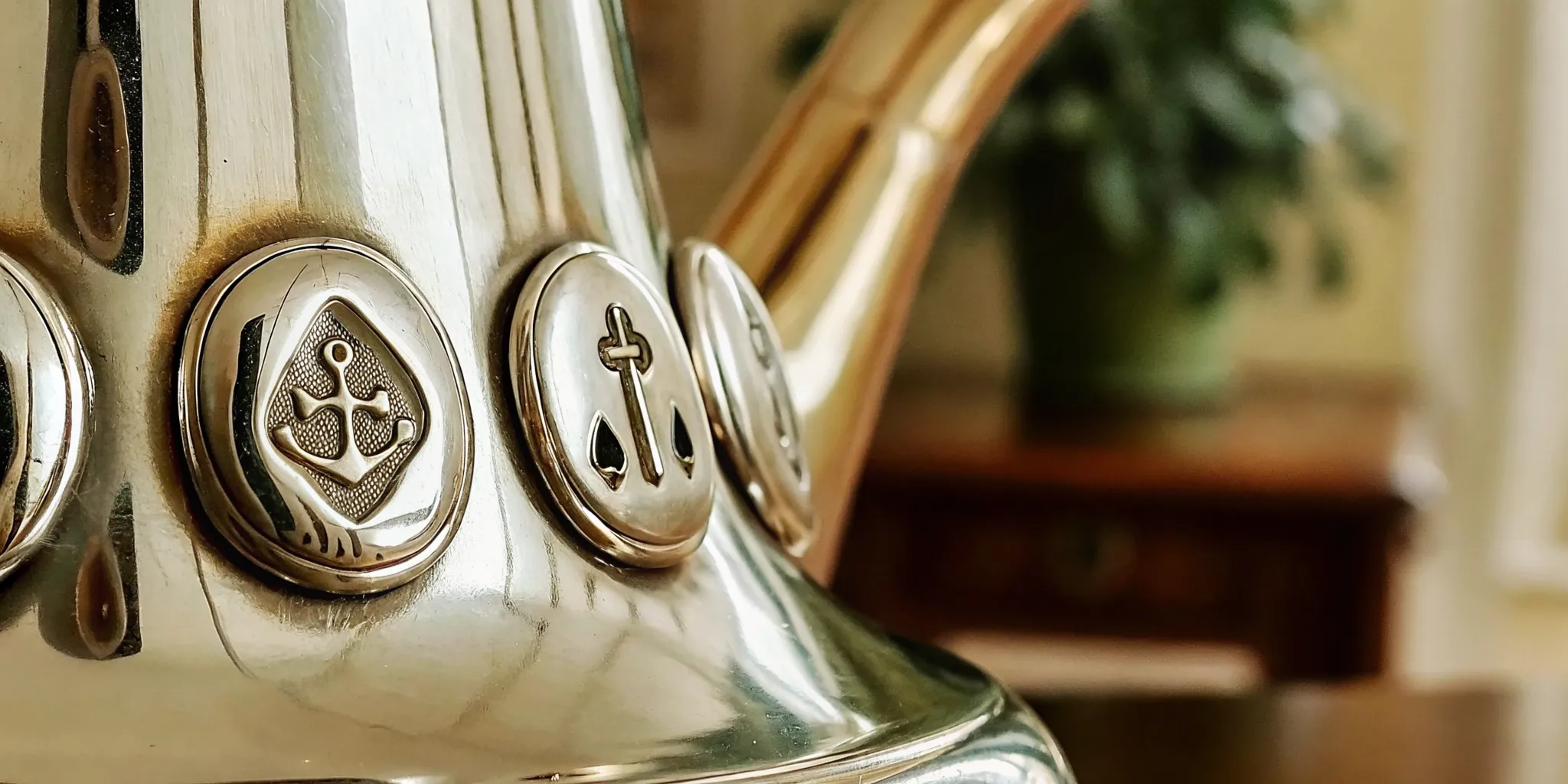
- Assay Office Mark. This mark indicates the official location where the silver was tested for purity. According to the Smithsonian Libraries, the most famous mark is the leopard’s head for London. Other symbols include an anchor for Birmingham or a crown for Sheffield.
- Date Letter Mark. The date letter indicates the exact year the assay office tested the item. This mark uses a single letter inside a shield or frame. The letter style changes each year, cycling through different fonts and shield shapes every twenty or twenty-five years.
- Maker’s Mark. The maker’s mark identifies the silversmith or company. It usually consists of initials stamped inside a small shield or geometric shape.
- Duty Mark. This special stamp was used on British silver made between 1784 and 1890. It shows the profile head of the reigning king or queen to prove the maker paid the required tax.
How Do You Read British Silver Hallmarks?
British silver hallmarks are read in a set row of four to five stamped symbols. Each symbol conveys a specific detail: the maker’s initials, the standard of purity, the assay office location, and the date letter that pinpoints the year of manufacture.
The system of British silver hallmarking is one of the oldest consumer protection structures in human history. The system dates back to the year 1300 under King Edward the First. In 1478, the term hallmark was introduced for silver tested in London. British hallmarks provide essential information about an antique silver object, including its fineness, the place of origin, and the date of manufacture.
Town and Assay Office Marks
An assay office mark signifies the specific location where the metal was tested. The most common British assay mark is the leopard’s head for London. In 1300, the first standard mark was an uncrowned leopard’s head. By 1478, a crown was added to prevent fraud. The crown was removed in 1821, which helps experts date older English silver. Birmingham silver features an anchor mark, while Sheffield displays a crown. Edinburgh uses a castle with three towers, and Dublin displays a crowned harp. Checking these symbols is a great way to start identifying silver hallmarks.
Decoding the Date Letter Cycles
A date letter identifies the specific year an object was hallmarked. This letter code changed every year in a sequence of twenty to twenty-five years. Each cycle used a distinct font, case style, and shield shape. To accurately identify the year, compare the letter style and the outer shield shape to official charts. The Jubilee mark was used during 1934 and 1935 for the Silver Jubilee of King George V.
The 1973 Hallmarking Act and Modern Standards
As the silver trade grew, the law had to adapt. The British government consolidated these rules under the 1973 Hallmarking Act. This law made hallmarking compulsory for any precious metal item over one gram. The Act was later amended to include platinum in 1975 and palladium in 2009. Knowing these rules is an essential part of antique silver hallmarks identification.
Ready to identify your silver hallmarks with expert accuracy? Contact Lion and Unicorn for a professional appraisal of your antique silver items.
How Can You Tell Sterling Silver from Silver Plate?
Sterling silver is 92.5 percent pure silver with official assay marks like .925 or a lion passant. While silver plate is a thin silver layer over a base metal with no purity marks. Plated items often show copper-colored wear and may be magnetic, whereas sterling silver stays silver throughout.
To tell sterling silver from silver plate, you must know what to look for. Sterling silver has high purity, while silver plate has only a thin coat of silver over a base metal like copper or nickel. Finding these differences will help you know the real value of your piece when selling antique silverware.
Check the Hallmarks and Maker Codes
Look closely at the stamp on the item. According to the Library of Congress, silver plate items lack official assay marks. If you see stamps like EPNS or EP, the item is silver plate. Sterling silver will have clear purity stamps such as .925, STERLING, or a lion passant.
Run Simple Tests at Home
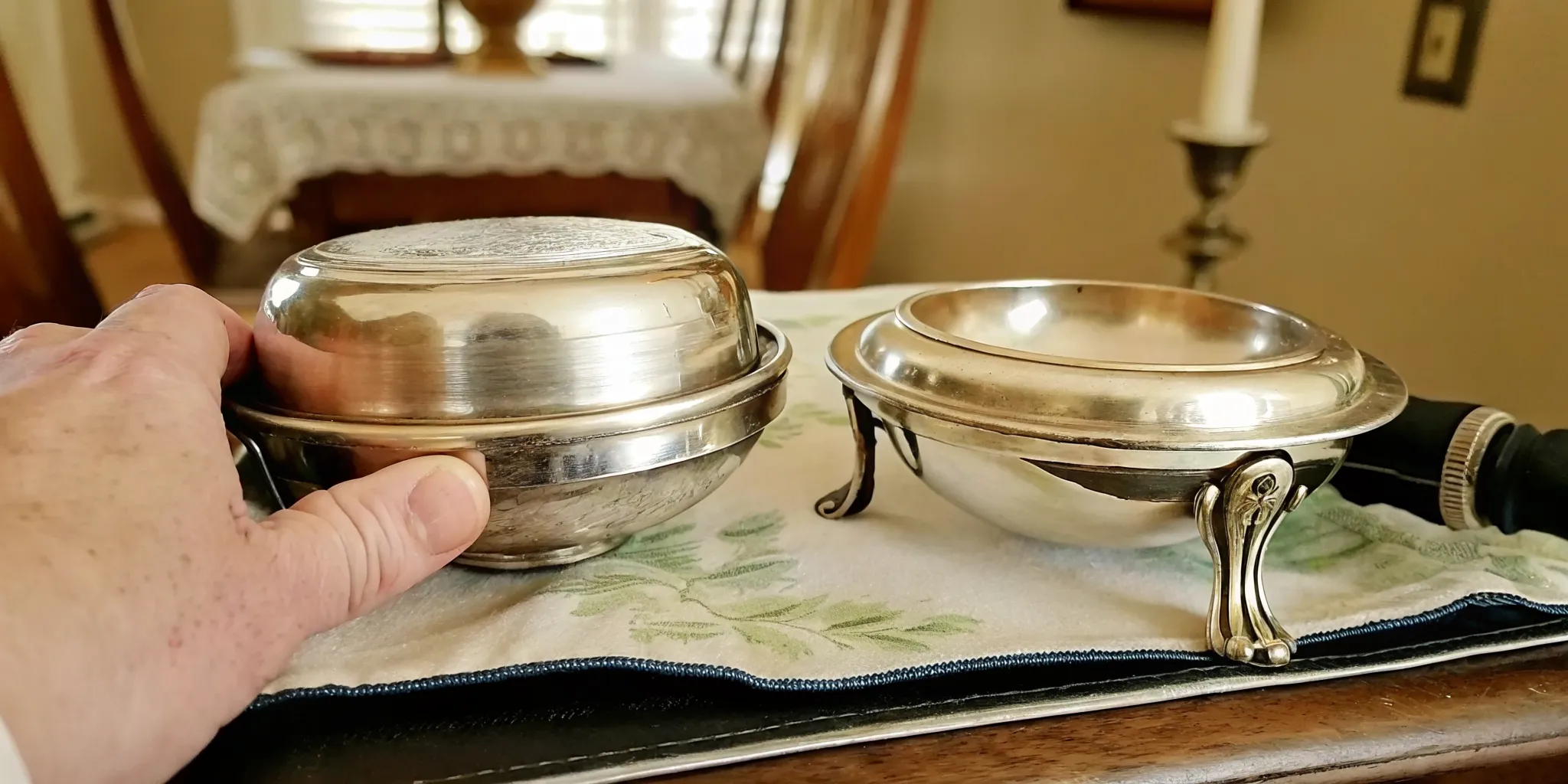
Use a strong magnet on your item. Fine sterling silver is not magnetic. If your piece sticks to the magnet, it has a core of base metal, which means it is silver plate. Look closely at the edges where the piece gets a lot of wear. On older silver plate, the thin silver coat can wear off over time. If you see a reddish color like copper showing through, the item is silver plate.
| Feature | Sterling Silver | Silver Plate |
|---|---|---|
| Metal Purity | 92.5 percent pure silver | Thin silver coat over base metal |
| Official Stamps | Stamps like .925 or STERLING | Stamps like EPNS or EP |
| Assay Marks | Yes, shows official testing | No, only has maker codes |
| Magnetic Pull | None, pure silver is not magnetic | May stick if base metal is magnetic |
| Wear Over Time | Stays silver throughout | Base metal can show through |
How Do You Identify Rare Silver Marks?
Identifying rare silver marks requires a six-step process: examine under magnification, identify the purity mark first, cross-reference the assay office mark. Look up the maker’s mark online, determine the date from the date letter, and consult a certified appraiser like Lion and Unicorn for unusual marks.
Identifying rare silver marks requires a methodical approach. By following a clear step-by-step process, you can determine if your item is a valuable antique or a common replica. For official valuations of your estate items, you can get an official appraisal from the certified team of experts at Lion and Unicorn.
- Examine with a Magnifying Glass. Use a ten-times magnification loupe under bright light to find every stamp on the piece. Scan the undersides of bowls, the backs of spoon handles, or near the rims of cups.
- Identify the Purity Mark First. Look for the standard mark to verify silver content. According to the Library of Congress, sterling must show .925 or STERLING. On older British pieces, a lion passant indicates the same purity.
- Cross-Reference the Assay Office Mark. Locate the assay mark showing the city where the silver was tested. A leopard’s head means London, while an anchor represents Birmingham, per the Smithsonian Libraries.
- Look Up the Maker’s Mark Online. Every silversmith stamped a unique maker’s mark, usually initials inside a shield or rectangle. Use free databases such as 925-1000.com or silvermakersmarks.co.uk.
- Determine the Date of Manufacture. UK assay offices used a single alphabet letter to record the year. The letter changes font, case, and shield shape in regular cycles. Consult Jackson’s Hallmarks to match the letter to its calendar year.
- Consult a Certified Appraiser. If a mark is rubbed or unusual, seek professional help. An expert can verify rare marks. Learn how to get antiques appraised for a fair price when selling your silver collection.
Frequently Asked Questions
How do you identify a sterling silver hallmark?
Look for a purity stamp. US makers use the word sterling or the numbers 925, representing 92.5 percent silver purity. British silver uses the lion passant mark. According to the Library of Congress, sterling silver must meet this exact purity. Find these stamps on the back or bottom of an item.
What do the five standard silver marks mean?
British sterling silver carries five standard marks. The sterling mark certifies purity, the assay office mark shows where experts tested the metal, the date letter reveals the year. The maker mark identifies the creator, and the duty mark shows tax payment from 1784 to 1890.
How can you tell sterling silver from silver plate?
Sterling silver is solid precious metal, while silver plate has a thin coat over base metal. According to the Library of Congress, silver plate items lack official purity marks. They feature codes like EPNS. Plated items are magnetic, whereas solid sterling is not.
How do you read a British silver assay mark?
An assay office mark shows the city where experts tested the silver. A leopard head represents London, and an anchor represents Birmingham. According to the Smithsonian Libraries, the assay mark guarantees the metal meets strict standards.
What is a silver hallmark date letter?
A date letter indicates the exact year a British assay office tested the silver. Offices used a single alphabet letter each year, changing the font style or shield shape every cycle. According to the Smithsonian Libraries, these letters help collectors find the age of a piece.
Ready to identify your antique silver?
Holding onto unidentified silver items can lead to costly mistakes. You might sell a rare sterling piece for a fraction of its true value. The certified appraisers at Lion and Unicorn can help you get clear answers and protect your investment.
Ready to schedule your free silver appraisal and consultation? Contact Lion and Unicorn to set up your appointment and learn exactly what your antique silver is worth.
Free Consultation
Ready to Sell Your Estate or Collection?
Lion & Unicorn's expert team offers free appraisals and nationwide pickup service.
Over 30 years of experience — Florida's most trusted auction house.