


Cameo Glass Value Guide: Identification, Makers, and Market Prices for Collectors
Free Consultation
Ready to Sell Your Estate or Collection?
Lion & Unicorn's expert team offers free appraisals and nationwide pickup service.
Over 30 years of experience — Florida's most trusted auction house.
A signed Galle vase sold for eighteen thousand dollars at auction. High prices like this drive the need for a solid cameo glass value guide. Buyers and heirs must know what makes one piece a treasure and another a simple fake.
Sell Your Antique Glass Collection
This cameo glass value guide helps collectors find the market worth of antique pieces by looking at the maker and condition. High-quality glass from masters like Emile Galle or Thomas Webb and Sons can sell for thousands of dollars. The price depends on the number of glass layers and how deep the carving is. To find a fair price, you must identify the maker and check the mark. Condition is the main factor because chips or cracks drop the value. A piece with three or more colors and deep carving gets a high price. If you want to sell your antique glass collection, knowing these facts is essential.
To value these pieces well, you must first understand the history and craftsmanship behind the glass. Spotting the difference between real carved cameo and cheap pressed glass starts with the basic technique. This guide covers the major makers, the signs of authenticity, and the current market prices that determine what your cameo glass is worth today.
Cameo Glass Value Guide: What Is Cameo Glass? A Collector’s Introduction
Cameo glass is a type of fine art glass that has been prized for a very long time. It is made by joining two or more layers of colored glass together. A skilled artist then carves or eats away the outer layers with acid. This work shows the colors beneath and creates a raised image. People who collect these pieces value them for their fine detail and deep history. If you are looking for a Daum Nancy glass value guide, you should first know how these rare items are made. The price of a piece often depends on how many layers of glass it has and how well it was carved.
To broaden your knowledge of fine art glass values, also consult our Murano glass value guide for pricing on Italian art glass categories.
The Ancient Roots of Carved Glass
The art of making cameo glass started thousands of years ago in Ancient Rome. The most famous old piece is the Portland Vase, which experts date to between 5 and 25 AD. This vase shows the high level of skill that Roman glass makers had. They could carve tiny details into dark blue glass that was covered by a thin white layer. While many of these early works were lost to time, the technique was not. Cameo glass was also made in Islamic art during the 9th and 10th centuries. Today, large groups like the Library of Congress keep records of these old works. Looking at these early pieces can help you see why the style is still so popular today.
The Art of Fusing and Carving
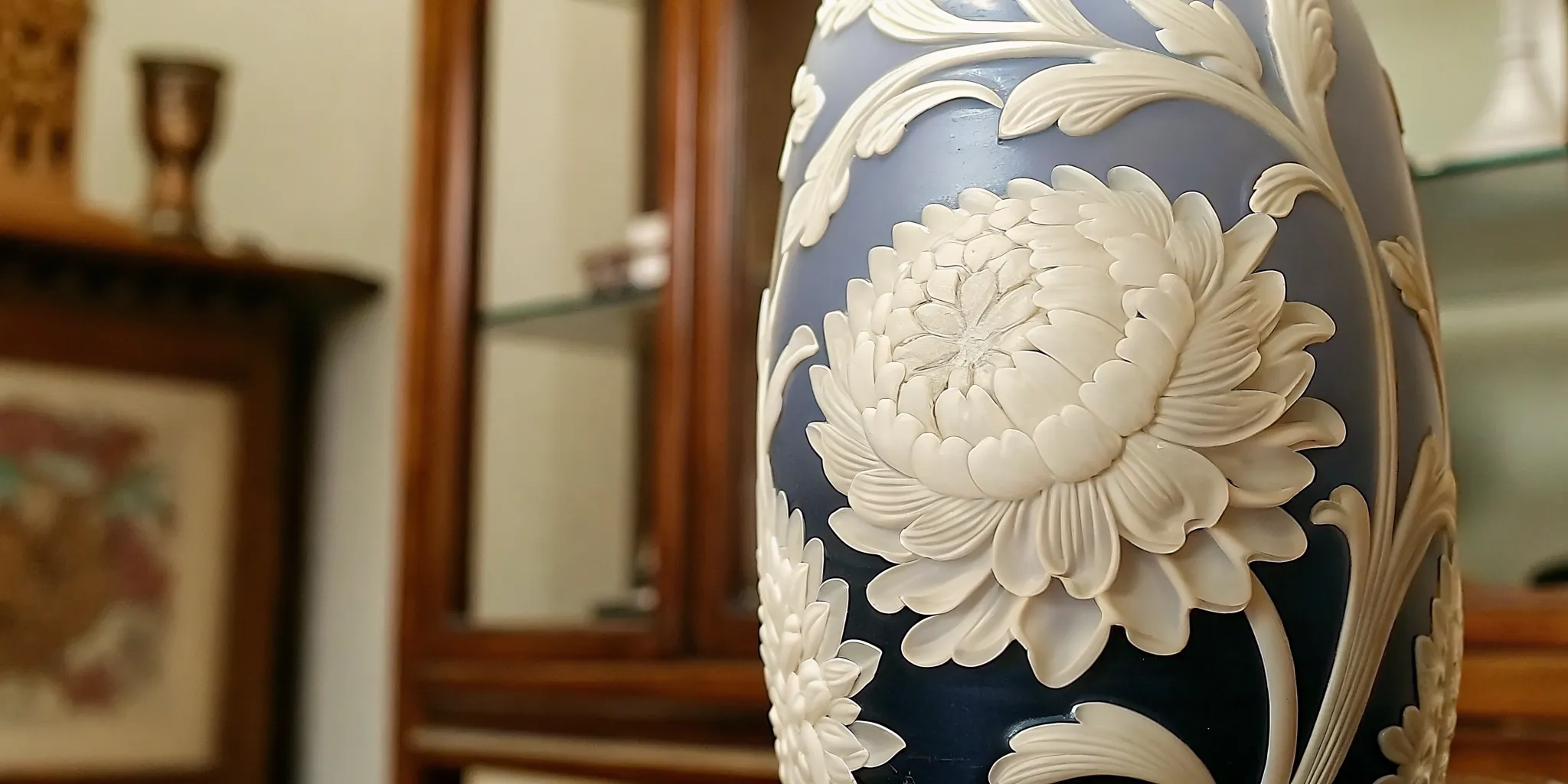
Making a piece of cameo glass takes a long time. A glass maker starts with a hot ball of glass and dips it into a second color to add a new layer. Some of the best pieces have as many as five layers of fused glass. Once the glass is cold and hard, the carving can start. In the past, artists did this by hand with small wheels and sharp tools. Later, some shops used acid to eat away the top layers. This was a faster way to work, but hand-carved glass is still what buyers want most when they sell your antique glass collection for a high price.
The Victorian Growth of Cameo Glass
For a long time, the art of cameo glass was a lost secret. It came back in 1876 when an English glass maker named John Northwood finished a copy of the Portland Vase. This task was very hard and took him three full years to do. His work started a new wave of interest in the craft across Europe. Within just one year, many factories began to make cameo glass for the public. This led to a huge growth in art glass during the Art Nouveau years. Many of the most famous pieces we find today are from this busy time. Collectors also look for mould-blown glass, which is made in a special way to look like carved glass. These facts will help you know the market for these fine antiques.
Major Cameo Glass Makers to Know
The market for antique art glass is led by a few key names from the late 19th and early 20th centuries. These makers pushed the limits of glass technology to create layers of color and light. If you want to build a collection, you should know the history and style of these top firms.
Master Glass from Thomas Webb and Sons
Thomas Webb and Sons started in 1837 in Stourbridge, England. The firm became a leader in the art glass world by the mid-1800s. They won the Grand Prix at the Paris International Exhibitions in both 1878 and 1889. The firm is famous for their three-color cameo pieces. These often use white and red glass on a yellow base. They also made a popular line called ivory cameo glass. It features carvings of flowers and butterflies. A fine scent bottle from this maker sold for 750 pounds at a recent auction. You can find more data on English glass history through Carters or other price guides.
Innovation at Stevens and Williams
Stevens and Williams was another major force in the Stourbridge glass industry. The firm grew from an older glassworks and took its new name in 1847. Top designers like Frederick Carder and John Northwood helped the company reach new heights in the late 1800s. They were known for many skills such as acid etching and intaglio engraving. In 1919, the firm began to supply glass to the Royal Family. They later took the name Royal Brierley Crystal after a visit from the Duke and Duchess of York. Collectors can learn more about these glass types on 20th Century Glass.
Emile Galle and the French Style
Emile Galle was the leading figure of the French Art Nouveau movement. He worked in Nancy, France, and lived from 1846 to 1904. Galle was a true master who used as many as five fused layers of glass in his best work. By 1899, he began to use acid etching to make pieces for a wider market. His work often shows themes from nature like plants and insects. A signed Galle vase was appraised at 18,000 dollars back in 2016. In 2023, a large boat-shaped vase by Galle sold for 2,000 pounds at auction. You can see how these prices compare to other makers in our Daum Nancy pricing and values guide.
Daum Nancy Art Nouveau Studio
The Daum brothers ran a workshop in Nancy that was first inspired by Galle. They soon found their own voice in the Art Nouveau style. Daum Nancy glass often uses three layers of glass and carries the Cross of Lorraine mark. The patterns on these pieces are the most important factor for their value. Today, these works are highly sought after by collectors around the world. You can learn more about related French glass in our guide to Daum Nancy values.
| Maker | Country | Key Technique | Era | Price Range |
|---|---|---|---|---|
| Thomas Webb and Sons | England | Three-color cameo | Victorian | Moderate to High |
| Stevens and Williams | England | Intaglio engraving | Victorian to Modern | Moderate |
| Emile Galle | France | Five-layer acid etching | Art Nouveau | High to Very High |
| Daum Nancy | France | Three-layer cameo | Art Nouveau | Moderate to High |
If French art glass appeals to you, our Lalique crystal value guide provides expert pricing detail on another iconic French glass category.
How Do I Identify Authentic Cameo Glass?
Spotting real cameo glass takes a sharp eye and some practice. Many collectors want to know how to tell a fake from a true antique before they buy. Real cameo glass is made by fusing layers of colored glass.
Artists then carve or etch the glass to show the colors below. This creates a raised design that you can feel with your fingers. But fakes are common in the market, so you must know the signs of a true piece.
Examine the Carving and Depth
The first step is to look at how the artist carved the glass. English cameo glass often comes from the town of Stourbridge. These pieces are usually wheel-carved by hand rather than etched with acid. They often show scenes from nature or old myths.
You should feel deep, crisp edges when you touch the design. Real pieces show great skill and very fine detail. Experts at Catherine Southon Auctioneers note that fine cameo glass is valued for its skill rather than its size.
French cameo glass is a bit different from the English style. Many French artists used acid to etch their designs into the glass layers. This style was very popular during the Art Nouveau years from 1890 to 1910.
It often features flowing lines and floral patterns. If you find a piece where the carving feels shallow or uneven, it might be a new copy. Fakes often lack the depth of relief that true antique glass shows. When you sell your antique glass collection, buyers look for these signs of quality.
Study the Maker Marks and Signatures
Marks and signatures can help you find the maker, but they can be faked with ease. Many real pieces are signed, but people forge these marks often to trick buyers. For example, some glass has the Gallé name but also includes the word “TIP.”
This mark means it is a Romanian copy or style. In the Romanian language, “TIP” means the type of the work. It is not a real piece made by the French master. You can learn more about specific makers in our Daum Nancy identification and pricing guide.
You should also check how the signature looks on the glass. A forged mark often looks too perfect or is in an odd spot on the base. Real marks were often etched or carved by the artist while they were making the piece.
They should look like they are part of the glass, not just scratched on the top. If a mark looks new or sharp, it might be a recent fake. Collectors should always check the past of a piece to make sure it is real. Most forged marks are added after the glass is cold.
Look for Age and Wear
Old glass shows signs of use and age that are very hard to fake. True antique cameo glass will have small scratches on the bottom. These marks come from years of sitting on wood shelves or stone tables.
If a piece looks too smooth and shiny on the base, it could be a modern copy. New glass often lacks the natural wear that comes with a hundred years of past. Always look for these tiny signs to tell if a piece is truly old or a new copy.
The condition of the glass is also a key factor in its value. Chips or cracks can lower the price by a lot. But a piece that is too perfect can also be a sign of a fake. Most antiques will have some small signs of their long life.
If you need help, a certified art and antiques appraisal can help you find the truth. Pros know how to spot the difference between old wear and new damage from a fake.
Cameo Glass vs. Pressed Glass: Key Differences
Many collectors confuse pressed glass with true cameo glass. While the two can look similar at a glance, they are made in completely different ways. Knowing the difference can save you from overpaying for a mass-produced piece that has no collector value.
How They Are Made
True cameo glass starts with multiple fused layers of colored glass. The design is created by removing material from the outer layers, either by hand carving or acid etching. The relief you see is actual glass that was left behind after careful removal of the surrounding material. Pressed glass starts as a single layer of molten glass that is forced into a mold under pressure. Any raised design is simply the shape of the mold. There are no distinct colored layers to reveal. The pattern on pressed glass is part of the surface, not a carving through separate layers.
Visual and Tactile Differences
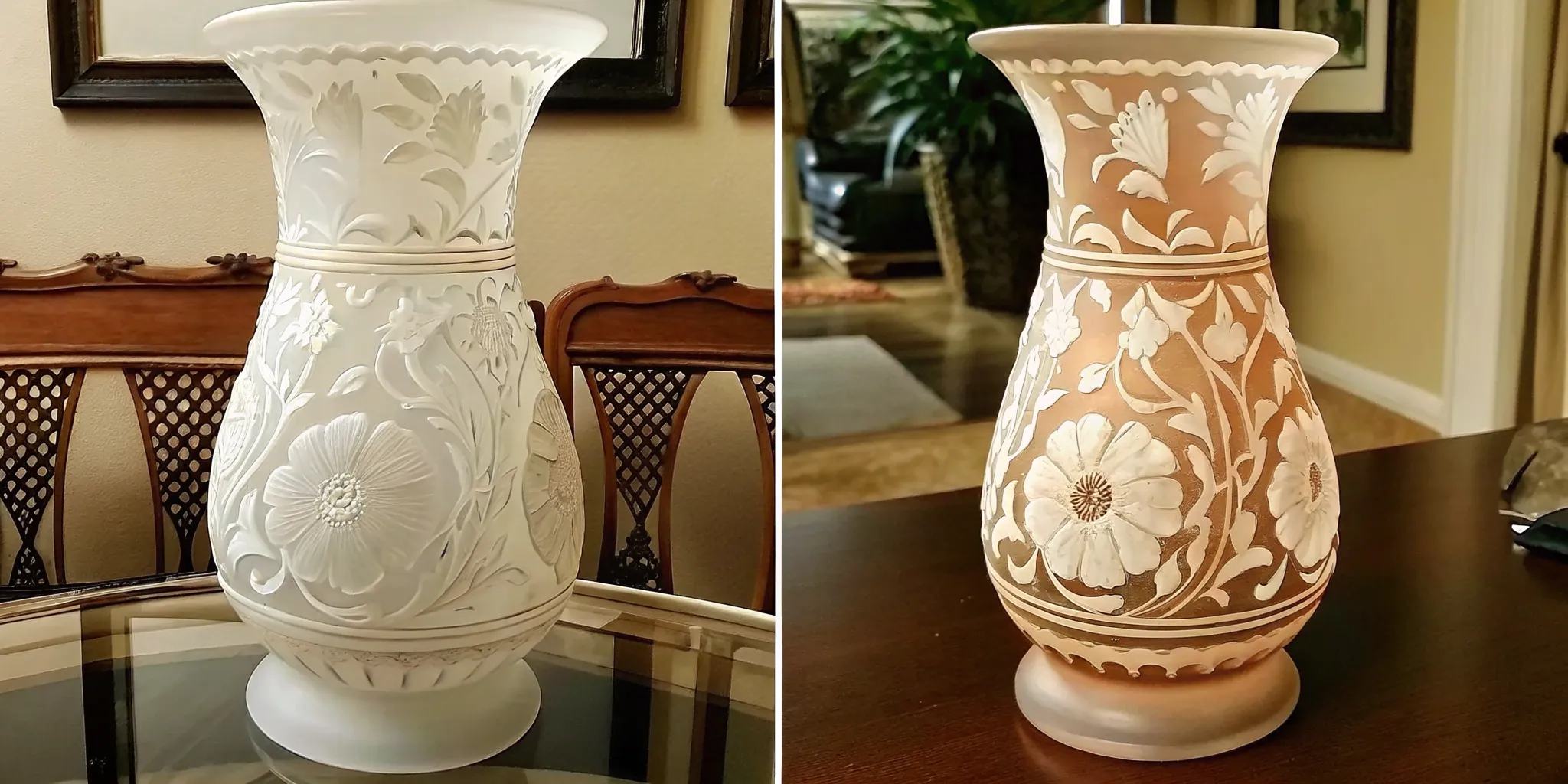
Hold the piece up to the light. True cameo glass shows distinct bands of color at the edges and base where the layers were built up. You may see subtle variations in color depth where the carver worked through different layers. Pressed glass has a uniform look throughout. The colors are surface-level only, and you will not see the transition between layers that defines genuine cameo work. Run your fingers over the design. Cameo carving has subtle variations in depth that pressed molds cannot replicate. The relief on cameo glass feels organic and hand-worked, while pressed glass has a machine-uniform feel. The back of a pressed piece will be smooth and uniform, while the back of a cameo piece often shows evidence of the layering process.
Price as a Clue
The price difference between cameo and pressed glass is dramatic. A genuine antique cameo vase from a known maker like Thomas Webb or Emile Galle can sell for thousands of dollars at auction. A pressed glass piece with a similar look might sell for twenty or fifty dollars at an estate sale. If the price seems too good to be true, the piece is almost certainly pressed glass rather than genuine cameo. Serious collectors are willing to pay a premium for the craftsmanship and rarity of true cameo glass. While pressed glass remains accessible as a decorative item with minimal investment value.
How Much Is Cameo Glass Worth? Current Market Prices
Cameo glass prices vary widely based on the maker, age, condition, and complexity of the piece. Most fine examples fall into a range of a few hundred to several thousand dollars, but rare pieces can reach extraordinary sums at the right auction.
General Price Ranges by Maker
According to Catherine Southon Auctioneers, estimates for cameo glass range from about 100 pounds to over 1,000 pounds for fine or rare examples. A new world record was set when a single piece sold for more than 200,000 pounds at auction, showing the upper potential of the market. Most common Victorian pieces from makers like Thomas Webb and Stevens and Williams sell in the 100 to 500 pound range. A fine Thomas Webb scent bottle with detailed floral carving recently sold for 750 pounds. Stepping up to French makers, a large canoe-shaped cameo glass vase by Emile Galle achieved 2,000 pounds at auction in 2023. A signed Galle vase was professionally appraised at 18,000 dollars in 2016, demonstrating the wide gulf between common and exceptional pieces.
Daum Nancy and English Market Data
Daum Nancy vases with fine cameo work and the Cross of Lorraine mark are typically estimated at 1,500 to 2,500 dollars per example at auction. Online price guides like Carter’s Auctions and Marks4Antiques track hundreds of sold prices for English cameo glass, providing valuable reference data for collectors. The market for English cameo glass has remained steady, with most pieces holding their value over time.
What Drives the Highest Prices
Pieces with three or more fused layers of colored glass command the highest prices. Each additional layer adds difficulty and time to the carving process. A three-color Webb piece will sell for significantly more than a simpler two-color example. The Art Nouveau era of the 1890s to 1910s is the most sought-after period for French cameo glass. And signed examples from this period consistently achieve the best auction results. Condition is the single most important factor. A mint piece with deep carving, original finish, and no damage can sell for three to five times what a damaged example of the same design would bring. Chips, cracks, and old repairs reduce value dramatically.
How to Sell Your Cameo Glass Collection
Selling cameo glass requires more care than selling ordinary household items. The market is specialized, and working with the right partner can mean the difference between a fair price and a disappointing one. Follow these steps to get the best outcome for your collection.
- Get a professional appraisal. Before you list any piece, have it examined by a certified appraiser who knows art glass. A proper appraisal establishes the maker, age, condition, and estimated market value. Lion and Unicorn offers certified art and antiques appraisals with over 30 years of experience in the field.
- Research the maker and market. Spend time learning about your specific piece. Is it a Thomas Webb vase from the 1880s? A Galle piece from the Art Nouveau era? Knowing the maker, pattern name, and recent comparable sales helps you set realistic expectations.
- Choose the right sales channel. Auction houses are typically the best option for quality cameo glass. They attract serious collectors who are willing to pay market value. Private sales can work for well-known pieces but lack the competitive bidding that drives prices up. Online platforms like eBay are best suited for lower-value common pieces.
- Prepare condition documentation. Take clear photos in natural light, showing the piece from multiple angles. Document any chips, cracks, or repairs honestly. Provenance records, original boxes, or receipts from the original purchase add significant value.
- Set a realistic reserve price. A reserve price protects you from selling too low while still allowing the bidding to find the true market value. Work with your auction specialist to set a reserve that reflects recent comparable sales.
- Work with a specialist auction house. This is the most important step. A general auction house may not know how to market your cameo glass to the right buyers. A specialist firm like Lion and Unicorn with deep experience in art glass and antiques can position your pieces in front of the collectors who value them most. Contact our expert team for a free consultation and appraisal.
Frequently Asked Questions
How can I identify a genuine Gallé cameo glass vase?
Authentic Gallé pieces often feature the artist’s signature, but many fakes exist. According to experts at Catherine Southon Auctioneers, any piece marked with TIP next to the Gallé name is a Romanian copy. Genuine French cameo glass shows flowing Art Nouveau patterns made with acid etching and high relief depth.
What is the average price for antique cameo glass?
Market values for antique cameo glass vary widely based on the maker and condition. Most fine examples sell for between £100 and £1,000, though rare pieces can reach much higher prices. For the most accurate valuation, schedule a certified art and antiques appraisal for current market data.
Does damage significantly reduce the value of cameo glass?
Yes, condition is a critical factor when determining the worth of art glass. Chips, cracks, and old repairs usually lower the market price. Because the carving process is so complex, structural damage is hard to fix without losing the original appearance. Always check for flea bites or surface scratches that might impact the final sale price.
Why are multi-layered cameo glass pieces worth more?
Collectors value pieces with three or more fused layers because each layer adds depth and detail to the final design. Makers like Daum Nancy used three layers to create complex scenes. More layers mean more time and skill to carve, making these pieces rarer and more desirable.
Ready to Get Your Cameo Glass Appraised?
Knowing the value of your cameo glass is the first step toward making smart decisions about your collection. Whether you inherited a set of carved vases, discovered a signed Galle piece at an estate sale. Or have been collecting for years, a professional appraisal gives you the knowledge you need to sell with confidence. Lion and Unicorn has over 30 years of experience in the art glass market, with offices across Florida and nationwide service. Our team knows the makers, the marks, and the current market prices that determine what your pieces are worth.
Schedule your free, no-obligation appraisal today. Call us at (954) 866-8044 or reach out online to speak with our expert appraisers. We offer nationwide pickup and can help you sell your collection through our weekly auctions, connecting your pieces with serious collectors around the world.
Contact us today for your free cameo glass appraisal
A signed Galle vase sold for eighteen thousand dollars at auction. High prices like this drive the need for a solid cameo glass value guide. Buyers and heirs must know what makes one piece a treasure and another a simple fake.Sell Your Antique Glass Collection
This cameo glass value guide helps collectors find the market worth of antique pieces by looking at the maker and condition. High-quality glass from masters like Emile Galle or Thomas Webb and Sons can sell for thousands of dollars. The price depends on the number of glass layers and how deep the carving is. To find a fair price, you must identify the maker and check the mark. Condition is the main factor because chips or cracks drop the value. A piece with three or more colors and deep carving gets a high price. If you want to sell your antique glass collection, knowing these facts is essential.
Cameo Glass Value Guide: What Is Cameo Glass? A Collector’s Introduction
Cameo glass is a type of fine art glass that has been prized for a very long time. It is made by joining two or more layers of colored glass together. A skilled artist then carves or eats away the outer layers with acid. This work shows the colors beneath and creates a raised image. People who collect these pieces value them for their fine detail and deep history. If you are looking for a Daum Nancy glass value guide, you should first know how these rare items are made. The price of a piece often depends on how many layers of glass it has and how well it was carved.
The Ancient Roots of Carved Glass
The art of making cameo glass started thousands of years ago in Ancient Rome. The most famous old piece is the Portland Vase, which experts date to between 5 and 25 AD. This vase shows the high level of skill that Roman glass makers had. They could carve tiny details into dark blue glass that was covered by a thin white layer. While many of these early works were lost to time, the technique was not. Cameo glass was also made in Islamic art during the 9th and 10th centuries. Today, large groups like the Library of Congress keep records of these old works. Looking at these early pieces can help you see why the style is still so popular today.
The Art of Fusing and Carving
Making a piece of cameo glass takes a long time. A glass maker starts with a hot ball of glass and dips it into a second color to add a new layer. Some of the best pieces have as many as five layers of fused glass. Once the glass is cold and hard, the carving can start. In the past, artists did this by hand with small wheels and sharp tools. Later, some shops used acid to eat away the top layers. This was a faster way to work, but hand-carved glass is still what buyers want most when they sell your antique glass collection for a high price.
The Victorian Growth of Cameo Glass
For a long time, the art of cameo glass was a lost secret. It came back in 1876 when an English glass maker named John Northwood finished a copy of the Portland Vase. This task was very hard and took him three full years to do. His work started a new wave of interest in the craft across Europe. Within just one year, many factories began to make cameo glass for the public. This led to a huge growth in art glass during the Art Nouveau years. Many of the most famous pieces we find today are from this busy time. Collectors also look for mould-blown glass, which is made in a special way to look like carved glass. These facts will help you know the market for these fine antiques.
Major Cameo Glass Makers to Know
The market for antique art glass is led by a few key names from the late 19th and early 20th centuries. These makers pushed the limits of glass technology to create layers of color and light. If you want to build a collection, you should know the history and style of these top firms.
Master Glass from Thomas Webb and Sons
Thomas Webb and Sons started in 1837 in Stourbridge, England. The firm became a leader in the art glass world by the mid-1800s. They won the Grand Prix at the Paris International Exhibitions in both 1878 and 1889. The firm is famous for their three-color cameo pieces. These often use white and red glass on a yellow base. They also made a popular line called ivory cameo glass. It features carvings of flowers and butterflies. A fine scent bottle from this maker sold for 750 pounds at a recent auction. You can find more data on English glass history through Carters or other price guides.
Innovation at Stevens and Williams
Stevens and Williams was another major force in the Stourbridge glass industry. The firm grew from an older glassworks and took its new name in 1847. Top designers like Frederick Carder and John Northwood helped the company reach new heights in the late 1800s. They were known for many skills such as acid etching and intaglio engraving. In 1919, the firm began to supply glass to the Royal Family. They later took the name Royal Brierley Crystal after a visit from the Duke and Duchess of York. Collectors can learn more about these glass types on 20th Century Glass.
Emile Galle and the French Style
Emile Galle was the leading figure of the French Art Nouveau movement. He worked in Nancy, France, and lived from 1846 to 1904. Galle was a true master who used as many as five fused layers of glass in his best work. By 1899, he began to use acid etching to make pieces for a wider market. His work often shows themes from nature like plants and insects. A signed Galle vase was appraised at 18,000 dollars back in 2016. In 2023, a large boat-shaped vase by Galle sold for 2,000 pounds at auction. You can see how these prices compare to other makers in our Daum Nancy pricing and values guide.
Daum Nancy Art Nouveau Studio
The Daum brothers ran a workshop in Nancy that was first inspired by Galle. They soon found their own voice in the Art Nouveau style. Daum Nancy glass often uses three layers of glass and carries the Cross of Lorraine mark. The patterns on these pieces are the most important factor for their value. Today, these works are highly sought after by collectors around the world. You can learn more about related French glass in our guide to Daum Nancy values.
| Maker | Country | Key Technique | Era | Price Range |
|---|---|---|---|---|
| Thomas Webb and Sons | England | Three-color cameo | Victorian | Moderate to High |
| Stevens and Williams | England | Intaglio engraving | Victorian to Modern | Moderate |
| Emile Galle | France | Five-layer acid etching | Art Nouveau | High to Very High |
| Daum Nancy | France | Three-layer cameo | Art Nouveau | Moderate to High |
How Do I Identify Authentic Cameo Glass?
Spotting real cameo glass takes a sharp eye and some practice. Many collectors want to know how to tell a fake from a true antique before they buy. Real cameo glass is made by fusing layers of colored glass.
Artists then carve or etch the glass to show the colors below. This creates a raised design that you can feel with your fingers. But fakes are common in the market, so you must know the signs of a true piece.
Examine the Carving and Depth
The first step is to look at how the artist carved the glass. English cameo glass often comes from the town of Stourbridge. These pieces are usually wheel-carved by hand rather than etched with acid. They often show scenes from nature or old myths.
You should feel deep, crisp edges when you touch the design. Real pieces show great skill and very fine detail. Experts at Catherine Southon Auctioneers note that fine cameo glass is valued for its skill rather than its size.
French cameo glass is a bit different from the English style. Many French artists used acid to etch their designs into the glass layers. This style was very popular during the Art Nouveau years from 1890 to 1910.
It often features flowing lines and floral patterns. If you find a piece where the carving feels shallow or uneven, it might be a new copy. Fakes often lack the depth of relief that true antique glass shows. When you sell your antique glass collection, buyers look for these signs of quality.
Study the Maker Marks and Signatures
Marks and signatures can help you find the maker, but they can be faked with ease. Many real pieces are signed, but people forge these marks often to trick buyers. For example, some glass has the Gallé name but also includes the word “TIP.”
This mark means it is a Romanian copy or style. In the Romanian language, “TIP” means the type of the work. It is not a real piece made by the French master. You can learn more about specific makers in our Daum Nancy identification and pricing guide.
You should also check how the signature looks on the glass. A forged mark often looks too perfect or is in an odd spot on the base. Real marks were often etched or carved by the artist while they were making the piece.
They should look like they are part of the glass, not just scratched on the top. If a mark looks new or sharp, it might be a recent fake. Collectors should always check the past of a piece to make sure it is real. Most forged marks are added after the glass is cold.
Look for Age and Wear
Old glass shows signs of use and age that are very hard to fake. True antique cameo glass will have small scratches on the bottom. These marks come from years of sitting on wood shelves or stone tables.
If a piece looks too smooth and shiny on the base, it could be a modern copy. New glass often lacks the natural wear that comes with a hundred years of past. Always look for these tiny signs to tell if a piece is truly old or a new copy.
The condition of the glass is also a key factor in its value. Chips or cracks can lower the price by a lot. But a piece that is too perfect can also be a sign of a fake. Most antiques will have some small signs of their long life.
If you need help, a certified art and antiques appraisal can help you find the truth. Pros know how to spot the difference between old wear and new damage from a fake.
Cameo Glass vs. Pressed Glass: Key Differences
Many collectors confuse pressed glass with true cameo glass. While the two can look similar at a glance, they are made in completely different ways. Knowing the difference can save you from overpaying for a mass-produced piece that has no collector value.
How They Are Made
True cameo glass starts with multiple fused layers of colored glass. The design is created by removing material from the outer layers, either by hand carving or acid etching. The relief you see is actual glass that was left behind after careful removal of the surrounding material. Pressed glass starts as a single layer of molten glass that is forced into a mold under pressure. Any raised design is simply the shape of the mold. There are no distinct colored layers to reveal. The pattern on pressed glass is part of the surface, not a carving through separate layers.
Visual and Tactile Differences
Hold the piece up to the light. True cameo glass shows distinct bands of color at the edges and base where the layers were built up. You may see subtle variations in color depth where the carver worked through different layers. Pressed glass has a uniform look throughout. The colors are surface-level only, and you will not see the transition between layers that defines genuine cameo work. Run your fingers over the design. Cameo carving has subtle variations in depth that pressed molds cannot replicate. The relief on cameo glass feels organic and hand-worked, while pressed glass has a machine-uniform feel. The back of a pressed piece will be smooth and uniform, while the back of a cameo piece often shows evidence of the layering process.
Price as a Clue
The price difference between cameo and pressed glass is dramatic. A genuine antique cameo vase from a known maker like Thomas Webb or Emile Galle can sell for thousands of dollars at auction. A pressed glass piece with a similar look might sell for twenty or fifty dollars at an estate sale. If the price seems too good to be true, the piece is almost certainly pressed glass rather than genuine cameo. Serious collectors are willing to pay a premium for the craftsmanship and rarity of true cameo glass. While pressed glass remains accessible as a decorative item with minimal investment value.
How Much Is Cameo Glass Worth? Current Market Prices
Cameo glass prices vary widely based on the maker, age, condition, and complexity of the piece. Most fine examples fall into a range of a few hundred to several thousand dollars, but rare pieces can reach extraordinary sums at the right auction.
General Price Ranges by Maker
According to Catherine Southon Auctioneers, estimates for cameo glass range from about 100 pounds to over 1,000 pounds for fine or rare examples. A new world record was set when a single piece sold for more than 200,000 pounds at auction, showing the upper potential of the market. Most common Victorian pieces from makers like Thomas Webb and Stevens and Williams sell in the 100 to 500 pound range. A fine Thomas Webb scent bottle with detailed floral carving recently sold for 750 pounds. Stepping up to French makers, a large canoe-shaped cameo glass vase by Emile Galle achieved 2,000 pounds at auction in 2023. A signed Galle vase was professionally appraised at 18,000 dollars in 2016, demonstrating the wide gulf between common and exceptional pieces.
Daum Nancy and English Market Data
Daum Nancy vases with fine cameo work and the Cross of Lorraine mark are typically estimated at 1,500 to 2,500 dollars per example at auction. Online price guides like Carter’s Auctions and Marks4Antiques track hundreds of sold prices for English cameo glass, providing valuable reference data for collectors. The market for English cameo glass has remained steady, with most pieces holding their value over time.
What Drives the Highest Prices
Pieces with three or more fused layers of colored glass command the highest prices. Each additional layer adds difficulty and time to the carving process. A three-color Webb piece will sell for significantly more than a simpler two-color example. The Art Nouveau era of the 1890s to 1910s is the most sought-after period for French cameo glass. And signed examples from this period consistently achieve the best auction results. Condition is the single most important factor. A mint piece with deep carving, original finish, and no damage can sell for three to five times what a damaged example of the same design would bring. Chips, cracks, and old repairs reduce value dramatically.
How to Sell Your Cameo Glass Collection
Selling cameo glass requires more care than selling ordinary household items. The market is specialized, and working with the right partner can mean the difference between a fair price and a disappointing one. Follow these steps to get the best outcome for your collection.
- Get a professional appraisal. Before you list any piece, have it examined by a certified appraiser who knows art glass. A proper appraisal establishes the maker, age, condition, and estimated market value. Lion and Unicorn offers certified art and antiques appraisals with over 30 years of experience in the field.
- Research the maker and market. Spend time learning about your specific piece. Is it a Thomas Webb vase from the 1880s? A Galle piece from the Art Nouveau era? Knowing the maker, pattern name, and recent comparable sales helps you set realistic expectations.
- Choose the right sales channel. Auction houses are typically the best option for quality cameo glass. They attract serious collectors who are willing to pay market value. Private sales can work for well-known pieces but lack the competitive bidding that drives prices up. Online platforms like eBay are best suited for lower-value common pieces.
- Prepare condition documentation. Take clear photos in natural light, showing the piece from multiple angles. Document any chips, cracks, or repairs honestly. Provenance records, original boxes, or receipts from the original purchase add significant value.
- Set a realistic reserve price. A reserve price protects you from selling too low while still allowing the bidding to find the true market value. Work with your auction specialist to set a reserve that reflects recent comparable sales.
- Work with a specialist auction house. This is the most important step. A general auction house may not know how to market your cameo glass to the right buyers. A specialist firm like Lion and Unicorn with deep experience in art glass and antiques can position your pieces in front of the collectors who value them most. Contact our expert team for a free consultation and appraisal.
Frequently Asked Questions
How can I identify a genuine Gallé cameo glass vase?
Authentic Gallé pieces often feature the artist’s signature, but many fakes exist. According to experts at Catherine Southon Auctioneers, any piece marked with TIP next to the Gallé name is a Romanian copy. Genuine French cameo glass shows flowing Art Nouveau patterns made with acid etching and high relief depth.
What is the average price for antique cameo glass?
Market values for antique cameo glass vary widely based on the maker and condition. Most fine examples sell for between £100 and £1,000, though rare pieces can reach much higher prices. For the most accurate valuation, schedule a certified art and antiques appraisal for current market data.
Does damage significantly reduce the value of cameo glass?
Yes, condition is a critical factor when determining the worth of art glass. Chips, cracks, and old repairs usually lower the market price. Because the carving process is so complex, structural damage is hard to fix without losing the original appearance. Always check for flea bites or surface scratches that might impact the final sale price.
Why are multi-layered cameo glass pieces worth more?
Collectors value pieces with three or more fused layers because each layer adds depth and detail to the final design. Makers like Daum Nancy used three layers to create complex scenes. More layers mean more time and skill to carve, making these pieces rarer and more desirable.
Ready to Get Your Cameo Glass Appraised?
Knowing the value of your cameo glass is the first step toward making smart decisions about your collection. Whether you inherited a set of carved vases, discovered a signed Galle piece at an estate sale. Or have been collecting for years, a professional appraisal gives you the knowledge you need to sell with confidence. Lion and Unicorn has over 30 years of experience in the art glass market, with offices across Florida and nationwide service. Our team knows the makers, the marks, and the current market prices that determine what your pieces are worth.
Schedule your free, no-obligation appraisal today. Call us at (954) 866-8044 or reach out online to speak with our expert appraisers. We offer nationwide pickup and can help you sell your collection through our weekly auctions, connecting your pieces with serious collectors around the world.
Contact us today for your free cameo glass appraisal
Free Consultation
Ready to Sell Your Estate or Collection?
Lion & Unicorn's expert team offers free appraisals and nationwide pickup service.
Over 30 years of experience — Florida's most trusted auction house.