
Free Consultation
Ready to Sell Your Estate or Collection?
Lion & Unicorn's expert team offers free appraisals and nationwide pickup service.
Over 30 years of experience — Florida's most trusted auction house.
How much is my Chinese vase worth? The honest answer is that the description “Chinese vase” covers a wide range of objects, from later decorative pieces to rare works with a documented history. The shape, decoration, marks, materials, condition, and evidence of when and where it was made all matter. You can begin with a careful record of the vase, but a photograph or a mark alone cannot establish a reliable value.
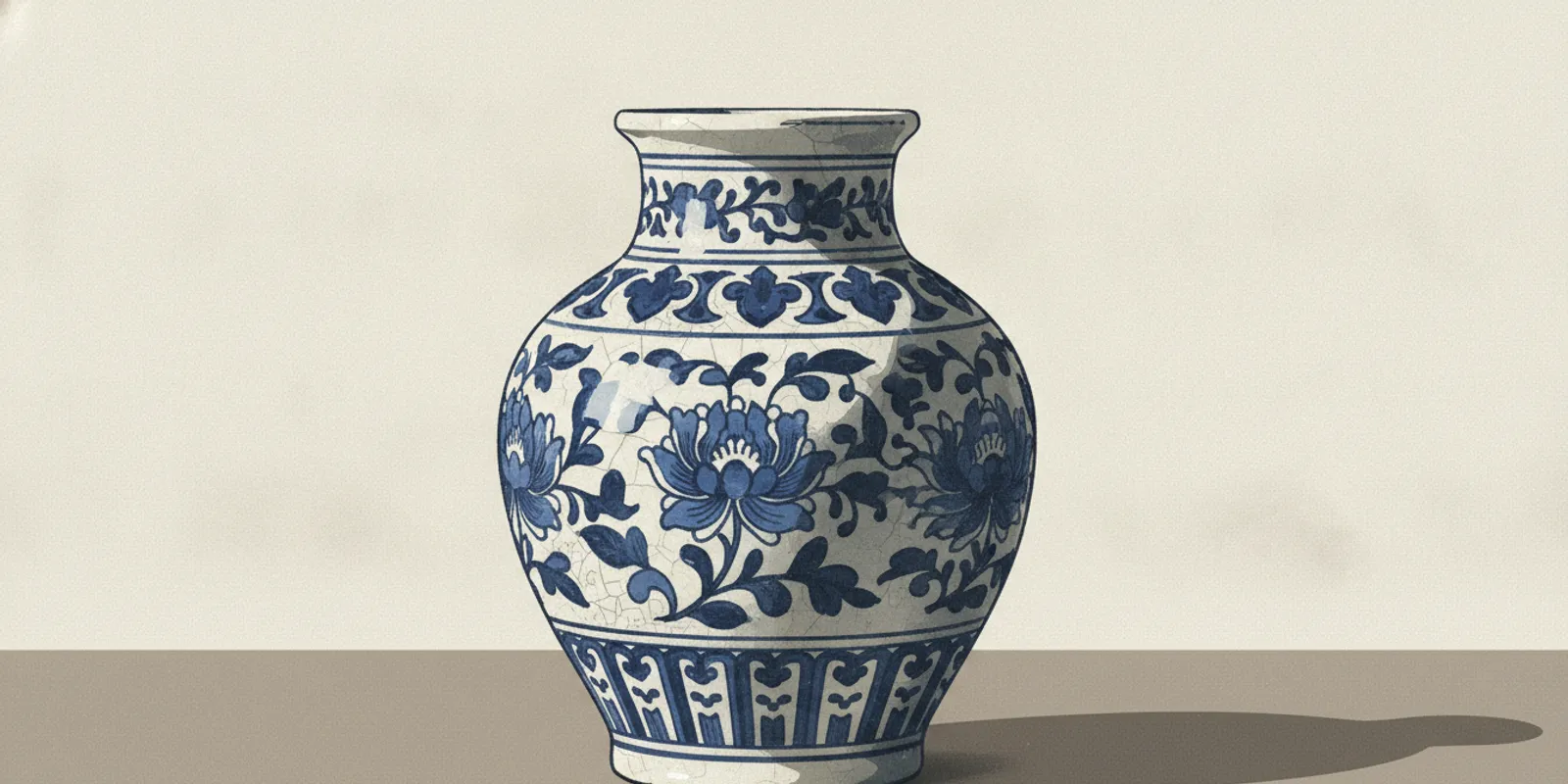
Discuss a Chinese vase or collection for sale
What does “worth” mean for a Chinese vase?
There is no single value that applies in every situation. A price someone asks in an online listing is not the same as an amount a buyer has paid. An insurance estimate, a private-sale expectation, an auction estimate, and the result of an auction can each answer a different question. Before comparing numbers, decide what you need the number for.
- Likely auction result: A considered estimate of what bidding might produce in a particular sale, based on the object and relevant market evidence. It is not a promise of the final result.
- Retail asking price: A seller’s offer price. It may reflect overhead, display, and time on the market; it does not prove that a buyer will pay that amount.
- Insurance value: A value prepared for an insurance purpose. It may use assumptions different from those used to set a selling strategy.
- Personal or family value: Meaningful to an owner, but not a market price unless buyers share that interest.
If you plan to sell, focus on evidence of actual transactions for genuinely comparable vases and the terms of the proposed sale. A high asking price for a superficially similar piece may not be a useful benchmark. A professional assessment should explain what kind of value it addresses and what assumptions it uses.
Which details help identify the vase?
Start with what you can observe, not with a guess about its period or place of production. A vase’s decoration can imitate an earlier style, and marks may be apocryphal, later additions, or difficult to read. No single feature proves age or authenticity. Record details so a specialist can assess the object as a whole.
Record its shape, dimensions, and materials
Write down the height, widest width, opening diameter, and approximate weight if you can do so safely. Describe the profile: for example, whether it has a long neck, rounded body, flared rim, handles, or a broad base. Note whether the body appears to be porcelain, stoneware, or another material, but treat your description as preliminary. Glaze, foot, decoration, and construction need to be considered together.
Use a ruler beside the object rather than placing it on top of a delicate surface. Photograph the vase standing upright next to a scale reference, then include a separate image with a ruler. Do not pick it up by the neck or handles. Large, heavy, or unstable pieces are safer when left where they are until you have a plan for moving them.
Photograph the decoration and every mark
Take clear images of the front, back, sides, top, base, and interior where visible. Photograph painted scenes, borders, colors, inscriptions, and any applied decoration in even light. Include close-ups of the foot and base. If there is a seal mark, reign mark, signature, label, or collection number, photograph it without trying to clean, redraw, or interpret it first.
Record marks exactly as they appear, including their color, placement, and whether they are under the glaze or on top of it, if you can tell without handling the vase. A mark can be useful evidence, but it does not by itself certify that the vase was made during the period named by the mark. Some later objects carry earlier reign marks as part of their decoration.
Keep family history and paperwork together
Write down what you know about when the vase entered the family, who owned it, where it was acquired, and whether it has appeared in an old inventory, estate record, exhibition, or sale. Keep receipts, old photographs, correspondence, labels, and prior appraisal documents with your notes. Separate what you know directly from what you have heard or inferred. Provenance can help researchers assess an object, but an undocumented story should not be presented as proven history.
For an overview of why ownership history can matter, see this guide to provenance and collectible objects. A link or label is a lead to investigate, not independent proof of a vase’s date or origin.
How do age, condition, and provenance affect value?
Age can be relevant, but it is not a value by itself. A vase made in an earlier period may be less desirable than a later example if it is damaged, altered, poorly documented, or not sought after by current buyers. Conversely, an object with a later date can have strong appeal if it is well made, visually compelling, and supported by a market. The specific object and its sale context matter more than a broad label.
Condition should be described precisely. Look for hairline cracks, chips, rim losses, hairlines, glaze scratches, staining, repairs, overpainting, replaced fittings, and areas of restoration. Check the foot and rim in normal light. Do not tap the vase to test it, scrape the glaze, or use chemical cleaners. Those actions can cause damage or make later evaluation harder. If you see a condition issue, photograph it with a close-up and a wider image showing where it is.
Condition does not always have a simple pass-or-fail effect. The location, size, visibility, and quality of a repair can matter, as can the rarity and desirability of the piece. Concealed repairs may not be apparent in casual photographs. A specialist’s in-person examination may be needed to distinguish a surface mark from a crack or restoration.
Provenance may add context and help establish a chain of ownership, especially when supported by records that can be checked. It should be assessed alongside physical characteristics and comparable sales. A family recollection, an old label, and a published collection record carry different evidential weight. Preserve original documents and do not detach labels or stickers from the vase.
How can I research a realistic comparison?
Look for completed sales rather than relying only on current asking prices. Useful comparisons share more than a general color or shape. Try to match the form, approximate dimensions, decoration, period attribution, mark, condition, and sale venue. A pair is not directly comparable to a single vase; neither is a small table vase automatically comparable to a monumental example.
- Write a neutral description. Include measurements, visible decoration, marks, and known condition. Avoid declaring the vase rare or authentic before that has been established.
- Search completed auction records. Record the sale date, venue, description, estimate if shown, result, and whether the displayed amount includes a buyer’s premium. A result from a different market or an older sale may need context.
- Compare the whole object. Check photographs and catalog descriptions carefully. If the comparison lacks a visible base, condition report, or clear dimensions, mark it as uncertain rather than treating it as a close match.
- Use several examples where possible. One striking result can be an outlier. A small group of relevant sales gives a better sense of how different features and condition issues may affect interest.
- Keep a record of your reasoning. Note why each comparison seems close or different. This prevents a headline price from becoming an assumed value without supporting evidence.
Published records can be incomplete, and some sale prices are displayed on different bases. Check whether the quoted result is a hammer price or includes the buyer’s premium. Lion & Unicorn’s current conditions state a 30% buyer’s premium; direct questions about taxes and any other charges to the sale venue and consult its current terms. Do not add or subtract charges without confirming the basis of each number.
Comparison shopping is not a substitute for identification. A vase with a similar painted scene can be from a different period, maker, or level of quality. If you cannot find close comparisons, that is a reason to seek specialist input rather than to assume the object is either exceptionally valuable or without value.
What factors might shift the estimate?
| Factor | What to document | Why it can matter |
|---|---|---|
| Form and scale | Height, profile, proportions, handles, and whether it is a single or part of a pair | Different forms attract different buyers and are not interchangeable comparisons. |
| Decoration and quality | Painted subject, color, detail, glaze, and overall execution | Visual appeal and quality can influence collector interest. |
| Marks and attribution | Exact location, appearance, and clear photographs of all marks | Marks can inform research but require interpretation alongside the object. |
| Condition | Cracks, chips, repairs, wear, staining, and restoration | Condition may change desirability and the relevance of comparison sales. |
| Provenance | Receipts, inventories, photographs, labels, and documented ownership | Reliable records can provide context and support research. |
| Sale setting | Venue, audience, timing, fees, and sale terms | Different routes and terms can produce different seller outcomes. |
Should I get an appraisal or seek a sale estimate?
The right next step depends on why you need a value. If you are dividing property, arranging insurance, settling an estate, or considering a sale, ask what kind of opinion is being offered and whether it fits that purpose. A verbal preliminary view based on photographs may help decide whether to investigate further, but it is not automatically a written appraisal or a guarantee of sale proceeds.
Ask who will examine the vase, what information they need, whether they will inspect it in person, and what the written result will cover. Clarify the intended use, valuation date, fee, and any limits or assumptions. If the person or firm also hopes to sell the object, ask how that relationship is handled and whether any fee or commission would apply. Get the terms in writing before proceeding.
The International Society of Appraisers is a professional association and its website provides a starting point for appraisal information. Confirm that any professional you contact has experience relevant to Chinese ceramics and can address the purpose of your request. General experience with antiques is not necessarily the same as specialized knowledge of Chinese porcelain.
To consider an auction or other selling route, begin with this guide to where to sell antiques and collectibles. It is useful to compare the proposed route, handling responsibilities, fees, timing, and what happens if the item does not sell—not just the estimate.
Which selling route fits the vase?
A single decorative vase may be sold privately, through a dealer, or at auction, depending on its identification, likely buyer interest, and the owner’s priorities. A sale route is not automatically better because it is familiar or promises a larger number. Compare the total arrangement, how the object will be presented, who bears each responsibility, and what outcome you need.
| Route | May suit | Questions to ask |
|---|---|---|
| Private sale | An owner who has a suitable buyer and can agree on identification, price, payment, and delivery. | How will you verify the buyer and payment? Who arranges safe packing and transport? What happens if the sale falls through? |
| Dealer sale | An owner who prefers a direct offer and understands that a dealer’s purchase price reflects the dealer’s own costs and resale plans. | Is the offer final? What supports it? When and how will payment be made? Is the vase being purchased outright or offered on consignment? |
| Auction consignment | An owner willing to offer the vase to bidding buyers under a written sale agreement. | What are the estimate, reserve if applicable, commission, insurance and handling terms, timeline, and plan for an unsold lot? |
Ask for written terms before handing over the vase. Confirm whether a proposed figure is an estimate or a purchase offer, what charges apply, who is responsible for transport and insurance, and when payment is due after a sale. For auction costs, check the current conditions rather than assuming that buyer charges or seller deductions are the same everywhere.
If the vase is part of a larger collection, mention the other objects when asking for guidance. Related pieces, matching pairs, or documented family holdings may affect how an expert considers the group and whether individual or combined handling makes sense. Do not separate a pair or discard paperwork just to simplify the first conversation.
For a sale or appraisal inquiry, you can also review Lion & Unicorn’s valuation information and the seller information page. If you are exploring what is currently offered at auction, the auction buying page explains the buyer-facing route. Read the terms for the specific sale before making decisions.
Collectors who want broader background may browse the site’s antiques articles and rare antiques topics. These are starting points for learning, not evidence that a particular vase has a certain age or price.
Ask for guidance about your vase’s value
Frequently asked questions
Can a mark on the bottom tell me how much my vase is worth?
A mark can be one clue, but it cannot establish value or date on its own. It needs to be considered with the vase’s form, materials, decoration, condition, and comparable sales. Photograph the mark clearly and avoid treating a reign mark as proof that the object was made during that reign.
Does an old Chinese vase automatically have a high value?
No. Age is only one part of the assessment. Identification, quality, condition, provenance, buyer interest, and the sale setting all influence what a buyer might pay. A later vase can be desirable, while an older object may have limited demand or condition concerns.
Can I estimate the vase’s price from online listings?
Listings show asking prices, not necessarily completed transactions. Use completed sale records when available, and compare the object’s size, form, decoration, condition, and sale terms. Treat a comparison as tentative if important details are missing.
Should I clean the vase before asking for an opinion?
No. Do not scrub, polish, soak, or use chemicals on it to improve its appearance. Photograph it as it is and note any visible residue or damage. Cleaning or removing labels can change the surface or remove useful evidence.
What should I send when requesting an initial review?
Send clear overall photographs, close-ups of the base and marks, measurements, a condition description, and any ownership records you have. State whether you are seeking an auction estimate, an appraisal for another purpose, or advice about a sale. Be clear about what is documented and what is family recollection.
Make your next step evidence-based
A careful record gives you a stronger starting point than a guess based on age, a mark, or a high asking price. Keep the vase safe, preserve its history, and ask a specialist to explain the evidence, intended value, and sale terms before you decide what to do.
Request guidance about selling a Chinese vase
The most useful estimate is one that explains how the specific object and its circumstances support the conclusion.
Free Consultation
Ready to Sell Your Estate or Collection?
Lion & Unicorn's expert team offers free appraisals and nationwide pickup service.
Over 30 years of experience — Florida's most trusted auction house.