
Free Consultation
Ready to Sell Your Estate or Collection?
Lion & Unicorn's expert team offers free appraisals and nationwide pickup service.
Over 30 years of experience — Florida's most trusted auction house.
If you are asking, “How much is my signed art print worth?” the honest answer is that a signature is only one part of the picture. The artist, edition, printmaking process, condition, authenticity evidence, and current demand all matter. A signed print may be worth more than an unsigned example, but the mark alone does not establish a reliable price. Start by documenting the work and comparing it with genuinely similar sales, then decide whether you need an informal estimate, a formal appraisal, or a selling opinion.
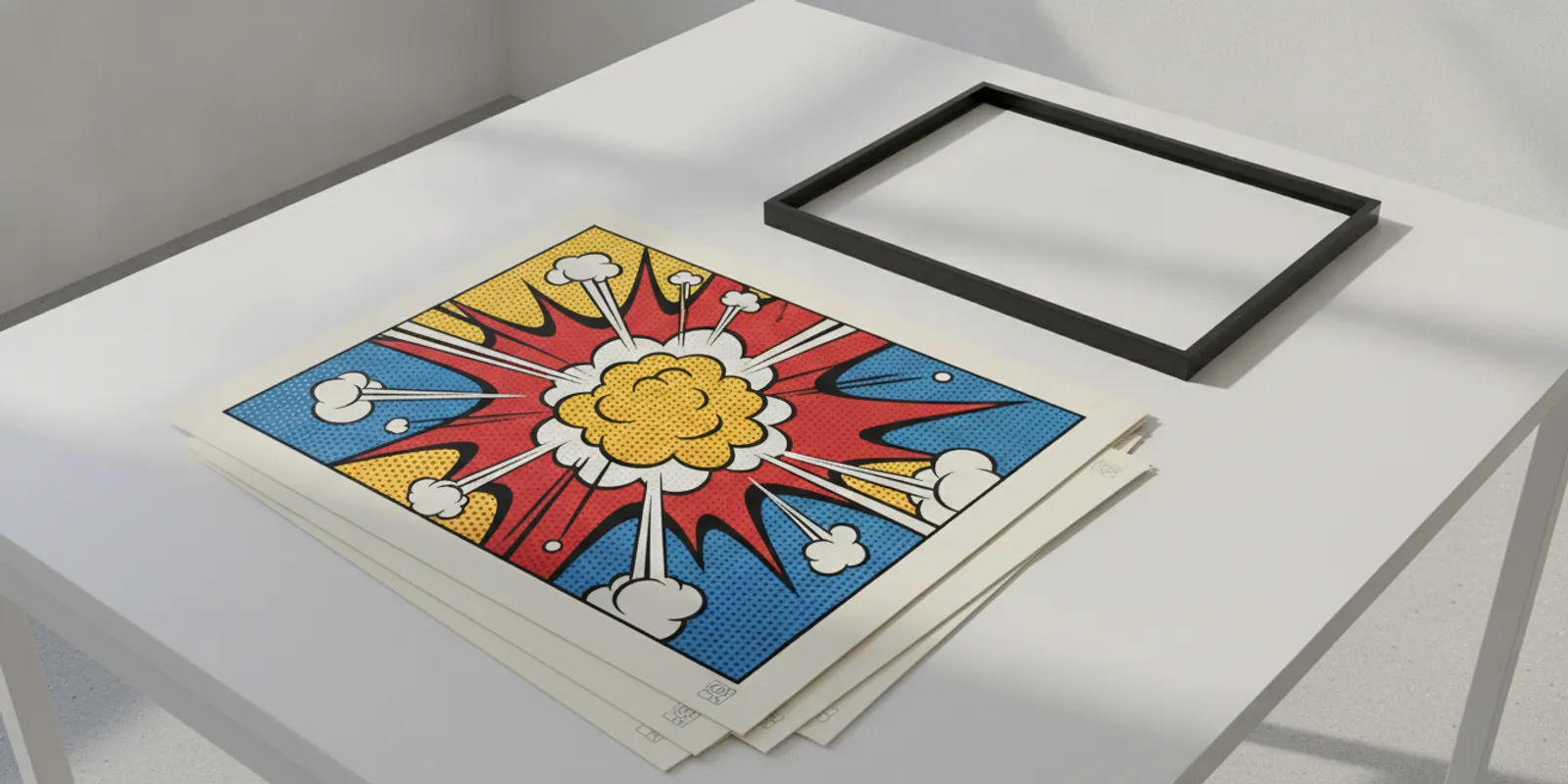
Ask about selling or appraising your art
What does a signed art print’s value depend on?
A signed art print is an image produced in multiple impressions, rather than a one-of-a-kind painting, and then signed by the artist or another person. The printing method and edition can affect how collectors view it. So can the artist’s market, the print’s age and rarity, and whether the signature is authentic. There is no single price list that turns those details into a guaranteed value.
Keep the different kinds of “value” separate. An asking price is what a seller hopes to receive. An auction result records what a buyer paid at a particular sale, before considering the buyer’s premium, taxes, shipping, or other charges. An appraisal is an opinion of value for a stated purpose and date, prepared using relevant information. A likely selling result can differ from an insurance or estate valuation because the intended use and assumptions differ.
For background on evaluating fine art, see this art appraisal guide. A print’s likely market is not the same as an insurance replacement figure, and an online asking price is not proof that a buyer paid that amount.
Which details should you identify first?
Before searching for prices, write down what you can observe without taking the work apart or altering it. Use a phone camera to make clear, well-lit images of the full front, the signature, any edition notation, labels on the back, and visible condition issues. Photograph the frame and any paperwork as separate views. Keep notes factual: “pencil signature at lower right” is more useful than guessing who signed it.
- Artist: Record the name exactly as written, including initials and spelling. If it is unfamiliar, do not assume a similar-sounding name is the same artist.
- Signature: Note its position, medium, and whether it appears in pencil, ink, or another material. A printed signature in the image is different from a hand-applied signature in the margin.
- Edition: Record numbers such as 12/100, “AP” (artist’s proof), or “HC” (hors commerce) exactly as shown. Do not assume one notation automatically makes a print rare or more valuable.
- Title and date: Capture any title, date, publisher, printer, or copyright information printed on the sheet or label.
- Process and materials: Look for descriptions such as lithograph, etching, screenprint, or giclée on the paperwork or catalogue record. When uncertain, mark the process as unknown rather than diagnosing it from a photograph.
- Dimensions: Measure the visible sheet if it can be done safely, and separately note the frame size. Do not remove a work from its frame solely to measure it.
- Provenance: List known ownership and keep receipts, certificates, gallery labels, exhibition records, or correspondence together.
These are the same types of evidence that make research more useful for other fine art. Clear records also help prevent confusion between an original print, a later reproduction, and an image that merely carries a printed signature.
How much difference does the signature make?
A genuine hand signature can matter because it may help confirm the artist’s involvement and because collectors may prefer signed examples. But signature is not a shortcut to a high value. A widely available print by an artist with limited buyer demand may remain modestly priced even when signed. Conversely, a sought-after image by an established artist can attract attention when its edition, condition, and history are well documented.
First determine what kind of mark you are seeing. A signature printed as part of the image is not equivalent to a signature added by hand. A hand-signed mark may still need authentication or corroboration, especially when the name is familiar or the work is valuable. Do not rely on a quick comparison with a signature image online as proof. Handwriting varies, images can be copied, and photographs can hide details.
Look for supporting evidence: a publisher’s record, a reputable gallery invoice, a catalogue raisonné entry where relevant, or credible provenance. A certificate may be useful, but its existence alone does not settle authorship or market value. Keep the certificate with the print and record who issued it and when. If the signature is unclear, describe it as “signed” only if you have a reasonable basis; otherwise use “appears signed” in your notes.
How do edition size and rarity affect the price?
Edition size is one clue, not a value formula. The fraction beside a signature typically identifies an impression’s number within an edition; it does not mean that impression is a percentage of the artist’s total output. Smaller stated editions may appeal to some buyers, but the print may also exist in other editions, proof states, or later versions. A low edition number does not automatically make a specific copy more valuable than a later-numbered one.
Check whether the edition information describes this exact image and process. For example, an artist may have produced the same image as a lithograph and as a separate screenprint edition. These are not interchangeable comparables. Also note whether the work is an artist’s proof or another special impression, but do not assume such labels carry a premium without evidence of buyer interest for that artist and work.
Rarity is meaningful when buyers want the scarce object. A print can be uncommon yet have few active buyers. A more frequently offered image can still achieve stronger prices if collectors consistently seek it. Use edition details alongside comparable sales and the artist’s broader market, rather than treating a small edition number as a price prediction.
How does condition change an art print’s value?
Condition can materially affect interest, especially when a defect changes how the image looks or suggests a risk of further damage. Inspect the work in even light without pressing, rubbing, or cleaning it. Note tears, creases, stains, fading, foxing (small brown spots), discoloration, water marks, missing corners, and any writing or adhesive on the sheet. If the print is framed, photograph visible issues and mention that the full sheet has not been inspected.
Framing can protect a print, but it can also conceal the sheet edges or create concerns if the materials are unsuitable. Do not remove backing, tape, or mounting materials if you are not confident doing so safely. Avoid home repairs, washing, bleaching, pressing, or applying new adhesives before asking an appropriate conservator or specialist. An attempted repair can complicate later evaluation.
Describe condition precisely rather than using only “good” or “excellent.” For instance, “small crease in lower margin, outside image” gives a prospective reviewer more information than “minor wear.” Record whether the issue is in the printed image or the margin, and whether it is visible from the front. Include close photographs, but remember that images cannot fully show surface texture, paper quality, or all forms of damage.
How can I compare prices without being misled?
Search for completed sales, not just current listings. A seller can ask any price; a completed transaction is better evidence of what a buyer accepted in that sale. Use several examples when possible and compare works that match on artist, image, print process, edition, signature, size, and condition. A different image by the same artist may offer broad context, but it is weaker evidence than a sale of the same print in a similar state.
Record the date, venue, currency, whether the result is a hammer price or a total including buyer charges, and any notes about condition. Auction results are historical evidence, not a promise about a future sale. Demand, competition, presentation, sale timing, and the reach of the audience can all affect an outcome. An asking price that remains unsold does not show what the print is worth in a completed transaction.
Use this comparison checklist:
- Search the artist’s name with the exact title or image description.
- Separate the same print process and edition from visually similar reproductions.
- Give more weight to recent, documented completed results than to old listings or estimates.
- Adjust your expectations for differences in signature, edition, size, provenance, and condition.
- Keep links or screenshots and note what each result actually represents.
For example, a signed impression of the same image, edition, and similar condition is a closer comparison than a different print by the same artist. If the only result you find is an unsigned example, note that difference rather than treating the prices as interchangeable. A large gap between two results is a reason to investigate the circumstances, not to select whichever figure is higher. Check whether one was a rare image, had stronger documentation, or appeared in a sale with a different audience.
Be cautious about converting an old result directly into today’s expected sale price. The time between sales, shifts in collector interest, and differences in venue can make older evidence less useful. Do not add a fixed amount for a certificate, a low edition number, or a frame unless comparable results show that buyers paid more for those features. When evidence is thin, say so. A responsible estimate should distinguish what is known from what remains uncertain.
For a second perspective on professional appraisal practice, consult the Appraisers Association of America. Its professional resources can help you understand the appraisal field; they do not provide a substitute for an opinion on this particular print.
Which route fits your purpose?
The right next step depends on why you need a number. If you are deciding whether to keep or sell a print, preliminary market research may be enough to frame the decision. If you need documentation for an estate, insurance, donation, or another formal purpose, explain that purpose before requesting an appraisal. The appropriate type of report and valuation approach depend on the intended use.
| Route | Useful when | What it can tell you | Important limit |
|---|---|---|---|
| Your own initial research | You are organizing the work or deciding what questions to ask | Possible comparables and details to verify | Online asking prices and incomplete records do not establish a reliable value |
| A selling opinion | You are considering a sale and want to discuss market fit | Whether the work may suit a selling channel and what information is needed | It is not necessarily a formal appraisal or a guaranteed result |
| Formal appraisal | You need a documented opinion for a defined purpose | A reasoned value opinion based on stated scope and relevant evidence | Tell the appraiser the intended use; different purposes may require different approaches |
| Auction research | You are considering an auction sale | Relevant completed results and sale-context questions | A past result does not guarantee the next result or equal your net proceeds |
When contacting an appraiser or auction house, share the artist’s name, dimensions, signature and edition details, condition images, and known ownership records. Ask what the opinion covers, what information is missing, and whether the next step is a formal appraisal or a sale discussion. Do not assume an initial evaluation is free; confirm any scope, fees, and terms directly before proceeding.
For current buyer charges when reviewing auction terms, check the auction’s conditions of sale rather than treating a hammer result as an all-in cost. For selling, ask about the proposed terms and any seller charges in writing. Your eventual proceeds may depend on the agreement and sale outcome.
What should I prepare before asking for an appraisal?
Make a compact record that allows a specialist to identify the print without handling it first. Include the front and back, a close view of the signature and edition notation, a label or certificate, dimensions if safely available, and honest condition notes. Gather relevant correspondence, purchase records, or previous appraisals, but make clear which facts are documented and which are family recollections.
Do not discard packaging, labels, or paperwork that may connect the print to a publisher, gallery, exhibition, or former owner. Store those documents separately from the print so they do not press against or adhere to the artwork. If there are multiple works, number them in your list and match each number to its photographs and records. This simple organization can help avoid mixing details between pieces.
Share your goal at the outset. “I am considering a sale” is different from “I need an appraisal for an estate matter.” Ask whether the specialist can address that purpose, what further examination may be needed, what the service includes, and what costs or terms apply. If an estimate is preliminary, understand what additional review could change it.
Readers sorting a larger group of works may also find it useful to review Lion & Unicorn’s guide to preparing information about an item’s value and its market-value articles. For broader selling considerations, see the guide to where to sell antiques and collectibles.
Discuss your print and possible next steps
Frequently asked questions
Does a signature always make a print more valuable?
No. A genuine hand signature may add collector interest, but value also depends on the artist, image, edition, condition, evidence, and demand. A printed signature is not the same as a hand-signed mark, and an unclear signature should not be treated as verified.
Is a numbered print more valuable than an unnumbered one?
Not automatically. A number can help identify an edition, but it does not by itself show rarity, desirability, or a likely price. Research the specific print and compare relevant completed sales.
Can I estimate the value from online listings?
Listings can show what sellers are asking, but they do not prove a buyer paid that amount. Give greater weight to documented completed sales of closely comparable prints, and account for differences in condition, edition, signature, and sale terms.
Should I clean or repair the print before seeking an opinion?
No. Avoid cleaning, flattening, retouching, or removing it from its frame just to prepare for review. Photograph what you can see and ask a qualified specialist or conservator before any treatment.
Make your next step evidence-based
A useful value estimate begins with identification, not a guess based on a signature or a high asking price. Document the print, verify the details you can, compare completed sales carefully, and choose an appraisal or selling conversation that matches your purpose.
Request a conversation about your signed art print
With clear records and realistic comparisons, you can make a more informed decision about whether to keep, appraise, or sell the work.
Free Consultation
Ready to Sell Your Estate or Collection?
Lion & Unicorn's expert team offers free appraisals and nationwide pickup service.
Over 30 years of experience — Florida's most trusted auction house.