

Erté Art Value Guide: History, Identification, and Current Prices
Free Consultation
Ready to Sell Your Estate or Collection?
Lion & Unicorn's expert team offers free appraisals and nationwide pickup service.
Over 30 years of experience — Florida's most trusted auction house.
Known as the “Father of Art Deco,” Erté created over 22,000 designs across fashion, sculpture, jewelry, and printmaking during a career that spanned nearly eight decades. Today, his work remains highly collectible, with prices ranging from under $100 for Franklin Mint reproductions to over $50,000 for rare original bronzes. This guide covers everything collectors and sellers need to know about identifying, authenticating, and valuing Erté art in today’s market.
Who Was Erté? A Brief Biography
Born Romain de Tirtoff in St. Petersburg, Russia, on November 23, 1892, Erté adopted his professional name from the French pronunciation of his initials (R.T.). He moved to Paris in 1912 to pursue a career in fashion design, despite his aristocratic family’s expectations that he follow a military career.
Erté’s breakthrough came when he began working with fashion designer Paul Poiret, whose bold, theater-influenced aesthetic aligned perfectly with his own artistic vision. By 1915, Erté had secured a contract with Harper’s Bazaar, producing over 240 iconic magazine covers through 1937. These covers established his signature style: elongated female figures, geometric patterns, vibrant colors, and ornate detailing that defined the Art Deco movement.
Beyond fashion illustration, Erté designed costumes and sets for the Folies Bergère, the Ziegfeld Follies, and numerous opera and ballet productions. His creative output expanded into sculpture, jewelry, lithography, and serigraphs, particularly during a major career resurgence in the late 1960s when the Metropolitan Museum of Art featured his work. Erté continued creating art until his death in 1990 at age 97.
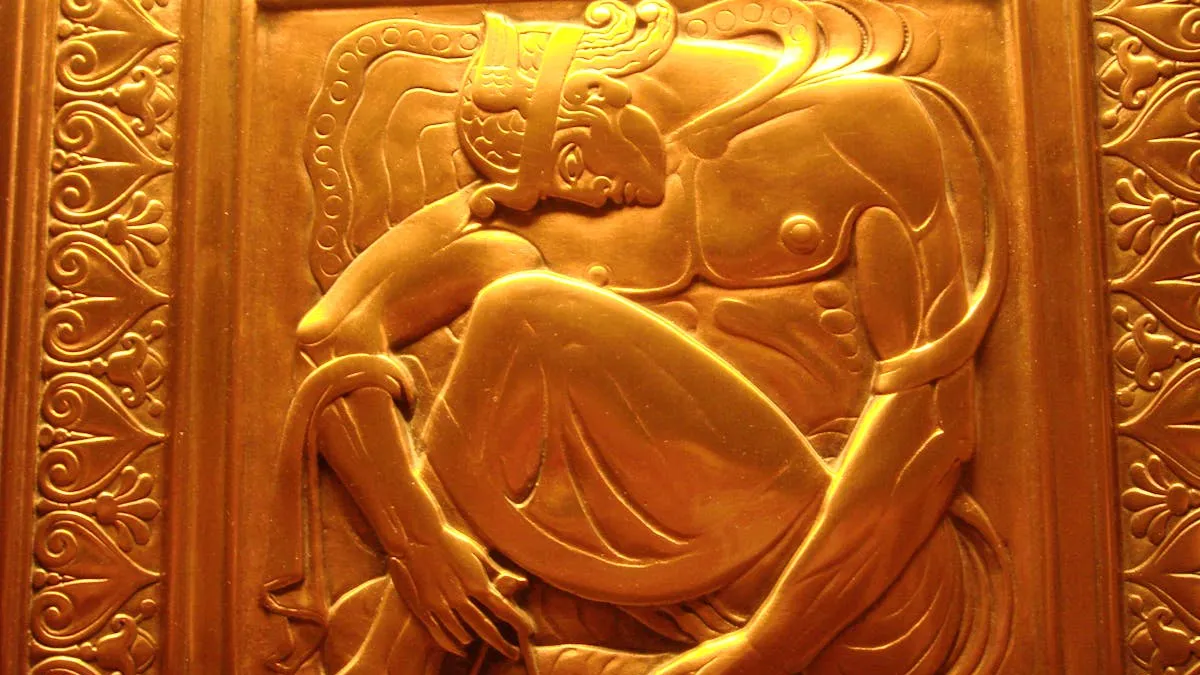
Types of Erté Art and Their Value Ranges
Erté worked across multiple mediums throughout his career. Understanding the type of piece you have is the first step in determining its value.
Bronze Sculptures
Erté’s bronze sculptures are among his most valuable works. Produced primarily between the 1980s and 1990 through Seven Arts Ltd. in London and other foundries like Chalk & Vermilion and Fine Art Acquisitions, these pieces were cast in limited editions ranging from 250 to 500 copies.
Current market values:
- Major figural bronzes (18-20 inches): $3,000 to $15,000 depending on subject and edition size
- Artist’s proofs (marked “AP”): Often command a 20-50% premium over standard edition numbers
- Iconic subjects like “Rigoletto,” “Fedora,” “Two Vamps,” and “La Plume”: $5,000 to $12,000+
- Rare or low-edition pieces: Can exceed $20,000 at auction
If you own Erté bronze sculptures, an experienced auction house can help you sell bronze sculptures for the best return. At Lion and Unicorn, we have handled numerous Erté bronzes, including the “Rigoletto” sculpture (1989, edition of 375), which sold for $12,188 at one of our recent auctions.
Serigraphs and Lithographs
The graphic works Erté began producing in the late 1960s during his artistic resurgence represent the largest segment of his collectible market. These include the famous Alphabet and Numbers series, the Four Seasons suite, and numerous individual compositions.
Current market values:
- Alphabet series (individual letters): $500 to $3,000 per print depending on letter and condition
- Complete Alphabet suite (26 prints): $15,000 to $40,000+
- Numbers series: $400 to $2,500 per print
- Other signed serigraphs: $300 to $5,000 depending on subject, size, and edition
- Unsigned or open-edition prints: $50 to $300
Key value factors for prints include whether they are signed in pencil by the artist, the edition size and number, condition of the paper and colors, and whether they retain original frames or gallery documentation.
Original Gouaches and Fashion Illustrations
Erté’s original hand-painted gouaches and fashion illustrations are the rarest and most valuable category. These one-of-a-kind works from his Harper’s Bazaar years and costume design commissions rarely appear at auction.
Current market values:
- Original costume or fashion gouaches: $10,000 to $100,000+
- Original Harper’s Bazaar cover designs: $20,000 to $80,000+
- Smaller original sketches and studies: $5,000 to $25,000
Jewelry
Beginning in the 1980s, at age 90, Erté created a line of jewelry inspired by his own Harper’s Bazaar drawings. These pieces, often featuring Art Deco motifs in gold with diamonds, rubies, and other gemstones, are both wearable art and collectible investments.
Current market values:
- Gold and gemstone brooches/pendants (Alphabet series): $1,000 to $10,000
- Statement necklaces with convertible elements: $2,000 to $5,000+
- Simpler enamel and gold pieces: $500 to $2,000
A bi-color gold, diamond, and ruby “Juno” convertible necklace by Erté, featuring a removable peacock brooch, sold for $3,960 at auction in 2024.
Harper’s Bazaar Magazine Covers
Original issues of Harper’s Bazaar featuring Erté’s covers from 1915 to 1937 represent one of the most accessible entry points for new collectors.
Current market values:
- Individual magazine issues in good condition: $35 to $300
- Exceptional or historically significant issues: $300 to $1,000
- Complete runs or significant collections: Premium pricing based on completeness
Franklin Mint and Reproduction Pieces
The Franklin Mint produced a “House of Erté” line in the 1990s, including porcelain figurines, music boxes, and collector plates based on his designs. Mikasa also created a line of collector plates featuring Erté’s famous compositions.
Current market values:
- Franklin Mint porcelain figurines: $20 to $200
- Franklin Mint collector plates: $5 to $75
- Music boxes: $30 to $150
- Mikasa collector plates: $10 to $50
While these reproduction pieces are not original Erté works, they remain popular with collectors who appreciate the Art Deco aesthetic at a more accessible price point.
How to Identify Authentic Erté Art
Authentication is critical when buying or selling Erté art, as forgeries and misattributions exist in the market. Here are the key identification markers for each medium.
Bronze Sculpture Authentication
Authentic Erté bronzes carry several identifying marks:
- Artist’s signature: Erté’s distinctive monogram signature incised into the base
- Edition number: Stamped as a fraction (e.g., “163/375” or “AP 6/12”)
- Publisher’s mark: Most common are “Seven Arts Ltd. London,” “Chalk & Vermilion,” and “Fine Art Acquisitions”
- Date: Usually stamped near the edition number (1980s-1990)
- Foundry mark: RPK foundry mark appears on many pieces
- Certificate of authenticity: Many pieces were sold with signed certificates, often from galleries like Dyansen Gallery
Print Authentication
For serigraphs and lithographs:
- Pencil signature: Authentic signed prints bear Erté’s pencil signature, usually in the lower right margin
- Edition number: Penciled in the lower left (e.g., “125/300” or “HC 3/10”)
- Embossed seal: Many prints feature an embossed publisher’s seal
- Paper quality: Original prints use high-quality archival paper
- Color registration: Authentic serigraphs show precise color registration without bleeding
“HC” designates “Hors Commerce” (not for sale) proofs, which are typically rarer than standard editions and may carry a premium.
Gouache and Original Work Authentication
Original Erté works should ideally have:
- Provenance documentation: Gallery records, exhibition history, or published references
- Medium consistency: Erté’s gouaches typically use a specific palette and technique
- Period-appropriate materials: Paper, pigments, and backing materials consistent with the attributed date
For any significant Erté purchase, professional authentication from a recognized expert or auction house that buys fine art with Erté experience is strongly recommended.
What Affects the Value of Erté Art?
Several factors determine what a specific Erté piece is worth at auction.
Edition Size and Number
Smaller editions are generally more valuable. A bronze from an edition of 250 will typically command more than one from an edition of 500. Artist’s proofs (AP) and Hors Commerce (HC) copies, produced in much smaller quantities, often sell for significant premiums.
Subject Matter
Certain subjects consistently achieve higher prices. The Alphabet and Numbers series remain perennial favorites. Theatrical subjects, particularly those connected to the Folies Bergère or notable productions, carry strong appeal. Female figures in dramatic Art Deco gowns are the most sought-after motif.
Condition
Condition has a major impact on value:
- Bronzes: Surface patina should be original and undamaged. Chips, repairs, or repatination reduce value significantly.
- Prints: Foxing (brown spots), fading, water damage, or tears reduce value. Prints in original frames with gallery labels may add value.
- Paper works: Any restoration, trimming, or light damage affects pricing.
Provenance
A documented history of ownership, especially if the piece passed through a notable gallery or was featured in a published catalogue raisonné, adds value. Erté signed certificates of authenticity from the original sale enhance desirability.
Market Timing
The Art Deco revival continues to support strong demand for Erté’s work, though values can fluctuate with broader art market trends. The most desirable pieces, particularly rare bronzes and original gouaches, have shown consistent appreciation over the past decade.
Frequently Asked Questions About Erté Art
How much is Erté art worth?
Erté art ranges from under $100 for Franklin Mint reproduction plates to over $50,000 for rare original bronzes and gouaches. Signed serigraphs typically sell between $300 and $5,000, while bronze sculptures range from $3,000 to $15,000 for most pieces.
What is the most valuable type of Erté art?
Original gouaches and fashion illustrations are the most valuable, often selling for $10,000 to $100,000 or more. Among more commonly available works, bronze sculptures and complete print suites (especially the Alphabet series) command the highest prices.
How can I tell if my Erté print is authentic?
Look for a pencil signature in the lower right margin, an edition number in the lower left, an embossed publisher’s seal, and high-quality archival paper. The signature should match Erté’s known monogram style. When in doubt, consult a professional appraiser with experience in Art Deco prints.
Are Franklin Mint Erté pieces valuable?
Franklin Mint “House of Erté” figurines and plates are affordable collectibles, typically selling between $5 and $200. While they are not original Erté works, they are based on his designs and appeal to collectors who appreciate Art Deco aesthetics at accessible prices.
Where can I sell Erté art?
A full-service auction house with experience handling Erté works can maximize your return. At Lion and Unicorn, we have sold hundreds of Erté pieces including bronzes, serigraphs, jewelry, and the coveted Courvoisier collection. You can request a free evaluation to find out what your piece is worth.
What is the Erté Alphabet series?
The Alphabet series is a set of 26 serigraphs, each depicting a letter of the alphabet formed by elegant female figures in Art Deco poses. Originally created as gouaches in the 1920s and later reproduced as limited-edition prints, the complete set is one of Erté’s most iconic and valuable works.
How to Sell Your Erté Art at Auction
If you own Erté artwork and are considering selling, working with an auction house that has specific experience with his work is the best way to achieve fair market value. Here is what to expect from the process:
- Request an evaluation. Contact the auction house with photos and any documentation you have, including certificates of authenticity, purchase receipts, or provenance records.
- Professional appraisal. An experienced art appraiser will examine the piece, verify authenticity, assess condition, and provide a market estimate based on recent comparable sales.
- Consignment. Once you agree on terms, the auction house handles cataloging, professional photography, marketing to their collector network, and listing the piece in an appropriate sale.
- Auction and settlement. After the sale, you receive payment according to the agreed schedule, typically within a few weeks of the auction.
Lion and Unicorn acquired over 350 original Erté works, giving our team deep experience with his art across every medium, from bronze sculptures and serigraphs to jewelry and decorative objects. If you have Erté art to sell or want to explore our current listings, contact our team for a complimentary evaluation or submit photos for a free online estimate.
Lion and Unicorn is a full-service auction house with over 30 years of experience specializing in art, antiques, and collectibles. With offices across Florida and nationwide service, we buy art and antiques in Florida and provide certified appraisals, estate liquidation, and consignment services for sellers across the United States. Tell us about your collection or call us at (954) 866-8044 for a free consultation.
Have Erté prints, bronzes, or related artwork to sell? Lion & Unicorn can help you sell fine art collection pieces through auction.
For mixed collections, Lion & Unicorn can also help you sell art and collectibles together.
Free Consultation
Ready to Sell Your Estate or Collection?
Lion & Unicorn's expert team offers free appraisals and nationwide pickup service.
Over 30 years of experience — Florida's most trusted auction house.