


How to Find Qualified Art Appraisers Near Me
Free Consultation
Ready to Sell Your Estate or Collection?
Lion & Unicorn's expert team offers free appraisals and nationwide pickup service.
Over 30 years of experience — Florida's most trusted auction house.
Finding the right art appraiser matters when a painting may be valuable, historically significant, or headed for an insurance, estate, tax, or sale decision. A general antiques estimate may not provide the provenance research, condition analysis, and market evidence that fine art requires.
Schedule a fine-art valuation with Lion and Unicorn.
When searching for art appraisers near me, look for a professional with verified education or experience, USPAP-compliant methods, relevant credentials, and a clear written report. The right specialist should explain how provenance, condition, comparable sales, and the intended use of the appraisal affect the final opinion of value.
Credentials are only the starting point. Before choosing someone to evaluate your painting or collection, consider the standards they follow, the work they regularly handle, and the evidence they can provide for each conclusion.
What Makes an Art Appraiser Qualified?
A qualified art appraiser combines recognized credentials, documented experience with the type of property being valued, current knowledge of appraisal methodology, and a commitment to objective professional standards. Look for someone who regularly performs paid appraisals, follows USPAP, and can explain the scope and purpose of the valuation in a written report.
Start by checking the appraiser’s qualifications rather than relying only on proximity or a general interest in art. The legal definition used in 26 USC 170 recognizes an appraiser who has earned a designation from a recognized professional organization or who meets applicable education and experience requirements. The same definition emphasizes verifiable experience valuing the specific type of property involved. A specialist in paintings, sculpture, or decorative arts is therefore a stronger fit than a generalist with no demonstrated fine-art background. Finding a qualified appraiser you can trust starts by confirming that their expertise matches the object in front of you.
Credentials and relevant experience
Professional membership can provide one useful point of verification, especially when the organization requires education, ethical conduct, and continuing adherence to appraisal standards. However, a designation should be considered alongside actual experience. Ask how often the appraiser values comparable works, what markets and periods they know, and whether they regularly complete appraisals for compensation. Regular paid appraisal work is one of the qualifications identified in the federal definition of a qualified appraiser.
USPAP compliance is another essential consideration. The IRS describes professional art appraisers as having training in appraisal methodology and the Uniform Standards of Professional Appraisal Practice. Along with education and experience in fine art, decorative arts, and collectibles. USPAP provides a framework for consistent, supportable work, including research, analysis, reporting, and professional conduct.
Objectivity and professional ethics
An appraisal should be independent and fit its stated purpose. A professional appraiser should disclose relevant conflicts, separate personal opinion from documented analysis, and explain how the conclusion was reached. Ethics requirements from organizations such as the Certified Appraisers Guild reinforce the importance of impartiality and USPAP compliance. You should also confirm that the appraiser has not been prohibited from practicing before the IRS during the relevant period if the valuation will support a tax-related filing.
Lion and Unicorn applies these principles as a Florida auction house, providing USPAP-compliant valuations through appraisers who are members of the International Society of Appraisers. That combination of fine-art experience, recognized professional standards. And market knowledge helps create a valuation that is useful for insurance, estate planning, sale decisions, or other clearly defined purposes.
Why Provenance and Condition Matter in Art Valuation
Provenance and physical condition can determine whether a painting is viewed as a documented, marketable work or as an object with unanswered questions. Provenance is the recorded history of ownership. It can help establish authenticity, connect a work to a recognized collection or exhibition, and support a stronger market valuation. Condition tells the appraiser what has happened to the object itself, including damage, restoration, alteration, or deterioration that may affect its appeal and long-term stability.
A professional appraiser studies both factors together. A compelling ownership history cannot compensate for severe damage, and an attractive painting with no reliable documentation may still require additional research before its value can be established. The appraisal process should explain how the available evidence supports the final opinion rather than presenting a number without context.
Provenance research traces the chain of title through records such as invoices, estate documents, gallery labels, exhibition histories, catalogues, correspondence, and previous appraisal reports. Not every work will have a complete paper trail, especially pieces that have remained in a family for generations. However, even partial documentation can help clarify where a painting came from and whether its history is consistent with the artist, period, and subject matter. Provenance research is widely recognized as crucial to establishing authenticity and market value, as described by the Maine Arts Commission’s appraisal guidance.
Condition reporting is equally important. An appraiser looks for surface abrasions, tears, stains, fading, flaking, punctures, loose canvases, frame damage, and signs of cleaning or overpainting. Restoration may protect a work, but extensive or poorly documented intervention can change how collectors view it. Two paintings by the same artist with similar subjects may command very different prices when one retains its original surface and the other has substantial repairs.
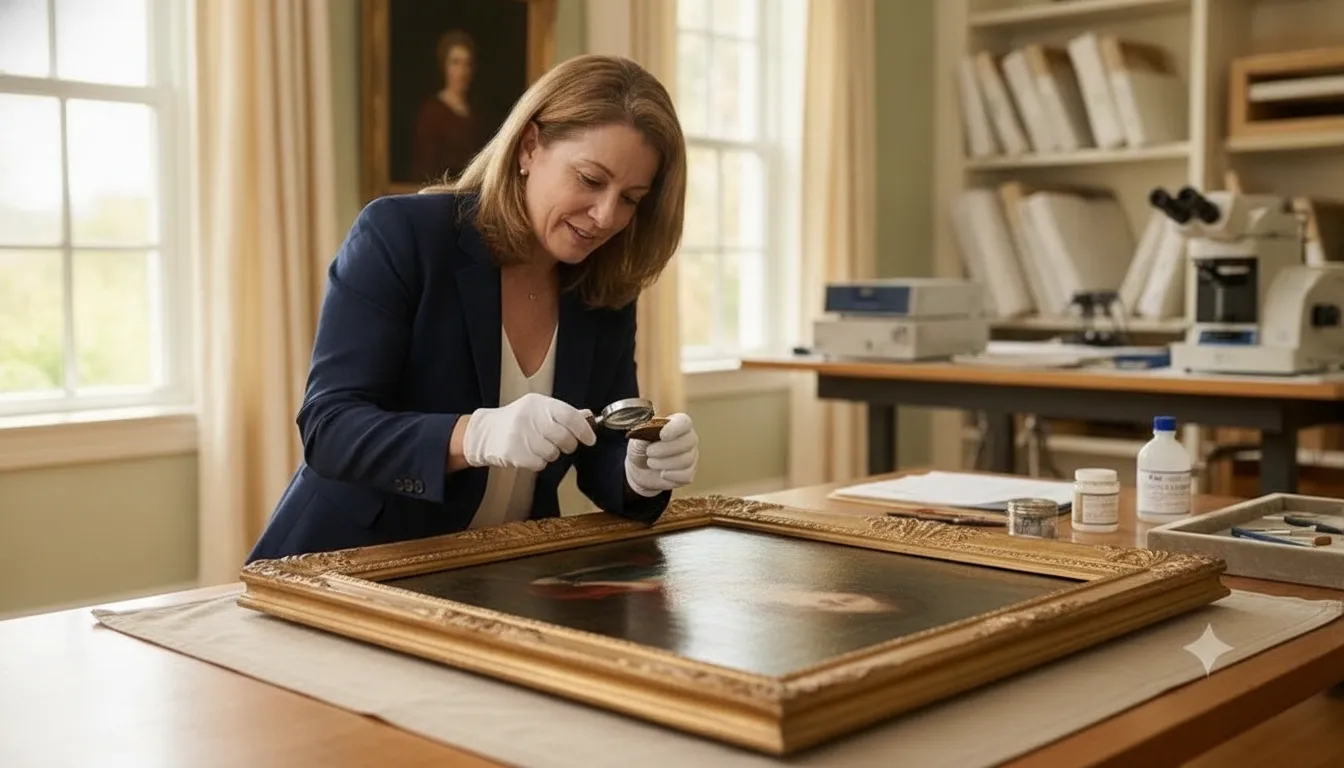
Uncertain provenance and poor condition create valuation risk. They may reduce the number of buyers willing to compete, make insurance decisions less precise, or complicate an estate division or sale. An objective appraisal helps owners avoid selling too low, over-insuring an item, or relying on an assumed value that the available evidence cannot support. The Maine Arts Commission identifies these risks as important reasons to obtain a professional written opinion.
When preparing for an appointment, gather every document connected to the artwork and avoid cleaning, reframing, or attempting repairs first. Share clear photographs of the front, back, frame, labels, signatures, and visible damage. A specialist such as Lion and Unicorn can then evaluate the artwork’s history and condition as part of a defensible valuation. Rather than treating appearance alone as proof of worth.
How Does a Professional Art Appraiser Determine Market Value?
A professional art appraiser determines market value through documented research, comparison, and analysis, then presents the conclusion in a written report. The process considers the artwork’s artist, medium, size, condition, provenance, rarity, and relevant market evidence. It is a prescribed methodology, not an educated guess, and the final opinion should explain how the appraiser reached the stated value.
Market value is also tied to the purpose of the appraisal. An insurance valuation may help establish appropriate coverage, while an estate or gift tax appraisal must address federal reporting requirements. A valuation prepared for a charitable contribution may support IRS Form 8283. The intended use should be explained before the appraiser begins, because the assignment and report need to match the decision you are making.
Research, comparison, and a written opinion
The appraiser begins by identifying the work and examining available documentation. This may include the artist’s signature, title, date, medium, dimensions, exhibition history, previous sales, and ownership records. The appraiser then researches comparable works and weighs how closely those examples match the piece being evaluated. Provenance, condition, and authenticity can materially affect the result, so missing records or visible restoration should be noted rather than ignored.
The result is a written opinion of value supported by the research and the selected methodology. That documentation gives an owner something concrete to use when making financial decisions. It can reduce the risk of selling too low, paying too much, or dividing property unfairly. It can also help avoid underinsuring or overinsuring a collection and provide support when estate taxes, gift taxes, or charitable deductions are involved. The Maine Arts Commission describes these risks and the role of a written appraisal in its guidance on appraisers and conservators: professional appraisal methodology and risk management.
Why high-value and sale-bound art needs careful valuation
Collectors often commission an appraisal before auction or consignment so they can set realistic expectations and make informed decisions about timing and selling strategy. A professional valuation can clarify whether a work merits additional research, conservation, private marketing, or public auction. It can also help an owner understand the difference between an insurance value, a tax-related value, and an anticipated sale price. These figures are not automatically interchangeable.
The IRS Art Appraisal Services team provides advice on valuation questions involving personal property and works of art. Its guidance states that works with individual values generally above $150,000 receive closer review, although the service has discretion. The IRS also reviews appraisals connected with noncash charitable contributions, including Form 8283, as well as estate and gift taxes. See the IRS Art Appraisal Services guidance for the applicable context.
In Florida, Lion and Unicorn provides USPAP-compliant valuations through a fine-art-focused auction process. That creates a practical path from documented valuation to consignment when selling is the appropriate next step. Owners who want to understand how an auction house values art can review the process before arranging a consultation.
Where Can You Find Art Appraisers Near Me in Florida?
To find qualified art appraisers near me in Florida, start with professional association directories, then compare the appraiser’s credentials, specialty, and appraisal purpose. Local galleries, established auction houses, and referrals from estate professionals can also identify specialists who understand the Florida market and the type of art you own.
Professional art appraiser associations often maintain directories or provide referrals to qualified individuals. These listings are a useful starting point because they can help you identify appraisers who follow recognized professional standards. Before scheduling an appraisal, ask whether the individual has verifiable education and experience valuing the specific property involved. An appraiser who primarily handles jewelry or general household contents may not be the right choice for a painting, sculpture, or collection of works on paper.
- Professional appraiser association directories and referral services.
- Established local galleries with knowledge of artists and regional collectors.
- Auction houses that regularly evaluate and sell comparable fine art.
- Estate attorneys, fiduciaries, conservators, and other trusted professionals.
Ask prospective appraisers whether they follow the Uniform Standards of Professional Appraisal Practice, commonly called USPAP. You should also look for recognized professional affiliations, such as membership in the International Society of Appraisers, or ISA. Credentials alone do not replace relevant experience, but they provide a useful basis for comparing providers and understanding an appraiser’s commitment to methodology and ethics.
Fine-art specialization matters because value depends on more than an object’s appearance. The appraiser may need to research the artist, medium, provenance, condition, market history, and comparable sales. Confirm that the person you select routinely handles the category represented in your collection, whether that includes paintings, sculptures, prints, or decorative arts. Also explain whether you need an appraisal for insurance, an estate, charitable donation, equitable distribution, or a potential sale. The intended use affects the report and the standard of value required.
For owners who want both valuation guidance and a possible sales route, Lion &. Unicorn is a full-service Florida auction house serving clients statewide, including Hollywood, Palm Beach, Orlando, Miami, and Naples. The company specializes in fine art and sculptures and provides USPAP-compliant valuations by ISA-member appraisers. If you are considering selling fine art in South Florida, an auction house with appraisal and consignment experience can help connect the valuation process to a practical next step. You can also review guidance on choosing a qualified art appraiser in Florida before requesting an appointment.
How Much Does an Art Appraisal Cost, and Can You Get One for Free?
Art appraisal fees vary because the work required varies. An appraiser may charge an hourly rate for research, authentication support, and consultation, or quote a flat fee for a defined assignment. A simple valuation of one clearly identified painting may require less time than a collection involving several artists, uncertain dates, condition concerns, or limited ownership records.
Before agreeing to an appraisal, ask what the fee includes and what kind of report you will receive. The collection size is one factor, but so are the age and artist of each work. The availability of comparable sales, provenance research, and the level of documentation requested. A short verbal opinion or preliminary estimate is not the same as a signed written appraisal. If you need documentation for insurance, tax, estate, or sale decisions, confirm that the final report is prepared by a credentialed professional and is appropriate for that purpose.
A full written report is a paid professional service, but it can be a practical investment. It gives you a documented opinion of value, explains the research behind that opinion. And can help you make informed decisions about protection, estate division, charitable giving, or sale. The right scope also prevents you from paying for research you do not need, while ensuring that a high-value or historically significant work receives sufficient attention.
There are genuine free-first options. Some auction houses offer complimentary preliminary valuations when they believe a piece may be suitable for consignment. This type of review can help you decide whether to pursue a sale. But it is generally not a certified appraisal and may be offered in connection with the auction house’s interest in representing the property. Ask whether the review is preliminary, whether an appraisal fee applies later, and whether the business is evaluating the work for a potential auction.
| Consideration. | Preliminary valuation. | Certified written appraisal. |
|---|---|---|
| Purpose. | Screens whether a work interests the auction house for consignment. | Documents a defined value for insurance, tax, estate, or sale decisions. |
| Typical cost. | Often complimentary. | Paid hourly or flat-fee professional service. |
| Report. | Verbal or brief opinion. | Signed written report with research and methodology. |
| Certification. | Not a certified appraisal. | Prepared by a credentialed appraiser under USPAP. |
You can also begin by contacting a specialist who understands the category, period, and market for your artwork. Lion and Unicorn can help owners compare appraisal and consignment options, while vetted antique dealers across Florida may provide useful context for decorative or collectible works. When searching for art appraisers near me, compare credentials, scope, deliverables, and conflicts of interest rather than choosing solely on price.
How Do You Know If a Piece of Art Is Worth Anything?
A quick assessment can reveal whether a piece deserves deeper research. Start by identifying the artist, examining the work closely, and looking for documentation that connects it to a known sale, collection, gallery, or exhibition. These signals can suggest value, but they cannot establish authenticity or a reliable market price on their own.
A piece of art may be worth more when it is connected to a recognized artist. Remains in strong condition, has credible provenance, and compares favorably with recent sales of similar works. Research the artist, inspect signatures and labels, and review reputable auction databases or online valuation resources. Treat those results as a starting point, not a substitute for a professional appraisal.
Research the artist and comparable sales
Begin with the artist’s name, if it is known. Consider the artist’s reputation, period, medium, subject matter, and current demand. A work by an established artist is not automatically valuable. While an unknown artist may have a limited market or may require specialized research before its significance becomes clear.
Next, search reputable auction databases for recent sales of comparable works. Compare pieces by the same artist, medium, size, subject, date, and condition. Pay attention to whether prices reflect a completed sale rather than an asking price. Online valuation resources can help organize this research, but automated estimates may miss restoration, questions of authenticity, regional demand, or changes in the market.
Inspect signatures, labels, and condition
A signature can help identify a work, but it is not proof that the named artist created it. Look at its placement, style, materials, and consistency with documented examples. Gallery labels, exhibition stickers, inventory numbers, purchase receipts, correspondence, and old photographs can provide useful clues. Do not clean, reframe, repair, or remove labels before an expert examines the piece, because those changes may destroy evidence.
Condition also affects value. Note tears, fading, stains, cracking, warping, repairs, overpainting, and changes to the frame. A professional condition report can distinguish ordinary age from damage that affects authenticity, preservation, insurance, or saleability. Provenance, meaning the history of ownership, is equally important because it can support authenticity and market value. The Maine Arts Commission explains why provenance research matters in art appraisal.
Know when to seek a professional opinion
Request a professional opinion when the artist is unknown, the signature is uncertain, the ownership history has gaps. The work may be rare, or the potential value affects an important financial decision. A written appraisal is based on research, prescribed methods, and a defined purpose rather than an educated guess. It may be needed for charitable deductions, audit support, insurance, or estate and gift transfers. The IRS notes that its Art Appraisal Services team addresses valuation questions involving personal property and works of art, including certain significant charitable contributions, gifts, and estate transfers. You can review that guidance on the IRS Art Appraisal Services page.
For a complex painting, sculpture, or collection, choose an appraiser with verifiable experience in that type of art and a clear, independent process. Lion and Unicorn can help owners evaluate fine art when research, condition, provenance, and market context all need to be considered together.
Talk to a fine art appraiser about your painting or collection.
Frequently Asked Questions
How do I find out if a piece of art is worth anything?
Start by identifying the artist, checking for signatures or labels, and documenting the piece’s medium, dimensions, provenance, and condition. Auction databases can provide useful context, but a qualified appraiser is better equipped to assess authenticity, condition, comparable sales, and the purpose of the valuation.
How much does an art appraisal cost?
Fees vary according to the appraiser’s experience, the number of works, travel requirements, and the research and documentation involved. Ask whether the fee is hourly or fixed, what the written report includes, and whether additional research or inspection charges may apply.
Where can I get my artwork valued?
You can contact a fine-art appraiser, a specialized auction house, or a reputable gallery with appropriate expertise. Choose a professional who regularly handles comparable works and can explain the valuation method, credentials, condition review, and intended use of the appraisal.
How can I get a painting valued for free?
Some auction houses offer free preliminary valuations when they are considering a work for consignment. These evaluations can indicate whether further review is worthwhile, but they are not always substitutes for a formal written appraisal required for insurance, tax, estate, or charitable-donation purposes.
Ready to Schedule a Fine Art Appraisal?
A professional appraisal can clarify what you own, support thoughtful next steps, and give you a better understanding of a painting’s or collection’s potential. To discuss your artwork and available valuation options with Lion and Unicorn, schedule a fine art appraisal or free preliminary valuation.
Free Consultation
Ready to Sell Your Estate or Collection?
Lion & Unicorn's expert team offers free appraisals and nationwide pickup service.
Over 30 years of experience — Florida's most trusted auction house.