


How to Sell Inherited China and Dinnerware: A Complete Guide
Free Consultation
Ready to Sell Your Estate or Collection?
Lion & Unicorn's expert team offers free appraisals and nationwide pickup service.
Over 30 years of experience — Florida's most trusted auction house.
Inherited china can be difficult to evaluate, especially when a cabinet holds mixed patterns, incomplete place settings, and serving pieces with family memories attached. Before deciding what to keep, donate, or sell, pause long enough to document what you have. A maker’s mark, pattern name, matched pieces, and condition can change the likely market significantly.
Contact Lion and Unicorn for a professional appraisal of your inherited china and dinnerware.
To sell inherited china and dinnerware responsibly, begin by identifying the manufacturer and pattern, recording chips or repairs, and separating complete sets from individual pieces. A professional appraisal can then help you compare auction consignment with a direct sale based on value, timing, and the audience most likely to want the collection.
Lion and Unicorn helps executors navigate valuation and estate liquidation with a full-service approach, rather than leaving every decision to an online price database. The first step is understanding which clues reveal whether a set deserves closer attention.
Sell Inherited China And Dinnerware: How Do I Know if My Inherited China Is Valuable?
A practical value assessment begins with two questions: who made the pieces, and what condition are they in? Age, rarity, completeness, and current collector demand also matter, so an attractive family heirloom is not automatically a valuable one. Start by documenting the set before cleaning, separating, or discarding anything.
Check the manufacturer mark and backstamp
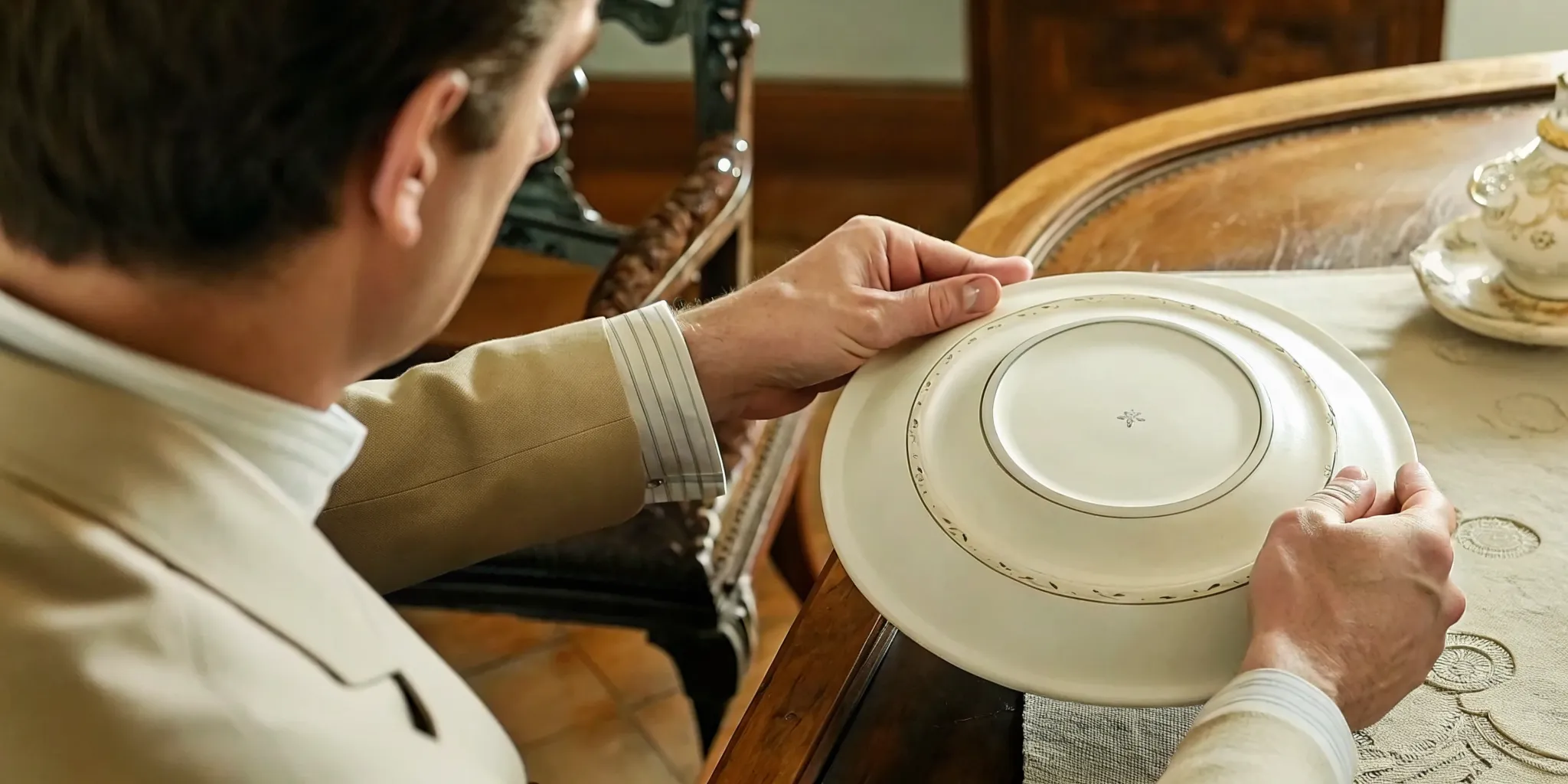
Turn over plates, serving pieces, cups, and accessories and photograph every mark, signature, or symbol. Manufacturer marks and artist signatures are often found on the underside or base of a piece. The backstamp can help identify the maker, pattern, approximate production period, and whether the design may be limited or discontinued. The Smithsonian Institution maintains reference information for porcelain and pottery marks, which can be useful during initial research.
Royal Worcester, Wedgwood, and Meissen are among the manufacturers often sought by collectors. Limoges and Rosenthal may also deserve closer attention, particularly when a mark, pattern, or form points to a specific production period. Older china from significant manufacturers can attract strong resale interest, while limited-edition or discontinued collections may command more than comparable mass-produced pieces. For additional context, see this guide to valuing fine china and porcelain.
Look for condition red flags
Inspect each piece in bright, indirect light. Chips, cracks, and crazing can significantly reduce market value, even when a pattern is desirable. Check rims, handles, feet, finials, and transfer-painted areas carefully. Note repairs, replacements, fading, stains, and missing pieces rather than trying to conceal them. A complete, matched service generally sells better than a group of unrelated or incomplete pieces, although rare individual pieces can still be important.
Choose the right appraisal method
Online databases and valuation services can provide a quick starting estimate, but historical sales data may not reflect current market conditions. They may also miss details in a backstamp, variation, repair, or regional demand. A professional appraisal is usually more reliable because an experienced specialist can assess the object itself. Compare relevant market evidence, and distinguish a genuine rarity from a common reproduction.
Lion and Unicorn can help executors move from preliminary identification to a documented valuation or consignment strategy. If the china is part of a larger estate. An in-person review is often the clearest way to understand what deserves individual attention and what should be grouped for sale. For more on the full estate process, read this estate liquidation guide for inherited collections.
What Factors Determine the Value of China and Dinnerware?
Several details work together when specialists estimate the value of inherited china. A recognized maker, scarce pattern, earlier production period, complete place setting, and strong collector demand can all increase interest. However, a desirable name does not automatically make every piece valuable. The specific pattern, size of the group, condition, and current market all matter.
Brand reputation, rarity, and age
Manufacturer reputation is an important starting point. Royal Worcester, Wedgwood, and Meissen are well-known names that are often sought by collectors, but the mark alone is not enough to establish a price. An uncommon pattern from a respected maker may attract more attention than a common pattern from the same company. Antique china from significant manufacturers or notable historical periods can also hold stronger resale interest because age, maker, and historical significance frequently influence demand.
Rarity can come from more than age. Limited-edition pieces and discontinued collections may command higher prices because collectors have fewer opportunities to locate them. Current demand can shift, so a pattern that sold quickly in the past may not have the same audience today. The most reliable assessment considers recent collector interest alongside the maker and pattern identification.
Completeness and condition versus rarity
Completeness often makes a practical difference. Full, matched sets generally fetch higher prices than scattered individual pieces or incomplete groups, particularly when the set includes serving pieces, lids, or less common place settings. Keep all related pieces together during sorting, even if the set is not immediately complete. A professional may recognize that separate family boxes belong to one service.
Condition can either reinforce or undermine the value created by rarity. Chips, cracks, and crazing significantly reduce market value, even when a pattern is old or difficult to find. A rare piece with a visible crack may still interest a specialist, but it should not be valued like an undamaged example. Avoid discarding imperfect pieces before assessment, since they may help complete a service or provide useful evidence of the pattern.
For practical guidance on selling inherited china and dinnerware, document the maker, pattern, approximate age, quantity, and visible defects before seeking an appraisal. That information gives Lion and Unicorn or another qualified specialist a clearer basis for evaluating both individual pieces and the collection as a whole.
Auction House vs. Direct Sale: Which Option Is Best?
For families deciding how to sell inherited china and dinnerware, the best route depends on the collection’s value, condition, completeness, and deadline. Auctions put distinctive pieces in front of motivated collectors, while direct sales can move ordinary or lower-value items more quickly. A structured inventory and professional review usually produces the strongest financial result.
| Factor | Auction house | Direct sale |
|---|---|---|
| Price potential | Competitive bidding can create the strongest market price, particularly when collectors recognize the maker, pattern, or rarity. | A fixed offer or individual listing provides more control, but the price may not reflect the collection’s full collector demand. |
| Speed | Requires time for appraisal, cataloging, marketing, the auction, and settlement. | Often faster, especially for pieces sold through eBay, Facebook Marketplace, or a specialist buyer. |
| Convenience | A full-service firm can help inventory, photograph, describe, market, and coordinate the sale. | The seller handles pricing, messages, packing, shipping, meetups, and decisions about unsold pieces. |
| Ideal for | Rare, complete, high-value, or strongly collectible sets where specialist exposure matters. | Common patterns, individual replacements, modest-value pieces, or situations where immediate payment matters most. |
When an auction is the stronger choice
Auction houses target collectors rather than a general audience. That distinction matters when a set has a recognized manufacturer, an unusual pattern, or a level of quality that is difficult to explain in a casual listing. Lion and Unicorn, for example, combines specialist knowledge with live and online auction reach. Its audience can include collectors who are prepared to compete for the right pieces. To understand how auction consignment works in practice, see this guide to online estate sale auctions.
Christie’s demonstrates the international reach possible through the auction model. It holds auctions of Chinese ceramics, English and Continental pottery, porcelain, and glass in London. Paris, Hong Kong, and New York, while also offering selected pieces through private sale. For many inherited collections, a regional specialist offers a more accessible process while still presenting the material to an informed market.
When direct sale may make more sense
Direct sale is practical when speed and simplicity outweigh the possibility of a higher price. Replacements.com may suit sellers with identifiable pieces sought by people completing a set. Although its drop-off appointment process requires a $1,000 minimum. eBay can reach a broad buyer pool. While Facebook Marketplace may work for local pickup and larger groups of dishes. Chinasearch alternatives can also be useful when a seller already understands the pattern and realistic asking price.
The choice does not have to be all-or-nothing. Estate liquidation may combine an auction, private sales, and an on-site sale depending on the volume, value, and type of property. Begin with an inventory, separate complete sets from loose pieces, and obtain an informed assessment before accepting a quick offer. If you are selling dinnerware sets, that extra step can reveal opportunities a general marketplace would miss. Learn more about the differences between these approaches in this estate consignment versus auction guide.
How to Prepare Inherited China for Sale
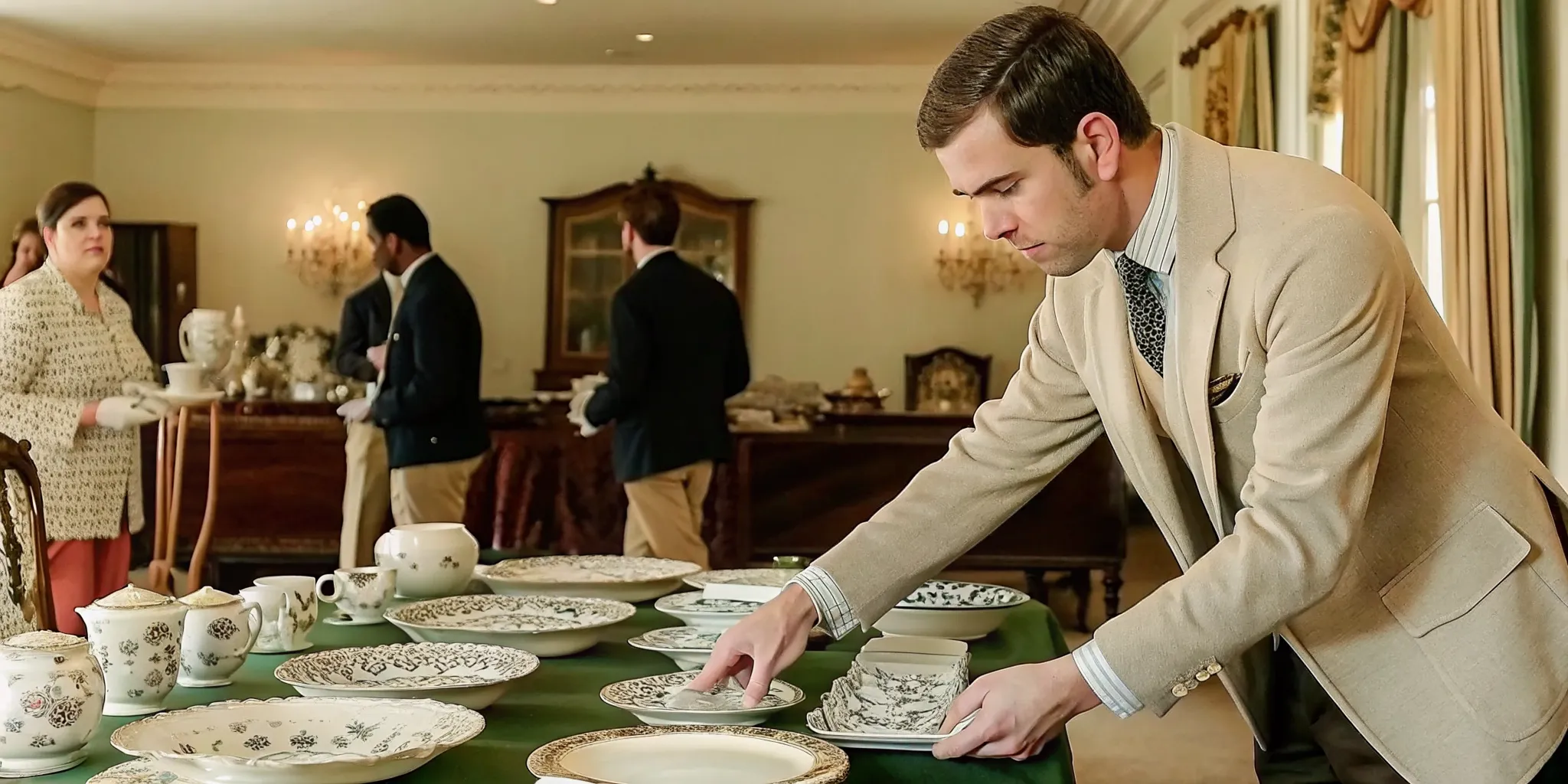
Careful preparation protects both the condition and the information that helps buyers understand a china collection. Work methodically, keep matched pieces together, and record flaws honestly. A clean inventory also gives an auction specialist or appraiser a reliable starting point when deciding whether to consign a set. Group pieces by pattern or market individual serving items.
- Inventory and photograph every piece. Lay out plates, cups, saucers, serving dishes, lids, and accessories by pattern or maker. Record quantities and photograph the front, backstamp, distinctive decoration, and any visible wear. Keep photographs with the written inventory so missing pieces can be identified later. If you need broader guidance, this estate liquidation resource explains how inventory fits into an overall estate strategy.
- Clean conservatively. First check whether a piece is glazed or unglazed, and look for hand-painted decoration. Unglazed ceramics should not be washed, while valuable ceramics should never go in a dishwasher. For suitable glazed pieces, use mild detergent in a sink lined with a foam pad, handle one piece at a time, and dry with a soft cloth. Use a lint-free cotton duster or a soft artist’s brush for intricate areas. Avoid sprays and polishes, which can discolor finishes. These precautions follow preservation guidance from the Kansas Historical Society and the Museum of Royal Worcester.
- Inspect for damage before and after cleaning. Look closely for chips, hairline cracks, crazing, discoloration, loose handles, and old repairs. Water can weaken some older restoration materials, so do not assume a repaired piece is safe to submerge. Move larger or delicate pieces with both hands, supporting them from underneath rather than lifting by a handle, knob, or rim. If anything breaks, collect every fragment, including small slivers, and keep them separately for a conservator.
- Research pricing with sold listings. Search eBay’s completed or sold listings using the maker, pattern name, piece type, and condition. Compare actual sale prices rather than optimistic asking prices, and note whether the result represents a single piece, a partial group, or a complete matched set. Treat online research as an indication of market activity, not a formal appraisal, because demand and condition can vary substantially.
- Store the collection safely until sale. Stack plates only with paper towel or flannel liners between them, keep shelves uncrowded, and protect pieces from temperature extremes and direct sunlight. Fading can affect hand-painted designs, while crowded shelves increase breakage risk. Do not separate lids, saucers, or serving pieces from their matching sets during storage.
This process preserves evidence of the collection’s identity and condition while reducing avoidable damage before a professional evaluation or sale.
Where to Find the Best Market for Your China
The best selling channel depends on the quality, quantity, and condition of the china, as well as how much work you want to handle. A rare, complete service may attract serious collectors through an auction, while common mixed pieces may perform better in a local sale or a carefully managed online listing.
Auction house consignment
For valuable patterns, complete sets, and substantial estates, auction house consignment can provide the strongest combination of audience and convenience. Specialists present the china to targeted collectors, manage cataloging and photographs, coordinate bidding, and handle the transaction after the sale. This approach can be especially useful when you want competitive bidding without packing, listing, answering messages, or arranging individual shipments.
Lion and Unicorn offers a full-service auction and consignment model that fits estate executors who need a clear process and professional support. Estate liquidation is not limited to one dinner service. It may include the home’s furniture, artwork, jewelry, china, silver, coins, memorabilia, and other collectibles, according to Lion and Unicorn’s estate liquidation guidance. Managing related property together can make the process more organized than selling each item separately. For sellers with broader collections, this guide to selling antiques and collectibles provides additional context.
Online replacement and resale marketplaces
Replacements.com may be worth considering when you have at least $1,000 in merchandise and can meet its requirements for evaluation or drop-off. It can be a practical option for identifiable patterns with an established replacement market. eBay offers more control and a do-it-yourself route. Its sold listings can help you see what comparable pieces actually sold for, rather than relying only on asking prices. However, you will be responsible for descriptions, photographs, fees, packing, shipping, and customer service.
Estate sales and local dealers
Estate sales are often effective for mixed lots, everyday dinnerware, and households where many items need to move quickly. A local antique dealer may provide a convenient opinion or purchase, but a direct offer is not the same as exposing the collection to multiple competing buyers. Ask whether the dealer is evaluating individual pieces, a complete set, or the estate as a whole before accepting a price.
If you are comparing ways to sell inherited china sets, consider the value of your time as well as the expected sale price. A specialist can help determine which pieces deserve auction exposure and which should be grouped into a broader estate strategy.
Frequently Asked Questions
How do I determine the value of inherited china?
Start by recording the manufacturer marks, backstamps, pattern name, piece count, and condition. Marks are often on the underside, and reference resources such as the Smithsonian Institution can help with porcelain and pottery identification. A professional appraisal is usually more reliable than an automated online estimate because market conditions and details such as rarity may be missed.
Where is the best place to sell inherited china and dinnerware?
The best option depends on the collection’s value, size, condition, and how quickly you need to sell. An auction house can connect distinctive or higher-value pieces with collectors, while a replacement service or online marketplace may suit common patterns or individual pieces. For a larger estate, a full-service firm such as Lion and Unicorn can help coordinate appraisal, consignment, and liquidation.
Are there specific brands that have higher resale value?
Collectors often show strong interest in established manufacturers such as Royal Worcester, Wedgwood, and Meissen. Limoges and other significant makers may also attract attention, but the maker alone does not determine the selling price. Pattern rarity, completeness, age, demand, and condition all influence the final result.
What should I look for before selling my inherited china?
Inspect every piece for chips, cracks, crazing, stains, repairs, and missing components, and keep a written inventory with clear photographs. Avoid dishwashers and harsh cleaning products, which can damage valuable ceramics. The Kansas Historical Society recommends gentle cleaning with mild detergent for suitable glazed pieces, while unglazed or especially delicate ceramics may need to remain unwashed.
Can I sell a partial set of inherited china?
Yes. Partial sets, serving pieces, and individual place settings can still appeal to collectors or people replacing damaged items. However, full matched sets generally bring higher prices than incomplete sets, so keep all related pieces together during sorting and appraisal.
Ready to Discuss Your Inherited China?
When you have identified the pieces, a professional review can help you understand which sets, serving pieces, and individual items may be appropriate for auction or consignment. Lion and Unicorn can guide you through the next step with a practical, informed approach. To schedule an appraisal or consignment consultation, contact Lion and Unicorn and share a few details about the collection.
Free Consultation
Ready to Sell Your Estate or Collection?
Lion & Unicorn's expert team offers free appraisals and nationwide pickup service.
Over 30 years of experience — Florida's most trusted auction house.