


How to Handle an Inherited Estate: A Step-by-Step Liquidation Guide
Free Consultation
Ready to Sell Your Estate or Collection?
Lion & Unicorn's expert team offers free appraisals and nationwide pickup service.
Over 30 years of experience — Florida's most trusted auction house.
Inheriting an estate is rarely something you plan for. Whether a parent, grandparent, or loved one has passed away, you may suddenly find yourself responsible for a house full of belongings, from fine art and antique furniture to jewelry, collectibles, and everyday household items. Figuring out how to sell estate items while grieving can feel overwhelming.
📖 Related: selling estate jewelry
This step-by-step guide walks executors and heirs through the entire estate liquidation process, from the first walkthrough to the final sale. By the end, you will have a clear plan for turning an inherited collection into organized, profitable results.
Key Takeaways: – Estate liquidation is the process of converting a deceased person’s personal property into cash through sales, auctions, or donations. – A structured approach, starting with inventory and ending with a professional auction, typically yields the best financial results. – Working with a full-service auction house can handle pickup, packing, transport, and sale so you can focus on what matters most.
What Is Estate Liquidation?
Estate liquidation is the process of selling or otherwise disposing of the personal property in an estate. This typically happens after someone passes away, but it can also occur during a divorce, downsizing, or major life transition.
Unlike selling a house (which involves a real estate agent), estate liquidation focuses on the contents inside the home: furniture, artwork, jewelry, china, silver, coins, memorabilia, and collectibles. The goal is to convert these items into cash, distribute proceeds to heirs, and settle the estate efficiently.
There are several ways to liquidate estate items:
- Auction house consignment – items are professionally cataloged, marketed, and sold to the highest bidder
- On-site estate sale – a company runs a multi-day sale at the home
- Online auction – items are photographed and listed for bidding on platforms that reach buyers nationwide
- Private sale – individual items sold directly to dealers or collectors
- Donation – items given to charity for a potential tax deduction
Each method has its place, and many estates use a combination. The right approach depends on the volume, value, and type of items involved.
📖 Related: estate sale tips
Step 1: Secure the Property and Gather Documents
Before touching a single item, take care of the legal and logistical basics.
Secure the home. Change the locks if necessary, especially if keys were given to neighbors, caregivers, or service providers. Make sure the homeowner’s insurance is still active and utilities remain on.
Locate important documents. Gather the will, death certificates (you will need multiple copies), insurance policies, and any existing appraisals or inventories. If the estate is going through probate, the executor or administrator will need legal authority before selling assets.
📖 Related: getting antiques appraised
Identify all heirs and beneficiaries. Before selling anything, confirm who has a legal claim to the estate’s contents. Check the will for specific bequests, such as a particular piece of jewelry left to a grandchild or a collection designated for a specific heir.
Consult an estate attorney if needed. Probate laws vary by state. In Florida, for example, the probate process can take several months. An attorney can clarify what you are legally authorized to sell and when.
Step 2: Conduct a Thorough Inventory
A complete inventory is the foundation of a successful estate liquidation. Walk through every room, including the attic, garage, basement, and storage units.
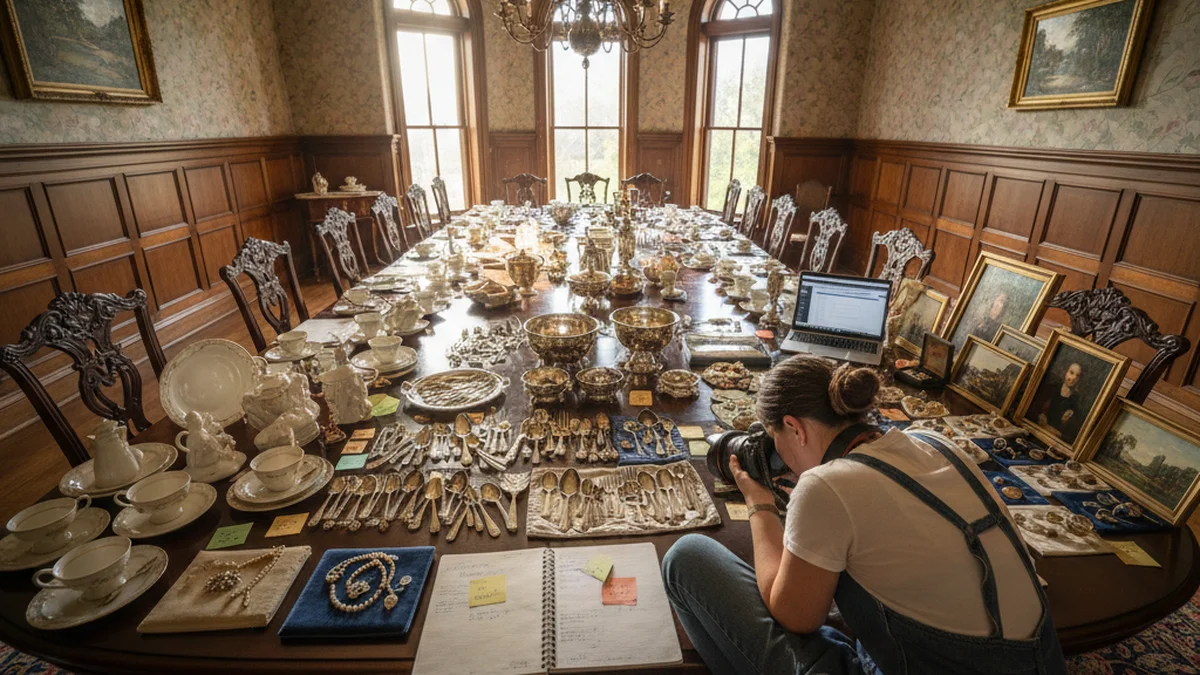
Document everything. Photograph or video each room and individual items of potential value. Note maker’s marks, signatures, labels, and condition. This visual record protects you legally and helps appraisers evaluate items remotely.
Organize items by category:
- Fine art – paintings, prints, sculptures
- Antiques and furniture – period pieces, mid-century modern, vintage items
- Jewelry and timepieces – rings, necklaces, watches, costume jewelry
- Collectibles – coins, stamps, sports memorabilia, figurines (Lladró, Royal Doulton, Swarovski)
- China, crystal, and silver – complete sets, sterling flatware, Waterford, Lalique
- Books, records, and ephemera – first editions, signed copies, vintage vinyl
- Everyday household items – kitchen goods, linens, tools, electronics
Do not throw anything away yet. Items that seem ordinary, like vintage buttons, mid-century kitchenware, or old advertising signs, can surprise you at auction. A professional appraisal from experienced specialists can identify hidden value in items you might otherwise overlook.
Step 3: Get Professional Appraisals
Not everything in an estate needs a formal appraisal, but high-value and hard-to-identify items absolutely do.
When you need a professional appraisal:
- Fine art, antiques, and jewelry of uncertain value
- Items needed for probate court filings or insurance claims
- Collections (coins, stamps, memorabilia) that require specialized knowledge
- Any item you suspect may be worth more than $500
Types of appraisals:
- Fair market value – what a willing buyer would pay a willing seller; used for estate tax and probate
- Replacement value – what it would cost to replace the item; used for insurance
- Liquidation value – what the item is likely to bring at a quick sale; used for planning purposes
A certified appraiser with expertise in the specific category, whether art, jewelry, or antiques, will provide the most accurate valuation. Lion and Unicorn offers certified appraisals and valuation services backed by over 30 years of experience in art, antiques, and collectibles.
Step 4: Decide What to Keep, Sell, and Donate
This is often the most emotionally difficult step. A clear framework can help you make decisions without regret.
Keep: Items with deep sentimental value, family heirlooms specifically bequeathed in the will, and items you will genuinely use or display. Be honest with yourself; keeping everything defeats the purpose of liquidation.
Sell: High-value antiques, art, jewelry, and collectibles that will attract competitive bidding. Also everyday items in good condition that have resale value. If you are unsure whether something is worth selling, let an expert assess it. Many items that heirs consider ordinary, like vintage costume jewelry or mid-century pottery, sell well at estate sales.
📖 Related: Where to sell antiques in Florida
Donate: Items that will not bring significant returns at sale but are still in usable condition. Charitable donations can provide tax deductions, which may benefit the estate. Keep detailed records and receipts for tax purposes.
For a deeper look at sorting strategies and common mistakes, see our guide on the do’s and don’ts of estate sales.
Step 5: Choose Your Liquidation Method
The best way to sell estate items depends on what you are selling, how quickly you need to close the estate, and how much involvement you want in the process.
Auction House (Best for Valuable Collections)
A professional auction house is typically the best choice for estates with significant antiques, art, jewelry, or collectibles. Auction houses bring specialized expertise, a built-in network of serious buyers, and competitive bidding that often pushes prices above what a private sale would achieve.
What a full-service auction house handles:
- Professional cataloging and photography
- Market research and reserve price recommendations
- Marketing to targeted buyer networks
- Online and in-person bidding platforms
- Pickup, packing, and transport of items from the home
- Settlement and payment after the sale
Lion and Unicorn provides all of these services with nationwide reach. Their team manages the entire process from the initial consultation to the final sale, including pickup, packing, and transport from anywhere in the country.
On-Site Estate Sale (Best for Large-Volume Household Contents)
An on-site sale works well when the home is filled with everyday items, furniture, and mid-range collectibles. An estate sale company prices everything, advertises the sale, and manages the event over two to three days.
Online Auction (Best for Reaching a National Audience)
Online auctions expose items to buyers across the country, which is especially valuable for niche collectibles, rare items, and specialty categories that may not have enough local demand. Explore current auctions at Lion and Unicorn to see how items are presented and sold online.
Combination Approach
Many estates benefit from a combination: high-value items go to auction, everyday goods go to an estate sale, and remaining items are donated. A professional estate sales consultant can recommend the right mix based on your specific situation.
Step 6: Prepare Items for Sale
Once you have chosen your liquidation method, it is time to prepare.
For auction consignment:
- Clean items gently (do not restore or refinish antiques, as this can reduce value)
- Gather any provenance documentation: receipts, certificates of authenticity, family history
- Note any damage or repairs
- Make items accessible for pickup
For estate sales:
- Organize items by room or category
- Remove personal documents, medications, and anything not for sale
- Ensure the home is clean and navigable
Pricing considerations: If you are wondering how to price items for an estate sale, research comparable sold items online or rely on your estate sale company’s expertise. For auction, the auction house sets estimates based on market data.
Step 7: Understand the Financial and Tax Implications
Estate liquidation has tax consequences that heirs and executors should understand before selling.
Step-up in basis: When you inherit an asset, its tax basis “steps up” to the fair market value at the date of death. This means you only owe capital gains tax on any appreciation that occurs after the date of inheritance, not on the original owner’s gain.
Estate tax: Federal estate tax only applies to estates exceeding the exemption threshold (currently $13.99 million in 2025). Florida has no state estate tax or inheritance tax, which is a significant advantage for Florida residents.
Income tax on sale proceeds: If you sell inherited items for more than their stepped-up basis, you may owe capital gains tax on the difference. Consult a tax professional for guidance specific to your situation.
Deductions for donations: Items donated to qualified charities can be deducted at fair market value. For items valued over $5,000, an independent appraisal is required for the deduction.
Step 8: Execute the Sale and Distribute Proceeds
With preparation complete, it is time to execute.
During the sale or auction:
- Stay in communication with your auction house or estate sale company
- Review and approve any reserve prices or minimum bids
- Be available for questions about provenance or item history
After the sale:
- Collect and review the settlement statement
- Distribute proceeds to heirs according to the will or probate court order
- Pay any outstanding estate debts, taxes, or fees from the proceeds
- File necessary tax documents
- Arrange final cleanout and donation pickup for remaining items
The entire process, from initial inventory to final distribution, typically takes four to eight weeks when working with an experienced team. Larger or more complex estates may take longer.
How Much Do Estate Liquidators Charge?
Fees vary depending on the method and the company. Here are the most common structures:
- Auction houses typically charge a seller’s commission (often 15-25% of the sale price). This covers cataloging, marketing, and conducting the sale.
- Estate sale companies usually take 30-50% of total sales as their fee.
- Appraisal fees are typically charged hourly ($100-$300/hour) or as a flat fee for the entire estate.
When comparing costs, consider the net result: a lower commission means nothing if the items sell for less. Auction houses that attract serious, knowledgeable buyers often deliver higher net proceeds despite their commission.

Frequently Asked Questions
What is the difference between an estate sale and an estate auction?
An estate sale is typically held on-site at the home over two to three days, with items priced individually. An estate auction involves competitive bidding, either online or in-person, where buyers compete for items. Auctions generally achieve higher prices for valuable antiques, art, and collectibles because of competitive bidding dynamics.
How long does estate liquidation take?
The timeline depends on the estate’s size and complexity. A typical estate takes four to eight weeks from initial consultation to final sale. Larger estates or those with extensive collections may take two to three months. Working with a full-service company that handles pickup, packing, and transport can significantly speed up the process.
Can I sell estate items before probate is complete?
This depends on your state’s probate laws and your authority as executor or administrator. In many cases, you can sell personal property before probate is finalized, especially if the court has granted you Letters Testamentary. Always consult your estate attorney before selling.
What items are worth the most at estate sales?
Fine art, antique furniture, sterling silver, fine jewelry, vintage watches, rare coins, and collectible figurines typically bring the highest prices. Niche collectibles like sports memorabilia, historical documents, and specialty items (Swarovski, Royal Doulton, Lalique) can also command strong prices at auction.
Do I need to clean out the entire house?
Not if you work with a full-service company. Lion and Unicorn offers pickup, packing, and transport services, meaning their team comes to the home, carefully packs items, and transports them to their facility for cataloging and sale. You do not need to handle the physical logistics yourself.
Handling an inherited estate takes time, knowledge, and the right support. If you are ready to start the process, contact Lion and Unicorn for a free consultation. With over 30 years of experience and full-service estate liquidation including pickup, packing, and transport, their team is ready to help you navigate every step. Call 954.866.8044 or visit lionandunicorn.com to get started.
If you need professional guidance, Lion & Unicorn’s estate liquidation services can help evaluate, catalog, market, and sell inherited property.
When the estate includes valuable objects, Lion & Unicorn can help you sell inherited antiques and collectibles through a specialist-led auction process.
Have antiques, art, or collectibles you’re ready to sell? Contact Lion and Unicorn to speak with our team.
Free Consultation
Ready to Sell Your Estate or Collection?
Lion & Unicorn's expert team offers free appraisals and nationwide pickup service.
Over 30 years of experience — Florida's most trusted auction house.