


Steuben Glass Value Guide: Signatures and Prices
Free Consultation
Ready to Sell Your Estate or Collection?
Lion & Unicorn's expert team offers free appraisals and nationwide pickup service.
Over 30 years of experience — Florida's most trusted auction house.
This Steuben glass value guide explains how signatures, production eras, designers, rarity, and condition shape the price of American art glass. A Steuben name on the base is useful, but it is only the beginning. Collectors pay very different amounts for a common clear-crystal animal, an early Frederick Carder Aurene vase, and a limited sculpture by a recognized designer. To estimate value responsibly, identify the exact form, document every flaw, and compare recent auction results for genuinely similar examples.
Request an auction evaluation for your Steuben glass
Steuben began in Corning, New York, in 1903 and developed two major collecting stories. The Carder period is associated with colored, iridescent, and experimental glass. The later era is best known for exceptionally clear lead crystal, restrained forms, and collaborations with notable artists. Both can be valuable, but age alone never guarantees a high price. The path begins with a careful identification of the piece before comparing any prices.
How to identify Steuben glass
Identify Steuben by combining the base signature, form, glass quality, finish, and a match to a documented stock number. Never rely on an etched name alone, because signatures can be copied and some authentic early pieces are unsigned.
Start in bright, indirect light on a padded surface. Examine the base, rim, handles, applied decoration, and any fitted components. Steuben’s later clear crystal is known for exceptional clarity, substantial weight, and a highly polished finish. A base may have a smoothly polished pontil area rather than a rough scar. Early colored glass varies greatly, so compare its shape, decoration, and color with documented examples instead of expecting every authentic piece to look alike.
Check the signature and stock number
Many examples carry an acid-etched or engraved Steuben signature on the underside. Depending on the period, the name can appear in script or block lettering. Early Carder-period pieces may have a fleur-de-lis mark, an acid stamp, a handwritten-style signature, or a number. A faint mark is not automatically suspicious, and a bold mark is not automatically genuine. Record the exact placement, lettering, and nearby numbers, then photograph them at an angle that catches the light.
A stock number can be especially useful because it links a piece to a known design. Match the number with the form, dimensions, color, and decoration. If a number points to a vase but the object is a bowl, more research is needed. Books, archival catalogs, and the Corning Museum of Glass research guidance can help establish identity, although museums generally do not provide market appraisals.
Judge quality, form, and finish
Look for clean finishing, balanced proportions, and carefully executed decoration. Later clear pieces should not have a gray cast or careless mold seams. Early iridescent glass should show an integrated surface effect rather than color that appears painted on. Weight and a clear ring can support an identification, but neither proves authorship. Other quality makers also produced heavy crystal, while shape and condition can affect the sound.
Compare the piece with reliable photographs from several angles. Silhouette is often decisive: the curve of a neck, profile of a foot, or placement of an applied element can separate an authentic documented form from a look-alike. Collectors learning adjacent makers may also benefit from the Fenton glass identification and value guide, which illustrates why maker-specific marks and production details matter.
For another important Scandinavian maker, see our Swedish Orrefors glass value guide for identification details, designers, and value factors.
Treat unsigned pieces carefully
Some authentic Steuben left the factory without a visible mark, and an old signature may be worn or hidden by base wear. An unsigned object needs stronger supporting evidence, including a documented form, correct measurements, characteristic glass, credible provenance, or an expert opinion. Do not add a signature or alter the base. An undocumented attribution should be described as tentative, because buyers pay less when authorship cannot be demonstrated.
Steuben signatures and dating clues
A Steuben signature helps date a piece only when read with its design, stock number, color, and production history. Signature styles overlap, so a mark by itself rarely establishes an exact year.
Dating Steuben is usually a process of narrowing a range rather than finding one precise day. Frederick Carder co-founded the company in 1903 and directed its early artistic production. The Carder years are associated with extensive color formulas and decorative experiments. After Corning Glass Works shifted the company’s direction in the 1930s, Steuben became celebrated for modern forms in exceptionally clear crystal. Recognizing which visual language fits the object is the fastest first step.
Read marks in context
Document the mark exactly as found, including capitalization, script style, surrounding symbols, and numbers. Use raking light rather than abrasive cleaning to reveal faint etching. Compare the lettering with published examples from the proposed era. A suspiciously fresh signature on a worn base deserves caution, as does a mark whose style conflicts with the design. Genuine marks can also look uneven because of the way they were applied, so irregularity alone does not prove a fake.
Labels, presentation boxes, receipts, and family records can add useful evidence. Keep them with the piece and photograph them. A box supports identity only when its size and fitted interior suit the object. Provenance is strongest when a document clearly names or pictures the same piece, not merely another Steuben object once owned by the family.
Use design history and numbers
Stock numbers, published catalogs, and designer records can connect an object to a documented model and date range. Confirm that every detail agrees. The same broad subject may have appeared in different sizes or versions, and replacement components can create a misleading combination. Designer attribution matters because collectors often seek works by Frederick Carder, Sidney Waugh, James Houston, Paul Haigh, or other recognized collaborators.
Production location may also matter for later pieces. Beginning in the early 2000s, Steuben used selected European producers for some lines while maintaining specifications for quality and finish. A later production history does not make a piece undesirable, but buyers may distinguish it from earlier Corning-made crystal. State the known period accurately rather than assuming every signed example was made in New York.
Build an evidence-based date range
When records conflict, list what is known and what remains uncertain. For example, a catalog can show that a design existed by a certain year without proving the year that one individual example was produced. A later retail receipt proves ownership by that date, not manufacture on that date. A defensible description might identify a Carder-period form with a likely decade while avoiding an unsupported exact year.
Which Steuben pieces are most collectible?
The most collectible Steuben pieces typically combine rarity, strong design, excellent condition, and documented authorship. Early Carder art glass, important clear-crystal sculptures, limited editions, and scarce colors often attract the strongest competition.
Demand is selective. A small group of advanced collectors may compete intensely for a rare Carder form while a familiar clear animal receives modest bids. Subject appeal, scale, and visual impact influence demand, but documentation separates a genuinely rare work from an attractive object with an ambitious asking price. Collector interest also changes over time, making recent comparable sales more useful than old price lists.
Carder-period colors and surfaces
Frederick Carder’s era produced a wide range of colored and iridescent glass. Gold Aurene and Blue Aurene are well known, but rarity depends on the exact form, color, decoration, size, and condition. Other admired types include Cluthra, Cintra, Tyrian, and various acid-cut or engraved designs. A familiar color on a common form may be less valuable than a scarce combination that is fully documented.
Surface quality is critical. Iridescence should be evaluated for scratches, dull spots, and restoration. Photograph color in neutral light without filters, because exaggerated images lead to poor comparisons. For context on another market where color and authenticity strongly affect demand, see the Murano glass value guide.
Important clear-crystal designs
Steuben’s clear-crystal era produced bowls, animals, presentation pieces, sculptures, and designs pairing glass with precious metals. Works associated with recognized artists or major commissions can command premiums, especially when complete and documented. The Gazelle Bowl designed by Sidney Waugh is an iconic example of the company’s modern aesthetic, but value still depends on version, condition, and market evidence.
Limited editions and elaborate sculptures can be desirable when they retain all components, fitted cases, certificates, and original packaging. A missing silver element or replaced fitting can reduce value substantially. Conversely, a common gift item does not become rare merely because its box survives. Use the box and paperwork as supporting evidence, not a substitute for identifying the object itself.
Rarity must be demonstrated
Words such as rare and unique should be supported by catalogs, edition numbers, archival evidence, or a scarcity pattern in auction records. Few online listings may simply mean that sellers describe the piece differently. Search by stock number, designer, dimensions, subject, and form. Check sold records, not only active listings. Museum collections, including the Art Institute of Chicago’s Steuben holdings, can help confirm significant designs without establishing a current price.
Steuben glass value guide by category
Steuben prices range from modest sums for common small crystal pieces to many thousands for rare, documented art glass and major sculptures. Category ranges are only starting points; exact form, condition, and recent comparable sales determine a defensible estimate.
Broad ranges help owners prioritize research, but they should not be treated as guaranteed sale prices. Small clear animals and table pieces often occupy the accessible end of the market. Larger bowls, engraved designs, early colored vases, important sculptures, and scarce designer works can sell for much more. Exceptional provenance can lift a piece beyond the usual range, while damage can push it below expectations.
| Category | Illustrative auction range | Primary value factors |
|---|---|---|
| Common small clear-crystal figures | $75-$400 | Subject, size, condition, and box |
| Bowls, table pieces, and engraved crystal | $150-$1,500 | Design, scale, completeness, and demand |
| Carder-period colored art glass | $300-$5,000+ | Form, color, rarity, signature, and surface |
| Important sculptures and scarce documented works | $2,000-$20,000+ | Designer, rarity, provenance, and condition |
These ranges are illustrative, not appraisals. Prices can fall outside them, and buyer’s premiums or seller fees affect the amount paid or received. The most useful comparison is a recent sale of the same model, size, color, and condition. If an exact match is unavailable, explain how each difference should influence value.
Compare sold auction records
Auction results show what bidders agreed to pay at a specific time. Confirm whether a published result includes the buyer’s premium, and note the sale date, venue, estimate, and condition report. One unusually high result may reflect two determined bidders; one low result may reflect poor photographs or undisclosed damage. A group of relevant sales is more dependable than a single result.
Retail and active marketplace prices can show availability, but they do not prove value because unsold pieces may remain listed for years. Insurance replacement values also serve a different purpose and are often higher than expected auction proceeds. When researching other clear-crystal markets, the Lalique crystal value guide offers useful comparison principles.
Account for transaction details
Estimate the likely hammer price separately from fees and net proceeds. Sellers may pay commission, photography, insurance, shipping, or other agreed charges. Buyers commonly pay a premium above the hammer price. Obtain the applicable terms before deciding whether an auction result supports your goal. A strong venue can expose a specialized piece to more qualified bidders, but timing and presentation still matter.
For current market evidence, browse relevant results and upcoming offerings through the Lion & Unicorn auction platform. Compare like with like and retain screenshots or links in your collection record, because online result pages and descriptions can change.
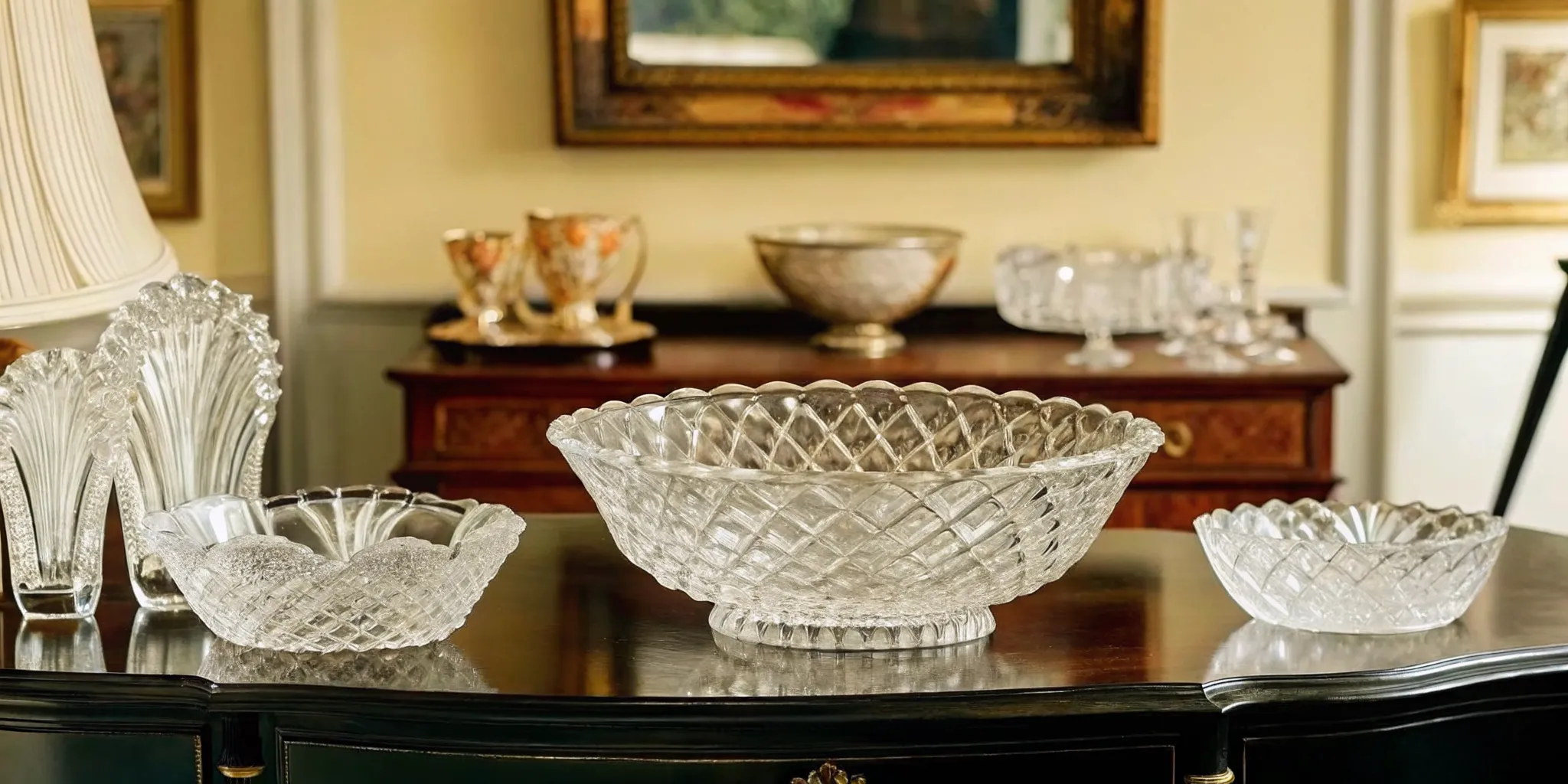
What affects Steuben glass value?
Condition, rarity, designer, form, color, provenance, completeness, and current collector demand all affect Steuben glass value. Condition and correct identification usually have the greatest immediate impact on sale price.
Two examples of the same design can sell far apart when one is pristine and the other has rim nicks, cloudiness, or polishing. Buyers also reward forms that are difficult to find, visually impressive, or associated with an important designer. A famous name does not erase condition issues, and excellent condition does not make a common form scarce. Evaluate each factor separately before combining them into an estimate.
Condition and restoration
Inspect the rim, base edge, high points, applied elements, and interior. Use a flashlight from several angles to find hairlines, bruises, scratches, and cloudy areas. Base wear can be consistent with age, but heavy wear affects presentation. Note water staining and internal residue. Never call a piece mint without a careful inspection, and disclose flaws clearly in any sale description.
Grinding, polishing, and other restoration can change dimensions or soften a profile. Professional work may improve appearance, but collectors still expect disclosure. Do not attempt aggressive cleaning on valuable glass. Sudden temperature changes, harsh chemicals, and abrasive pads can cause permanent harm. If treatment is needed, seek advice from a qualified glass conservator before acting.
Completeness and provenance
Confirm that stoppers, bases, silver fittings, and companion pieces are original and correct. A decanter with the wrong stopper may look complete but lose substantial value. Measure fitted components and compare them with documented examples. Keep boxes, certificates, receipts, correspondence, and exhibition labels together, since they can support identity and ownership history.
Provenance adds the most value when it is specific, credible, and relevant. Ownership by a notable collector or inclusion in a documented exhibition may matter. A family story without records is worth preserving as context, but present it as oral history rather than verified fact. Never remove old labels simply to improve appearance.
Market demand and presentation
Demand changes as tastes and collector groups evolve. Strong photographs, accurate measurements, and a precise description help qualified buyers recognize a piece. Include overall views, profile, base, signature, stock number, and every flaw. Neutral backgrounds and honest lighting are better than dramatic filters. Good presentation cannot change the object, but it can prevent a valuable feature from being overlooked.
Related collecting categories can provide context without serving as direct comparables. For example, the Depression glass value guide demonstrates how pattern, color, and condition create price differences in a distinct glass market. Keep Steuben comparisons limited to genuinely similar Steuben examples.
How to research and document your Steuben collection
Document each Steuben piece with measurements, weight, detailed photographs, marks, condition notes, provenance, and comparable sales. A consistent inventory makes appraisal, insurance, and eventual sale more accurate and efficient.
Create one record per object or matched set. Assign a simple inventory number that does not permanently mark the glass. Record height, width, depth, weight, color, subject, signature, stock number, and all components. Add the date and source of acquisition if known. Store photographs and documents in at least two secure locations, and update condition notes after a move or incident.
Photograph what buyers need to see
Take a full view from several angles, then photograph the base, signature, labels, decoration, fitted parts, and flaws. Place a ruler beside the object in one reference image, but do not let it obscure the piece. Use indirect daylight or diffused light to reduce glare. Clear images allow an auction specialist to assess whether the object merits deeper research before it is transported.
Photographing flaws protects both seller and buyer by establishing condition at a point in time. Note whether a line is a scratch, internal inclusion, or crack only when certain. If uncertain, flag it for inspection. Keep original image files because heavy editing can remove evidence and reduce confidence.
Research in a logical order
Begin with the signature and stock number, then compare form, dimensions, and color with reputable references. Search recent auction archives using several descriptions. Read complete condition reports when available. Follow citations back to catalogs or archival records instead of repeating unsupported online claims. The Corning Museum of Glass and its Rakow Research Library are important historical resources, but their research role is different from a commercial appraisal.
Next, build a comparable-sales sheet. Include the URL, sale date, auctioneer, lot description, dimensions, condition, hammer price if available, and notes explaining similarities or differences. Remove results that are merely active asking prices. Refresh the sheet before insurance review or sale because demand and currency values change.
Protect the physical collection
Handle glass with clean, dry hands over a clear padded surface. Lift a piece by its body rather than a delicate handle, finial, or applied element. Avoid stacking and leave enough shelf space that objects do not touch. Stable temperature and secure display reduce the chance of damage. For transport, separate components and use professional packing suited to valuable glass.
How can you sell a Steuben glass collection?
To sell Steuben glass effectively, identify and document every piece, obtain a current market opinion, and choose a sales venue with access to art-glass buyers. Group common pieces strategically while presenting rare works individually.
Begin with an inventory rather than an immediate sale listing. Separate potentially important works from common decorative crystal, but do not discard unsigned or damaged pieces before review. An experienced auction specialist can identify a scarce form that a general buyer might miss. Share photographs, dimensions, signature details, condition notes, and provenance so the specialist can recommend the next step.
- Inventory and photograph every piece.
- Record signatures, dimensions, condition, and provenance.
- Separate rare works from common decorative crystal.
- Request a current market opinion from an experienced specialist.
- Choose the sales path that fits the collection and timing.
Choose the right sales path
A specialist auction can create competition among collectors and provide transparent results. Direct sale may offer speed but less market exposure. Retail consignment can suit some pieces but may take longer. The best route depends on rarity, condition, quantity, timing, and the owner’s goals. Ask how the venue markets art glass, reports condition, handles reserves, and reaches remote bidders.
Common pieces may perform better in attractive groups, while rare Carder glass or important sculptures usually deserve individual catalog entries. Avoid mixing a major piece into a large miscellaneous lot. Accurate titles and descriptions should lead with maker, form, color or subject, designer when documented, dimensions, and condition.
Understand estimates and reserves
An auction estimate is a reasoned range intended to guide bidders, not a promise. A reserve is the confidential minimum under agreed terms. Setting expectations far above comparable sales can discourage bidding, while a realistic estimate can attract attention. Discuss fees, insurance, photography, shipping, payment timing, and unsold-lot policies before consigning.
For estates, decide who has authority to sell and retain records of approvals and distributions. Insurance schedules and old appraisals can help identify pieces, but they may not reflect current auction value. A fresh review should use recent sales and present condition. Keep copies of the final catalog description and result for future records.
Prepare without damaging value
Do not polish, repair, relabel, or aggressively clean a piece before seeking advice. Dust gently only when safe. Keep each stopper and fitted component with its correct object. Pack boxes and paperwork separately but label them to preserve the connection. Tell the auctioneer about every known flaw and restoration so buyers can bid with confidence.
Discuss the best auction strategy for your Steuben collection
Frequently Asked Questions
What factors determine the value of Steuben glass?
Steuben glass value depends on correct identification, condition, rarity, designer, form, color, provenance, completeness, and current demand. Recent auction sales for the same model and condition provide the strongest practical evidence, while chips, cloudiness, restoration, and missing components usually reduce value.
Are there Steuben glass price guides available?
Yes. Published references and archival catalogs can identify designs, stock numbers, dates, and designers, while recent sold auction records show current demand. A printed price can become outdated, so use books for identification and compare several recent, genuinely similar sales before estimating value.
Why is Steuben glass so expensive?
The most expensive Steuben combines exceptional craftsmanship with rarity, important design, strong condition, and collector demand. Early experimental colors, major clear-crystal sculptures, scarce forms, and documented designer works can require substantial skill to make and may appear infrequently at auction.
Can a museum appraise my Steuben glass?
Usually not. Museums and research libraries can provide valuable historical and identification resources, but they generally do not offer commercial appraisals for privately owned objects. For a market estimate, contact a qualified appraiser or an auction house experienced with Steuben and art glass.
Learn the true value of your Steuben glass collection
Accurate identification, honest condition reporting, and relevant sold comparisons turn a vague price guess into a defensible market opinion. Organize your photographs and records, then ask a specialist which pieces deserve individual research and how to reach the right bidders.
Request an auction evaluation for your Steuben glass
Free Consultation
Ready to Sell Your Estate or Collection?
Lion & Unicorn's expert team offers free appraisals and nationwide pickup service.
Over 30 years of experience — Florida's most trusted auction house.