


McCoy Pottery Value Guide: Marks and Prices
Free Consultation
Ready to Sell Your Estate or Collection?
Lion & Unicorn's expert team offers free appraisals and nationwide pickup service.
Over 30 years of experience — Florida's most trusted auction house.
A faint stamp, unusual glaze, or tiny chip can change a McCoy piece’s market appeal. Reliable identification starts beneath the base, then moves through form, finish, condition, rarity, and recent sales.
Request an expert evaluation of your McCoy pottery
A McCoy pottery value guide helps collectors identify a piece, judge authenticity, and estimate demand before comparing current market results. Start with any molded mark, style number, clay body, glaze, and shape, but never reject an unmarked piece solely for lacking a stamp. Early McCoy wares often had no maker’s mark, which also created room for fakes and look-alikes, according to the McCoy Pottery Collectors Society trademark reference. Then assess chips, cracks, repairs, glaze damage, rarity, and buyer interest, because a familiar shape in excellent condition may outperform a scarce piece with major restoration. A sound estimate pairs careful identification with recent sales of truly comparable examples, not optimistic asking prices or a single printed price range.
So, how can you separate a promising find from an attractive reproduction or an overpriced listing? McCoy pottery value guide at a glance lays out the first checks for marks, condition, rarity, and market evidence before you compare prices. To make a grounded estimate instead of a hopeful guess, the path begins with
McCoy pottery value guide at a glance
A useful McCoy pottery value guide starts with a range, not one fixed price. The same form can sell at different levels based on condition, glaze, rarity, and buyer demand. Treat each category below as a first sorting step before checking recent sales.
Practical value tiers
Common planters, bowls, and vases usually sit in the entry tier when their forms and glazes appear often. Unusual shapes, less common colors, and complete matched sets may reach the middle or higher tiers. Cookie jars and animal forms also draw collector interest, according to this Fairfax County history of McCoy pottery.
| Category tier | Typical examples | What may raise value | What may lower value |
|---|---|---|---|
| Entry | Common planters, bowls, and small vases | Clean glaze and clear shape | Heavy wear or common color |
| Mid-range | Distinctive forms and less common glazes | Strong demand and sound condition | Repairs, chips, or staining |
| Higher | Rare forms, scarce colors, and complete sets | Clear history and strong sold results | Doubt about age or maker |
| Specialist review | Unmarked, unusual, or disputed pieces | Confirmed authenticity and rarity | Look-alike or altered features |
Ask a pottery specialist to review an unusual McCoy piece
These tiers do not promise a sale result. They help narrow the search and show which pieces need closer review. A rare shape with a repair may sell below a common form in excellent condition.
Factors that shape the result
Start with condition and inspect every surface in good light. Note chips, hairlines, repairs, crazing, stains, and glaze loss. Then check the form, size, color, base, and any mark against known examples.
Authenticity deserves special care because early pieces may lack a maker’s mark, and look-alikes exist. A mark alone does not prove a piece is genuine. Collectors assessing or valuing McCoy pottery should compare the whole object, not only its base.
- Condition: damage, repairs, stains, and glaze wear
- Rarity: how often the same form and color appear
- Demand: how strongly buyers compete for that design
- Authenticity: whether form, clay, glaze, and marks agree
Using sold comparables
Search for completed sales of the closest possible match. Compare the same form, size, glaze, and condition rather than relying on asking prices. Record the sale date, venue, visible damage, and whether the piece was part of a group.
Use several relevant sales when possible, then explain any gap between them. A result for an intact piece should not set the range for one with a repaired rim. When matches are scarce or authenticity is unclear, seek a specialist review before making a sale decision.
How do you identify authentic McCoy pottery?
Authenticating McCoy pottery takes more than finding a familiar name on the base. Use the same inspection order each time, then compare every clue with a trusted catalog example. This method helps separate strong candidates from look-alikes before value enters the discussion.
A six-step inspection sequence
-
Study the form. Look at the vessel’s outline, proportions, handles, and molded detail. A catalog match should share the same shape, not just a similar theme.
-
Inspect the clay. Examine exposed clay along the foot and inside any small chips. Note its color, texture, weight, and how neatly the piece was formed.
-
Read the glaze. Check the color, sheen, coverage, and natural variation across the surface. McCoy became known for colorful glazes and unusual forms, but those traits alone do not prove a piece is genuine.
-
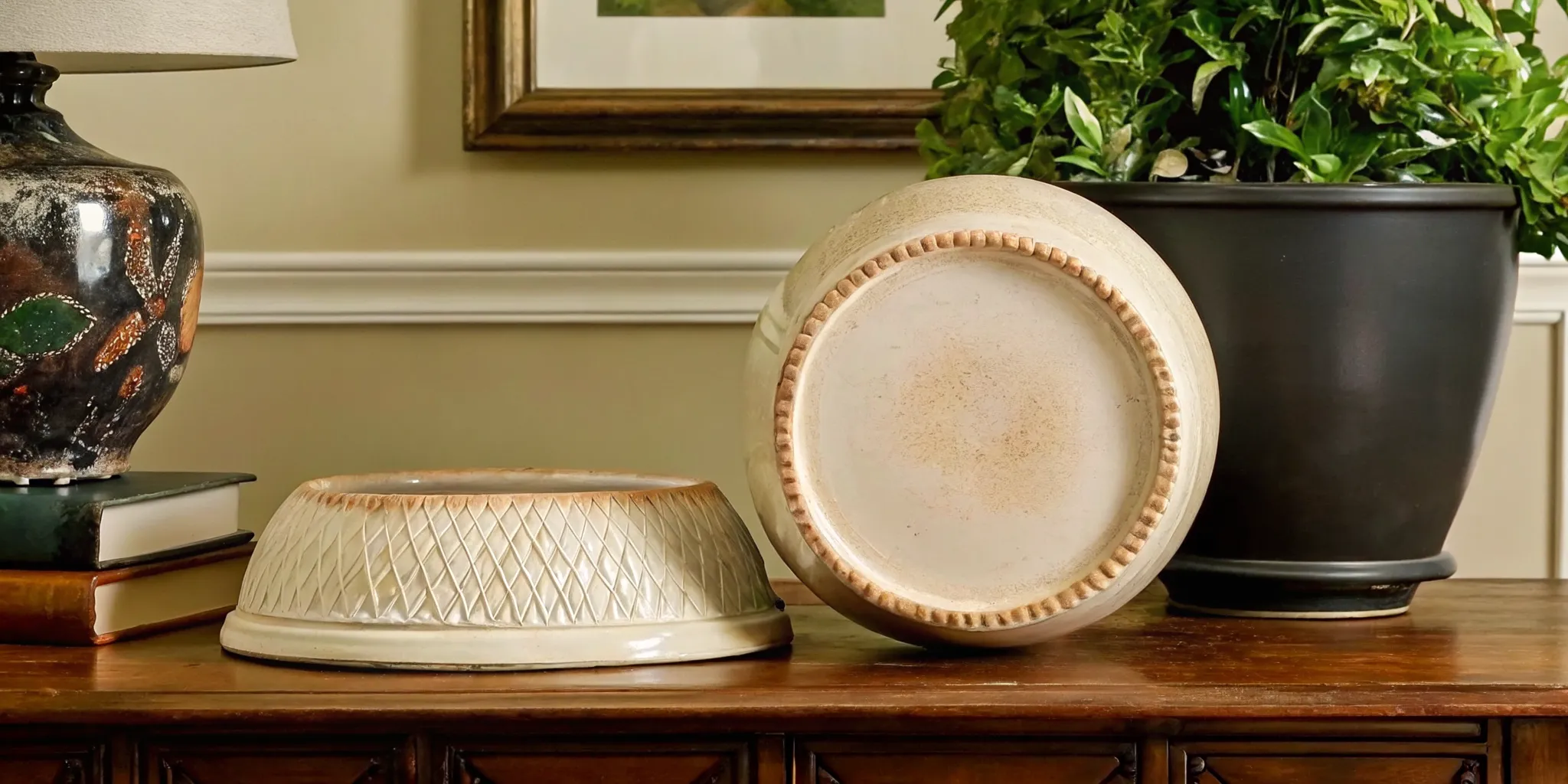
Turn over the base. Inspect the foot shape, glaze edge, firing marks, and signs of later grinding. The base should make sense for the form and production method.
-
Assess every mark. Record the exact wording, letter shape, depth, spacing, and any number. Compare the mark as a whole instead of treating the word McCoy as proof.
-
Confirm the catalog match. Compare form, size, glaze, base, and mark with a documented example. If several details disagree, pause and seek an expert opinion.
What if there is no McCoy mark?
An unmarked base is not an automatic failure. Early McCoy pieces often had no maker’s mark, which also created room for fakes and look-alikes. The Fairfax County Park Authority’s McCoy overview confirms this key issue for collectors.
On an unmarked piece, form and catalog evidence carry more weight. Look for an exact shape match, then check whether clay, glaze, dimensions, and base details support it. A vague resemblance to another planter or jar is not enough.
Authentication before valuation
Keep clear notes and photos during the inspection. Capture the front, sides, base, mark, damaged areas, and glaze details. These records make catalog comparison easier and help an appraiser judge the piece without relying on memory.
Authentication and value are linked, but they are not the same question. Once the identity is supported, condition, rarity, demand, and glaze can affect price. For market context or a second opinion, review Lion & Unicorn’s guidance on professional McCoy pottery evaluation.
Collectors also compare related American art pottery makers when judging glaze, form, and market demand. See Lion & Unicorn guides to Hull pottery marks and prices, Weller pottery identification, Roseville pottery patterns, and Rookwood pottery values for useful comparisons.
Understanding McCoy pottery marks and dates
A mark can narrow the search, but it rarely gives a complete answer by itself. McCoy used different names, impressed letters, and numbers during its long production history. Some genuine pieces have no maker’s mark at all. A careful review combines the base mark with shape, glaze, clay, size, and known production records.
A changing mark timeline
The markings changed as the pottery business and its product lines changed. Early examples may carry McCoy or Loy-Nel-Art wording, while style numbers appeared by 1929. By the mid-1940s, the company had shifted toward marks using only McCoy. These broad periods help organize research, but they do not date every piece exactly.
Company history offers another useful boundary. A Fairfax County history of McCoy pottery notes that the company was sold in 1967 and closed in 1990. Any claimed production date should fit within the maker’s documented history and the design’s known period.
Numbers, USA marks, and blank bases
An impressed number often points to a shape or model rather than a year. Compare that number with catalog references, then check whether the pictured form and measurements match. A USA mark may support an American origin, but it does not prove that McCoy made the piece. It also cannot establish a date on its own.
Blank bases deserve equal care. Early McCoy wares often lacked maker’s marks, which means an unmarked piece should not be rejected at once. The same gap also created room for fakes and look-alike wares. For an unmarked example, shape, glaze, clay color, and construction details carry more weight.
Marks are evidence, not proof
Never treat a familiar stamp as a stand-alone certificate of authenticity. Compare its lettering, spacing, depth, and placement with trusted examples from the same form. Then inspect the full piece for details that agree with the proposed age. A convincing base paired with the wrong body or glaze calls for more research.
A sound McCoy pottery value guide starts with identity before discussing price. Collectors should confirm the likely maker, form, production period, and condition as a group. For pieces headed to market, professional review can help with specialist guidance for a McCoy collection against relevant examples and sales records.
What determines McCoy cookie jar value?
McCoy cookie jar value depends on more than the name molded into the base. A sound appraisal weighs authenticity, form, decoration, condition, and recent demand together. Cookie jars are among the most sought-after McCoy items, but collector interest varies widely between designs.
Original lids and decoration
An original lid can make or break a jar’s value. Its glaze color, clay body, fit, and wear should agree with the base. A lid that rocks, pinches, or shows a different glaze may be a later replacement. Even a genuine McCoy lid from another design does not make the jar complete.
Original cold-painted details also matter, since this surface paint often fades or flakes with use. Strong color and clear facial features can lift demand when they remain authentic. Buyers should still favor honest age over fresh repainting. Chips, cracks, hairlines, repairs, stains, and heavy crazing usually reduce appeal, especially around the rim and lid.
Common forms versus scarce versions
Demand follows the exact version, not just the general character or shape. A familiar form in a standard glaze may appear often, while a scarce color or decoration may attract stronger bids. Small production differences, label traces, and unusual finishes can also separate an ordinary example from a better one.
Decoration must be judged with care. Crisp paint is appealing, but unusually bright surfaces may signal later work rather than rare factory decoration. Collectors should compare the jar with known examples before paying a premium. For help reviewing your McCoy pottery, document every mark, color, flaw, and repair.
Reproductions and sold comparables
Marks alone cannot prove that a cookie jar is authentic. Early McCoy wares did not always carry maker’s marks, and that gap helped create a market filled with fakes and look-alikes. For that reason, inspect the whole jar, including molding detail, weight, glaze, clay, and lid fit.
Use sold comparables rather than active asking prices. Compare the same form, glaze, decoration, lid status, and condition whenever possible. Check the sale date, auction venue, buyer’s premium, and whether the result reflects a single jar or a group lot. Several close results provide a firmer range than one unusually high sale.
If no exact match has sold recently, widen the comparison carefully. Start with the same form, then adjust for color, decoration, completeness, and damage. When reviewing a McCoy pottery value guide, treat listed prices as context rather than a fixed quote. The market ultimately rewards the jar collectors can verify and want now.
McCoy vases, planters, and early art pottery
Early McCoy production gives collectors a useful starting point for judging decorative pieces. The company first made practical stoneware, then shifted toward decorative ware in 1933, according to a Fairfax County history of McCoy Pottery.
Glazes and sculptural forms
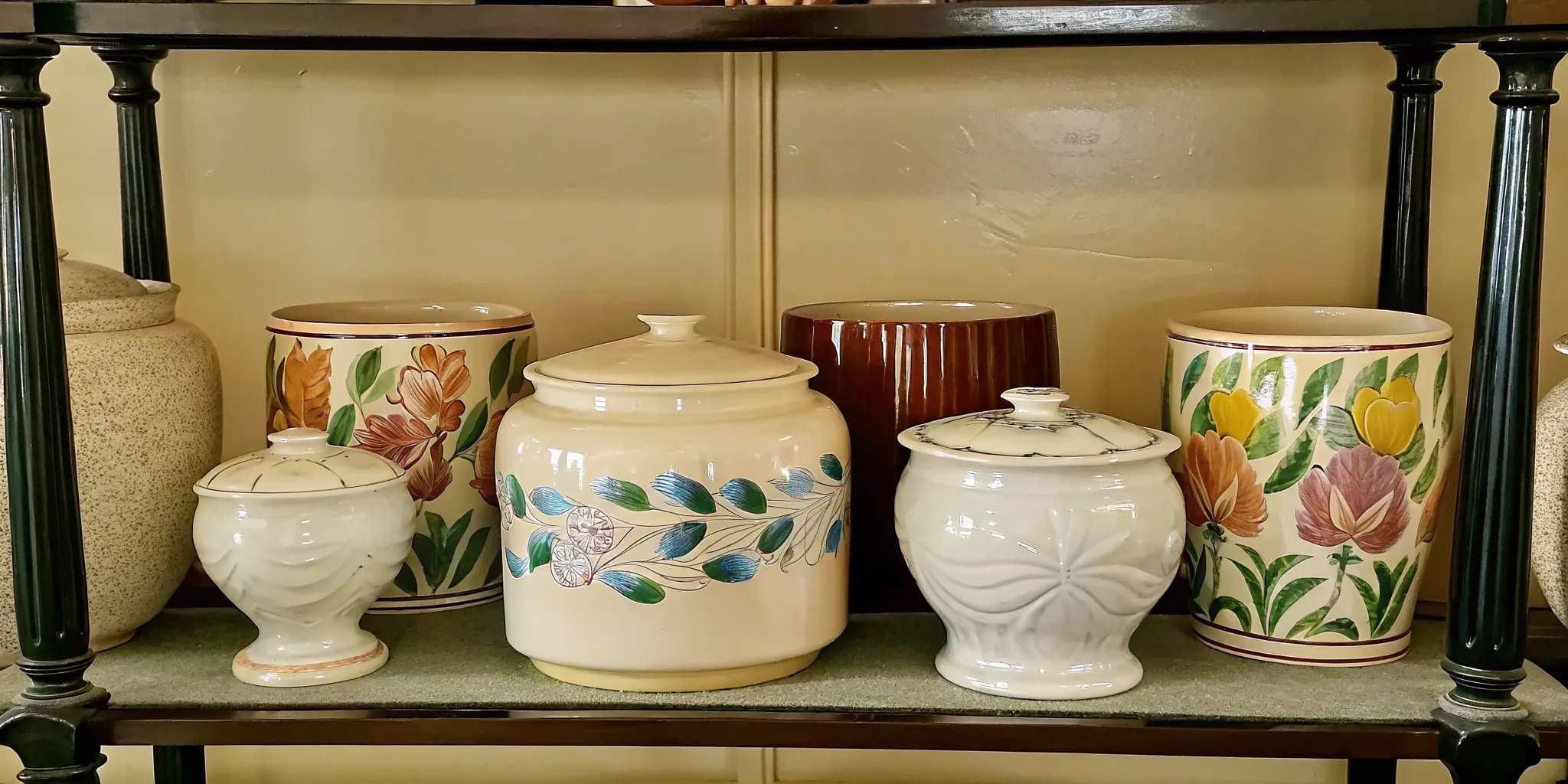
Vases, planters, and jardinieres show why McCoy became a major name in American art pottery. Collectors look for bold glaze color, strong relief, and forms that work as both pottery and room decor. McCoy became known for colorful glazes and unusual shapes, so visual appeal is central to this group.
A glaze should be judged across the whole piece, not from one bright area. Look for even coverage, intended color shifts, clean mold detail, and a surface that suits the form. Natural glaze variation can add character, but chips, cracks, repairs, and heavy staining may reduce buyer interest.
Planters, jardinieres, and matched sets
Planters range from simple floral forms to playful animal shapes. Jardinieres tend to have a larger scale and a stronger decorative presence. When reviewing either type, compare the shape, size, glaze, and condition with sold examples that closely match the piece.
- Check rims, feet, handles, and raised details for small chips.
- Inspect the interior for mineral marks, soil stains, and hairline cracks.
- Record the exact height, width, base mark, and any mold number.
- Note whether a vase or jardiniere belongs with a matching companion piece.
A matched pair or complete jardiniere-and-pedestal set should be researched as a set. Do not apply a single-piece result to the full group. The components should agree in glaze, scale, decoration, and wear before they are treated as original companions.
Decorative demand and value
Decorative demand can differ sharply between pieces that seem similar at first glance. A clean vase with a striking glaze may attract more attention than a rarer form with weak color or damage. Size also matters because large pieces create display impact, but they may have a smaller pool of buyers.
A useful McCoy pottery value guide should separate visual appeal from proof of age and maker. Early pieces may lack a maker’s mark, which makes close study more important. Compare mold quality, clay body, glaze, wear, and provenance before assigning a firm identity.
For owners considering a sale, recent results for the closest form and glaze provide the soundest market context. Lion & Unicorn’s guide to McCoy pottery appraisal guidance explains how specialist review can support that process. Keep sets together and document every condition issue before requesting an appraisal.
How condition changes McCoy pottery value
Condition can separate two otherwise similar McCoy pieces in the resale market. A useful McCoy pottery value guide should describe each flaw, not apply a fixed discount. Buyers weigh damage against rarity, design, glaze, and demand. A scarce piece with faults may still attract interest, while a common damaged example may be hard to sell.
Damage visible before a sale
Chips and cracks usually matter most when they affect the rim, handle, base, or another focal point. Check edges with good light, then inspect the inside and underside. A tight hairline can be easy to miss. Larger cracks may weaken the form and make safe shipping harder.
Crazing is a network of fine lines in the glaze. It differs from a crack through the pottery body, but buyers still assess its extent. Staining within crazing can draw more attention than clean, even lines. Scratches, glaze flakes, and worn high points should also appear in a condition report.
- Note each chip’s location, size, and whether the missing area is visible from the front.
- State whether a crack passes through the body or appears limited to the glaze.
- Describe staining by location and color without claiming it can be removed.
- Photograph the base, rim, handles, interior, and every damaged area.
Repairs and restoration
Repairs can range from a neatly reattached piece to broad fills and repainting. Look for glue lines, changed texture, uneven color, and areas that react differently under light. Do not call a repair invisible simply because it is subtle. Clear disclosure lets bidders decide how the work affects their interest.
Restoration may improve display appeal, but it does not make a piece original again. Record what seems restored and where it appears. If the extent is unclear, say so and seek an informed review. Authentication also matters because early McCoy pieces often lacked maker’s marks, and fakes and look-alike products exist.
Completeness and salability
A missing lid can change both appearance and use, especially for cookie jars, teapots, and covered vessels. Confirm that a present lid fits the body and belongs to the pattern. Replaced parts should be disclosed. Loose handles, unstable bases, and poor repairs can also limit buyer interest.
Cold-painted details sit on top of the fired surface, so visible paint loss can affect display quality. Describe the remaining color and avoid guessing how much has worn away. Salability depends on the whole object, not one flaw alone. For market context, compare condition with recent results when planning a sale for McCoy pottery.
Request an evaluation before selling inherited McCoy pottery
How to research and sell inherited McCoy pottery
Document the collection before cleaning
Start by giving each piece a simple inventory number and photographing it from every side. Capture the base, any mark, glaze, shape, size, damage, labels, and matching lids. Keep sets together, and record what the family knows about when and where each item was acquired.
Do not wash, repair, or remove old labels until a pottery specialist has reviewed the collection. Handle each piece over a padded surface, using both hands. Small chips, hairline cracks, repairs, and replaced parts can change buyer interest and sale expectations. Record each flaw without trying to hide it.
Research marks, forms, and sales
Sort the pieces by shared marks, colors, forms, and patterns. Use marks as clues, not final proof. Early McCoy pieces may lack maker’s marks, and fakes and look-alikes are common, according to Fairfax County’s collector history. Compare the clay body, glaze, mold details, and size with documented examples.
A McCoy pottery value guide is a useful starting point, but it cannot account for every piece. Search for recent completed sales that closely match the form, glaze, mark, and condition. Asking prices show seller hopes, while completed sales show what buyers accepted. Save the closest matches with their dates and condition notes.
Look beyond the first mark match. A rare glaze, original lid, unusual size, or strong condition may set one piece apart. A repaired example may belong in a different price range than an undamaged match. When records conflict, note the uncertainty instead of choosing the highest estimate.
Choose a sale path with professional input
Before choosing a venue, ask a pottery appraiser or auction specialist to inspect the strongest pieces. Professional review matters most when marks are unclear, forms seem scarce, or repairs are hard to see. An evaluator can also separate individual highlights from pieces that may sell better as a group.
For a collection or estate, organize the inventory and photographs before discussing consignment. Lion & Unicorn’s guide to evaluating an inherited McCoy collection explains a specialist-led sale path. Ask how pieces will be grouped, described, photographed, insured, and shipped. A sound plan balances likely demand with the care and cost needed to sell each item.
Frequently Asked Questions
How do I determine the value of McCoy pottery?
Start by identifying the form, glaze, mark, age, and condition. Then compare recent sold prices for closely matched pieces, rather than unsold asking prices. Rarity and collector demand can create large differences between similar forms. For a formal valuation, an appraiser can use documented sales records and account for repairs, provenance, and current demand.
How can I identify authentic McCoy pottery marks?
Authentic McCoy marks vary by production period and may include a name, logo, or style number. Some early pieces have no maker’s mark, so an unmarked base does not prove a piece is fake. The McCoy Pottery Online Reference Guide recommends researching marks carefully because many fakes and look-alikes exist. Compare lettering, clay, glaze, and mold details with documented examples.
How can I spot fake McCoy pottery?
Check whether the mark, shape, glaze, and clay body match a documented McCoy example. Warning signs include poorly formed lettering, weak mold details, artificial aging, and colors not associated with the known form. Since many early McCoy pieces were unmarked, a mark alone cannot confirm authenticity. Request clear base photographs and consult a specialist before buying an expensive piece.
Does the condition of McCoy pottery affect its value?
Condition can strongly affect McCoy pottery value. Chips, cracks, hairlines, staining, heavy crazing, and repairs usually reduce buyer interest and the likely sale price. However, collectors may accept minor flaws on especially scarce forms or glazes. Examine the rim, handles, base, and interior under strong light, and disclose every repair when seeking a valuation or selling the piece.
What are the rarest and most valuable McCoy pottery pieces?
There is no permanent list because rarity, condition, glaze, and collector demand change sale results. Scarce forms, unusual colors, limited-production pieces, and well-preserved examples often attract stronger interest. The McCoy Pottery Collectors Society reproduction guide notes that sought-after categories include cookie jars, umbrella stands, teapots, bookends, and animal-shaped planters. Verify a specific piece against recent comparable sales before assigning value.
Ready to Learn What Your McCoy Pottery Is Worth?
Waiting to identify your McCoy pottery can leave its value uncertain, delay estate decisions, and increase the risk of accepting less than the collection merits. Starting now gives an experienced evaluator time to review marks, condition, rarity, and relevant sales before you choose whether and when to sell. That early review can replace guesswork with a practical plan for a single piece, a grouped collection, or pottery within a larger estate.
Ready to understand what you have and decide on the next step? Request an evaluation of your McCoy pottery or estate collection to get clear guidance on identification, likely value, and an appropriate selling path. Acting now also gives you time to organize related pieces and consider your options without rushing an important decision.
Free Consultation
Ready to Sell Your Estate or Collection?
Lion & Unicorn's expert team offers free appraisals and nationwide pickup service.
Over 30 years of experience — Florida's most trusted auction house.