


Royal Worcester Porcelain Value Guide: Marks, Patterns, and How to Determine Worth
Free Consultation
Ready to Sell Your Estate or Collection?
Lion & Unicorn's expert team offers free appraisals and nationwide pickup service.
Over 30 years of experience — Florida's most trusted auction house.
A Royal Worcester piece can be worth less than £100, or it can sell for thousands, depending on details that are easy to overlook. The mark on the underside, the production period, the pattern, the artist, and the condition all matter more than a familiar name alone.
Schedule a professional porcelain appraisal with Lion and Unicorn.
This Royal Worcester porcelain value guide explains how to identify a piece, interpret its marks, compare patterns and figurines, and assess the factors that influence auction prices. Artist-signed wares, fruit-painted porcelain, early Georgian or Victorian examples, and sought-after works associated with James Hadley may attract particular interest.
Royal Worcester has been producing porcelain in Worcester, England, since 1751 and is regarded as one of the oldest surviving English porcelain brands. Understanding that long history is the first step toward reading a mark accurately and placing an individual piece in context.
Royal Worcester Porcelain Value Guide: A Brief History of the Worcester Royal Porcelain Company
Royal Worcester’s story begins in 1751, when Dr John Wall helped establish the Worcester Porcelain Company in Worcester, England. Production remained centered in the city for more than two and a half centuries, giving the manufacturer a particularly strong sense of place. It is regarded as one of the oldest English porcelain brands still in existence, and that long continuity is one reason a mark, shape, or artist’s signature can matter so much to collectors.
The company did not use one name throughout its history. Collectors may encounter references to the Flight factory, Flight and Barr, Barr Flight and Barr, Chamberlain and Company, Kerr and Binns, the Royal Worcester Manufactory, and the Worcester Royal Porcelain Company. These changes followed shifts in ownership, management, and manufacturing partnerships. A royal warrant granted in 1788 added prestige to the business and helped establish the royal association that remains central to its identity.
From Kerr and Binns to Worcester Royal Porcelain Company Ltd
James Hadley is an important figure in the company’s later nineteenth-century history. He joined Kerr and Binns in 1852, left to work as a freelancer in 1875, and established his own firm in 1896. Royal Worcester eventually absorbed the Hadley firm in 1905. Hadley’s name therefore appears both as an influential designer associated with Royal Worcester and as a separate chapter in the history of his own enterprise.
In 1862, after Kerr returned to Ireland, Richard Binns and Edward Phillips formally established Worcester Royal Porcelain Company Ltd. That corporate structure carried the business into the modern era, while its earlier names continued to provide useful clues when dating older pieces.
The twentieth-century conclusion
Royal Worcester merged with Spode in 1976, but later ownership and financial pressures continued to reshape the company. It entered administration in November 2008, and its last trading day was June 14, 2009. For anyone building a Royal Worcester porcelain value guide, this timeline is more than background. It helps place a piece within a particular period and explains why provenance, backstamps, and artist attribution deserve careful attention rather than a quick internet comparison.
Sources: the Art Institute of Chicago’s Worcester factory record and WorthPoint’s Royal Worcester history.
How to Identify Royal Worcester Marks by Reign
Royal Worcester backstamps changed as the factory changed names, owners, and manufacturing partnerships. A mark can therefore help establish the maker and approximate period, while signatures, decoration, and condition help determine whether the piece deserves closer attention in a Royal Worcester porcelain value guide.
Begin with the Dr Wall period, 1751 to 1783
Turn the piece over and look for the earliest crescent mark associated with the factory founded by Dr John Wall. Marks from this period are important because they belong to the earliest Worcester production. Compare the shape, placement, and quality of the mark with a reliable reference rather than assuming that every crescent indicates the same date. Early marks changed over time as the company developed, a history documented by the Art Institute of Chicago’s Worcester factory record.
Check for the Flight and Barr family of marks
Next, look for wording or symbols connected with Flight, Flight & Barr, and Barr Flight & Barr. These names identify successive factory periods and may appear alongside distinctive painted or impressed marks. Read every visible character carefully, since a partial mark can be mistaken for a later Royal Worcester backstamp.
Look for Chamberlain & Co and Kerr & Binns
Chamberlain & Co represents another recognizable period in the factory’s history. Kerr & Binns marks generally point to production from 1852 to 1862. This is a useful checkpoint when assessing a piece that appears Victorian or transitional. Record the complete wording before cleaning the base, and photograph it in angled light if the impression is faint.
Identify Royal Worcester marks after 1862
After 1862, look for the Royal Worcester name and the crown-based symbols associated with later production. The Crown mark and the Crown & Crescent are especially useful clues, but they should be read with the surrounding decoration and form. A printed puce mark can also appear on later pieces. Marks may indicate the manufacturer, date, and sometimes the designer or artist, so do not treat the symbol alone as a complete attribution.
Decode the date mark carefully
Some Royal Worcester pieces use a year-coded system in which dots, numbers, or letters help identify the production year, depending on the era. Count and record these details exactly, then compare them with a period-specific reference. Do not guess when a dot is worn or a letter is incomplete. The Blush Ivory period, produced primarily from the 1890s to 1914, is particularly collectable, especially when the piece also has strong decoration or an artist’s signature.
Finish by checking the base and the whole piece
Use the mark as a starting point, not a final valuation. Examine the foot rim, underside, and any hidden painted signature, then compare the mark with the shape, fruit painting, artist attribution, and condition. These factors can materially affect value, and specialist guidance is worthwhile when a mark suggests an early, rare, or signed example.
Evesham Gold and Other Collectible Royal Worcester Patterns
Evesham Gold is one of Royal Worcester’s most recognizable oven-to-table patterns, especially for collectors who appreciate its green vegetable and fruit motifs. The range was made in practical forms that remain easy to identify, including ramekins, covered casseroles, and flan dishes. A matching group can be more informative than a single plate because shape, decoration, and backstamp together help establish the pattern’s period and intended use.
Pattern recognition is an important first step in any Royal Worcester porcelain value guide. It can narrow the date range, distinguish an everyday tableware line from a rarer decorative design, and help an appraiser compare like-for-like auction results. It should not be treated as a value guarantee, however. Condition, completeness, decoration quality, and the mark on the base still need to be assessed.
Tableware patterns beyond Evesham
Pershore is another useful name to know. A Royal Worcester Pershore tureen and cover shows how the company applied its design vocabulary to larger serving pieces, not only to plates and cups. Floral designs also attract attention because painted flowers can vary considerably in execution, palette, and detail. When examining a floral piece, look closely at the painting rather than relying on the pattern name alone. Fine hand decoration, an unusual form, or a well-preserved original cover may make one example more desirable than another.
Decorative finishes and luster ware
Royal Worcester also produced decorative luster ware. In 1924, the company introduced luster ware to compete with Wedgwood’s dragon and fairyland lusters, placing the pieces within a broader story of twentieth-century design competition. The finish, color, shape, and originality of the surface are all relevant when comparing examples.
Blush Ivory is a separate decorative style rather than a single pattern. Primarily produced from the 1890s through 1914, it is highly collectible and can add interest to figures, vases, and other ornamental forms. A careful valuation pairs the finish with the base mark, artist or painter attribution where present, and condition. For that reason, pattern identification is best used as a pathway to research, not as a substitute for professional examination by Lion and Unicorn.
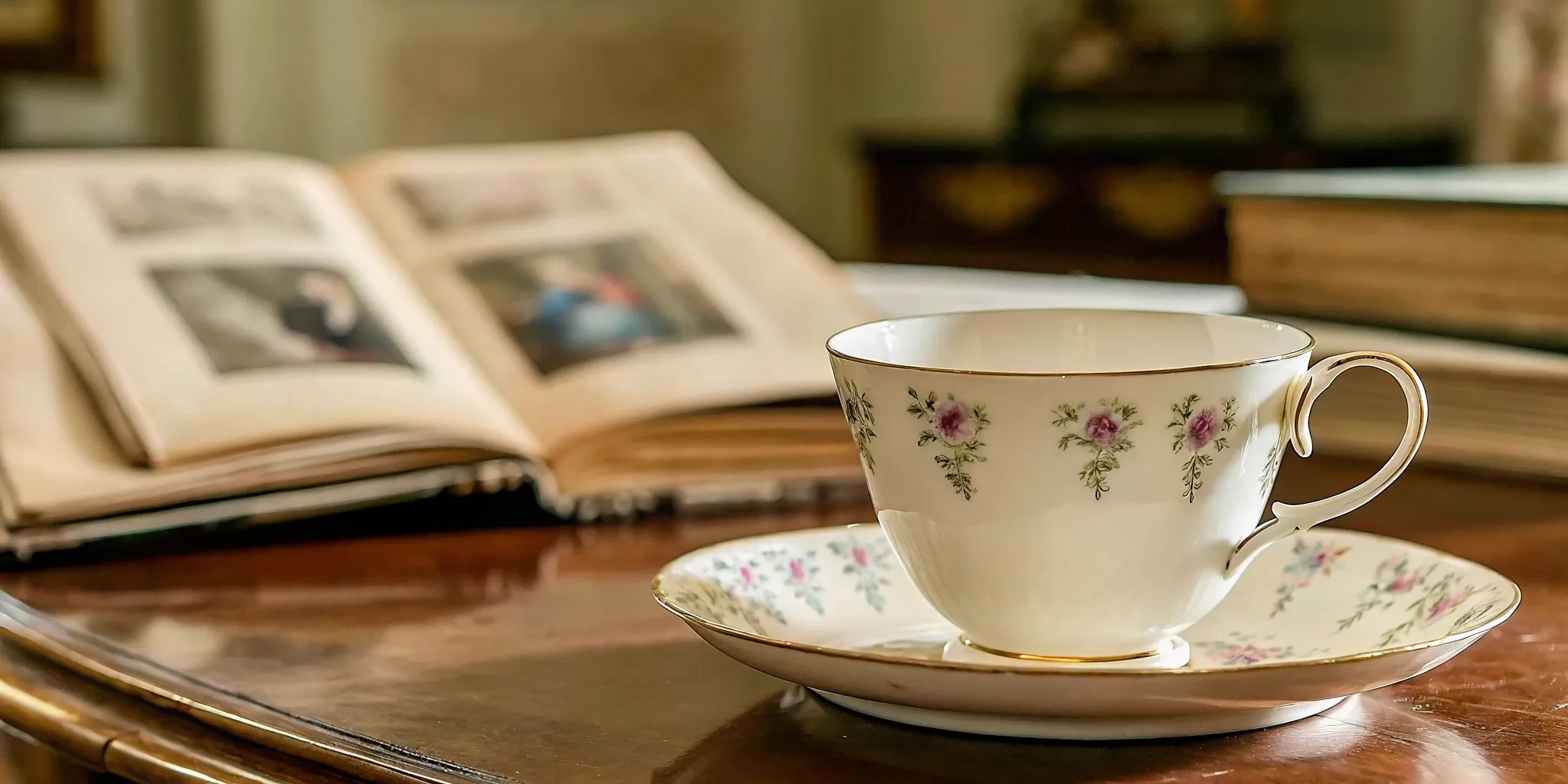
Sources: auction examples of Evesham and Pershore wares, and Royal Worcester history and luster ware background.
Royal Worcester Figurines and Sculpture Lines
Royal Worcester figurines span finely modelled historical figures, decorative spill holders, and animal sculptures, with appeal that depends heavily on design, age, condition, and attribution. The modern fine bone china figurine Upstairs Downstairs – The Chambermaid, dated 1989, represents a later collectible line, while earlier blush ivory pieces can carry a different level of scarcity and market interest.
James Hadley figurines and blush ivory figures
James Hadley is one of the most important names to look for when assessing Royal Worcester figural porcelain. He joined the firm in 1852, worked as a freelancer from 1875, established his own firm in 1896, and was absorbed back into Royal Worcester by 1905. That history can make attribution complex, particularly when a piece was produced around a period of changing business arrangements.
Blush ivory figural spill holders are among the forms associated with this collecting area. A Royal Worcester blush ivory spill holder depicting a boy carrying a basket has been identified as probably by Hadley. Rare, well-preserved Hadley pieces can command premium prices because collectors value both the sculptural quality and the connection to a major Royal Worcester modeller. A professional appraisal should consider the base mark, modelling details, decoration, and any evidence of restoration rather than relying on a general internet price.
Animal sculptures and artist signatures
Animal sculptures require the same careful approach. The modelling, finish, subject, and scale can distinguish an ordinary decorative piece from a more desirable signed work. Look closely for artist signatures and inscriptions, but do not assume that every mark identifies the modeller or guarantees a high value. Recognized Royal Worcester artists include Harry Ayrton, Raymond Rushton, John Freeman, and Walter Sedgley. Their signatures can materially affect buyer interest when they are genuine and attached to a desirable design.
Some signed pieces by recognized fruit painters have achieved thousands at auction, demonstrating why attribution matters in a Royal Worcester porcelain value guide. The strongest candidates combine a known artist, sought-after subject, strong condition, and clear provenance. Lion and Unicorn can assess these details together, helping owners distinguish a later figurine, a rare Hadley-related piece, and a signed sculpture with genuine auction potential.
What Factors Determine Royal Worcester Porcelain Value?
Royal Worcester porcelain value depends on a combination of condition, completeness, rarity, decoration, artist attribution, and production era. Decorative pieces may sell for under GBP 100, while rare, artist-signed wares can reach thousands at auction. A professional appraisal considers how these factors work together rather than relying on a single mark or pattern name.
| Factor | Impact on Value | What to Look For |
|---|---|---|
| Condition | Highest | No chips, cracks, or restoration; original finish intact. |
| Artist signature | Very high | Signed by Harry Ayrton, John Stinton, or other known painters. |
| Production era | High | 18th-century Georgian and early Victorian pieces command premiums. |
| Completeness | Moderate-high | Original lid, cover, stand, or matching components present. |
| Pattern rarity | Moderate | Unusual form, scarce decorative finish, or limited production run. |
| Decoration type | Moderate | Fruit painting, blush ivory finish, or fine hand-painted floral. |
Condition is usually the first value test. Chips, hairline cracks, repaired breaks, and professional restorations can dramatically reduce resale value, particularly on finely painted vases, figures, and delicate covers. Examine rims, handles, finials, feet, and painted surfaces under strong, even light. Do not attempt to conceal damage or undertake a home repair. Alterations can make an item more difficult to authenticate and may reduce its appeal to specialist collectors. The guide to selling inherited antiques offers additional preparation advice for families handling older collections.
Completeness also matters. An original cover, lid, stopper, stand, or matching component can materially improve desirability. A vase without its original cover, or a service missing important pieces, may be valued as an incomplete object even when the surviving porcelain is attractive. Record every component before cleaning, separating, or discarding anything. Small accessories can help establish how a piece was originally designed and used.
Age and rarity create another important distinction. Early Georgian and Victorian examples are often more sought after than later decorative production, especially when an unusual form, scarce pattern, or documented provenance is present. However, age alone does not guarantee a high price. A rare piece in poor condition may be less desirable than a later example with exceptional decoration and strong preservation.
Decoration and finish can move a piece into a higher collecting category. Fruit-painted porcelain is particularly important when the painting is finely executed and associated with a recognized artist. The blush ivory finish, produced primarily from the 1890s through 1914, is another collectible Royal Worcester style. Marks, shape, painter’s initials, and the quality of the decoration should be assessed together. For context, compare this process with our guide to identifying antique porcelain by mark and pattern.
Artist signatures can have a significant effect on value. Names associated with sought-after Royal Worcester wares include Harry Ayrton, Raymond Rushton, John Freeman, and Walter Sedgley. A signature should be verified rather than assumed from a resemblance in painting style. The condition of the painted surface, the period of the body mark, and the quality of the work all support or weaken an attribution. Our comparable collectible porcelain value guides show why artist, age, and condition must be considered together.
Lion and Unicorn can assess these details for owners who need a defensible estimate before insurance, inheritance planning, or sale. Photograph the front, back, base mark, signature, and any damage, and keep original components together until the piece has been examined.
Frequently Asked Questions
Is Royal Worcester porcelain valuable?
It can be. Decorative pieces may sell for under £100, while rare, early, complete, or artist-signed examples can reach thousands at auction. Fruit-painted wares, James Hadley figurines, and pieces from the Georgian or Victorian periods often attract particular interest, but condition and market demand remain decisive.
How do I determine the value of Royal Worcester?
Begin by recording the form, pattern, dimensions, base mark, date clues, artist signature, and condition. Look for chips, cracks, restoration, missing covers, or replaced parts, then compare the piece with credible auction results for similar examples. A specialist appraisal can account for rarity, provenance, completeness, and current buyer demand more reliably than a general online listing.
How do I identify Royal Worcester marks and dates?
Photograph the underside in good light and transcribe every mark, symbol, number, and signature. Royal Worcester marks changed as the business passed through different names and partnerships, including Flight and Barr, Barr Flight and Barr, and Kerr and Binns. Reference a specialist marks guide, then confirm the identification against the shape, decoration, and construction.
Are Royal Worcester figurines worth money?
Some are, especially well-preserved figurines associated with recognised artists or sought-after lines. James Hadley pieces are particularly collectible, while artist-signed examples can command strong prices. Do not assume every figurine is rare: verify the mark, model, signature, condition, and comparable auction results before setting an asking price.
Where can I find reliable Royal Worcester price guides?
Use specialist auction archives, museum collections, and reputable porcelain references to establish a starting range. Online listings show asking prices, not necessarily completed sales, so they should not be treated as definitive evidence. For insurance, estate, or selling decisions, Lion and Unicorn can assess the object in context and explain its likely market position.
Schedule a Professional Porcelain Appraisal
When marks, condition, pattern, and provenance make Royal Worcester difficult to assess, a professional review can help you understand the piece before deciding how to sell or insure it. Schedule a professional porcelain appraisal with Lion and Unicorn by contacting our appraisal team. Share clear photographs and any available history so the next step can focus on your collection.
Free Consultation
Ready to Sell Your Estate or Collection?
Lion & Unicorn's expert team offers free appraisals and nationwide pickup service.
Over 30 years of experience — Florida's most trusted auction house.