


Herend Porcelain Value Guide: Fishnet Figurines
Free Consultation
Ready to Sell Your Estate or Collection?
Lion & Unicorn's expert team offers free appraisals and nationwide pickup service.
Over 30 years of experience — Florida's most trusted auction house.
This Herend porcelain value guide explains how fishnet animal figurines are identified and valued. For sellers, color, condition, and the exact model shape the auction story.
Have a Herend collection to sell? Contact Lion and Unicorn for a specialist auction review.
Herend fishnet figurines value depends on the animal model, color variant, size, condition, and current collector demand. Sellers should confirm the porcelain mark, identify the hand-painted scale pattern, note gold or platinum accents, and inspect exposed points for chips, cracks, fading, or restoration. The fishnet decor is difficult to imitate because its narrow and widening scales are painted by hand across uneven surfaces, according to Herend Canada. That detail makes close inspection important. Auction valuation should also compare recent sold examples of the same animal and color, not broad asking prices for unrelated Herend pieces. A specialized auction review can place the figurine within the right collector market before sale.
A careful seller is not simply asking whether a figurine is old or attractive. The better question is what makes a specific example collectible enough to draw serious bids. To answer it, the path begins with What makes Herend fishnet figurines collectible?
Herend Porcelain Value Guide: What makes Herend fishnet figurines collectible?
Herend fishnet figurines are collectible because each scale pattern is painted by hand across the animal form. Model, colorway, size, condition, and collector demand all affect how a piece compares with recent sales.
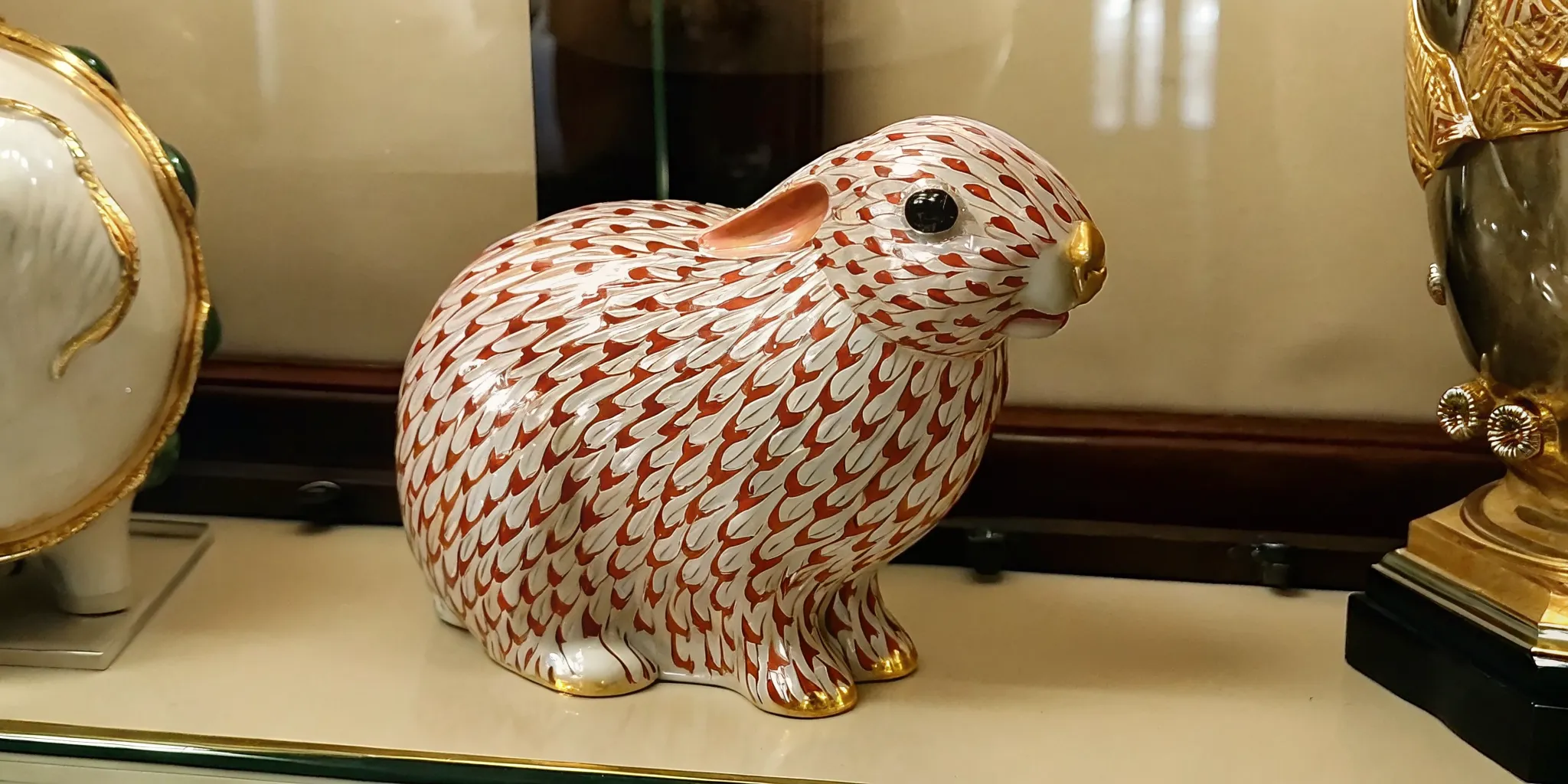
A hand-painted pattern with a long history
Herend fishnet figurines stand apart because the decoration follows the shape of each animal. The painter adds narrow or widening scales across an uneven porcelain surface by hand. That work gives the pattern a sense of motion rather than a flat, printed look.
The design also has a clear place in Herend history. Herend introduced the feather-like scaled decoration on a rooster figurine in 1871. Its account of fishnet decor traces this early use. The pattern later became a hallmark design. For collectors, that history helps explain why the fishnet finish is more than an added flourish.
Animals, color, and finishing touches
The subject matters because the fishnet pattern works with the animal’s form. It can follow a curved back, taper toward a leg, or frame the face. Painted details then bring focus to features such as eyes, ears, wings, or paws. A collector is choosing both an animal subject and a specific decorative treatment.
Color changes the character of the same subject. Gold ornament can add contrast, while platinum accents offer another finish. The porcelain body is also separate from the painted surface. For sellers, the more useful details are the painted surface, model, and condition.
Why collectors compare individual pieces
Herend fishnet figurines value is not a single fixed number. Collectors compare the animal subject, fishnet color, decorative accents, condition, rarity, and current demand. Two similar figures can appeal to different buyers. Their palettes and small painted details are not the same.
That focus also separates fishnet figurines from a broader discussion of Herend porcelain value. A general guide can cover marks, patterns, and dinner services across the maker’s output. A fishnet figurine review narrows the lens to animal models, hand-painted scales, color choices, and trim.
Look closely before comparing pieces. Note the animal, the color of the scales, the finish on the accents, and any visible wear. Then compare like with like. A fishnet rabbit and a fishnet rooster belong to the same collecting family, but they are not direct substitutes.
How do you identify a Herend fishnet figurine?
Compare related traditions in the Boehm guide and Royal Doulton guide.
Identify a Herend fishnet figurine by documenting the underside mark, model details, animal subject, colorway, dimensions, and hand-painted scale pattern. Use clear photographs from every side and treat identification as the first step toward specialist review.

Start with a careful review, not a quick verdict. An inherited animal figurine may have marks, painted details, or wear that deserve a closer look. Identification is the first step toward researching Herend fishnet figurines value. It is not the same as authentication.
What to record first
Handle the piece over a padded surface and photograph it in good light. The underside matters, but so do the sides, face, feet, tail, and raised details.
Use the same sequence for every figurine. That makes it easier to compare several inherited pieces without mixing up notes or images.
- Photograph the full animal from the front, back, and both sides. Add a top view when the pose or painted surface is hard to see.
- Turn the figurine over with care. Photograph the underside. Then take close views of each mark, stamp, painted notation, and number.
- Write down the subject and pose in plain terms. Note whether you have a rabbit, bird, fish, cat, or another animal.
- Record the colorway as it appears. Include the scale color, accent colors, and metallic-looking trim. Do not guess whether trim is gold or platinum.
- Inspect the painted finish at close range. Note the fishnet scales, facial features, small brush details, and areas that look uneven, faded, or worn.
- Measure the height, width, and depth. Photograph chips, cracks, missing parts, residue, or possible repairs. Do not try to clean or fix them first.
Hand-painted details and colorways
The fishnet surface deserves more than a passing glance. Herend describes the narrow and widening scales as details applied by hand to uneven surfaces. Its overview of fishnet decor also notes gold ornament and platinum accents. Record what is visible before drawing conclusions.
Do not rely on one feature alone. A mark may help with research, while the model number can help narrow the subject or version. The animal, pose, scale pattern, colorway, size, and condition belong in the same record.
From identification to research
Next, compare your notes with reliable reference material and past sale records for close matches. Lion and Unicorn’s guide to Herend porcelain value explains the broader role of marks and condition. Keep your photos with the measurements and written notes so a specialist can review the same evidence.
A checklist can narrow the search, but it cannot prove authenticity from photographs alone. If a piece may be scarce, altered, or repaired, ask for a specialist review before describing it for sale.
Which factors affect Herend fishnet figurines value?
Compare the Lladro guide and Cybis guide.
Herend fishnet figurines value is shaped by the exact animal model, pose, size, colorway, decorative accents, condition, and current demand. Compare the same subject and decoration whenever possible because broad brand-level comparisons can mislead sellers.
Start with the exact figurine
Herend fishnet figurines value depends on the specific piece, not the pattern name alone. Start by recording the animal, pose, height, fishnet color, and metallic accents. A common subject and an unusual subject should not be treated as direct matches.
The scaled fishnet design is applied by hand, as this Herend fishnet decor history explains. Small visual differences are worth noting. Still, an uncommon color does not prove that a piece is rare.
A practical inspection grid
Use this grid before looking for comparable sales. It keeps visible traits separate from assumptions about value. Describe the figurine well enough to compare it with similar examples.
| Factor | What to inspect | Why it matters |
|---|---|---|
| Animal subject and scale | Species, pose, height, width, and group composition | Subject and size define the closest comparison set. |
| Color variation and accents | Fishnet color, accent colors, gold, and platinum details | Different decor versions should be compared separately. |
| Rarity and availability | Repeated appearances, scarce versions, and matching examples | Limited availability can narrow the pool of useful comparisons. |
| Condition | Chips, cracks, losses, rubbing, repairs, and restoration | Damage can change how buyers assess the same model. |
| Age and documentation | Marks, labels, receipts, boxes, and prior sale records | Evidence helps support identification and ownership history. |
| Buyer demand | Recent interest in the same subject, size, and decor | Demand determines how much weight to give older comparisons. |
Evidence before assumptions
Condition deserves a close look under good light. Check raised points first, including ears, tails, feet, and applied details. Then look for hairline cracks, worn accents, and any area that may show repair.
Age can matter, but older is not an automatic synonym for more valuable. A mark, box, receipt, or prior record is useful when it supports the identification. Documentation is strongest when it can be tied to the figurine being assessed.
Demand is the final test. Compare results for the same subject, scale, color, and condition whenever possible. For broader background on marks and collector factors, review the Herend porcelain value guide before assigning weight to any single trait.
Do Herend fishnet colors change a figurine’s value?
Fishnet color can affect demand, but no single color is automatically the most valuable for every Herend figurine. Compare sold examples of the same model, size, decoration, and condition before drawing a conclusion.
Fishnet color descriptions
Color can affect interest in a Herend fishnet figurine, but it does not set the price by itself. A seller should describe the visible fishnet color before making a claim about rarity. Use plain terms such as blue, green, rust, or black only when they match the piece in hand.
Look at the painted scales under clear light. Note the main color, any second color, and whether the shade remains even across the form. Herend fishnet scales are applied by hand, including on uneven surfaces. That detail matters because small shifts can be part of the painted finish, not a flaw.
The safest listing keeps what you see separate from value. For example, write “green fishnet with gilt details” rather than “rare green Herend.” A rare-color claim needs support from the model, marks, sale records, or a known issue. Our Herend porcelain value guide explains how patterns and marks fit into the wider review.
Metal accents and painted details
Record accents as carefully as the fishnet. Herend has used gold ornamentation, while platinum accents have also become popular. The maker’s own overview notes this shift in fishnet decor. State whether the piece has gold-tone or platinum-tone accents, then check for wear.
Do not assume a metallic accent makes every figurine more valuable. Buyers still weigh the model, size, condition, marks, and demand for that form. Check raised edges, beaks, ears, tails, and feet. These areas can show rubbed paint, chips, or old repair.
The porcelain body also deserves a close look. For material context, kaolinite is a clay mineral. Yet a seller does not need lab terms in the listing. Clear notes about cracks, glaze wear, and restoration are more useful to a buyer.
Set-level consistency
When several figurines are sold together, review them one by one before calling them a matched set. Record the fishnet color, accent type, marks, size, and condition for each piece. A similar palette may help a group display well. It does not prove the pieces began as one set.
Consistency can still matter to a buyer. A group with the same fishnet color and similar accents may be easier to place in a collection. Mixed colors may also appeal to collectors who want variety. Describe what is present, avoid broad claims, and let the sale context support the estimate.
How should you check a fishnet figurine for damage?
For mixed porcelain, compare the Capodimonte guide.
Check a fishnet figurine under bright light, starting with exposed points such as ears, tails, legs, beaks, and raised details. Record chips, hairline cracks, paint loss, worn gilding, and possible restoration with close photographs before cleaning or selling.
Start with the fragile points
Set the figurine on a clean, padded table in good light. Look first at the ears, beaks, tails, legs, and any raised details. Turn the piece slowly instead of lifting it by a narrow part. A small chip can hide where a tail meets the body or under a curled feather.
Use a soft light from the side and inspect the surface from several angles. This can make hairline cracks, rough edges, and uneven repairs easier to spot. A magnifying glass may help with tiny details. Because the fishnet scales are applied by hand, compare nearby lines before deciding that a slight change is damage. Herend describes the hand-painted fishnet pattern as narrow or widening scales placed on uneven surfaces.
- Check pointed ears, open beaks, horns, claws, and toes.
- Follow long tails and thin legs from end to base.
- Inspect raised flowers, feathers, ribbons, and applied details.
- Look for fine cracks around joins and under overhangs.
Review the paint and underside
Next, check the color and gilt details without rubbing the surface. Note faded patches, scratches, and spots where decoration looks thin. Gold or platinum trim can show wear along exposed edges. Do not clean a marked area while you are still assessing it.
Turn the piece over with both hands and place it on padding. Photograph the underside, marks, labels, and any felt or residue. The base may reveal chips, old adhesive, or a filled area. For wider context on marks and collector factors, review the Herend porcelain value guide.
Pay close attention to changes in gloss, color, and texture. A repaired area may look smoother, cloudier, or slightly raised beside the original finish. Porcelain materials differ from surface paint and repair compounds.
Document before cleaning or repair
Write down what you see before moving the figurine into storage. Take clear photos of every side, then add close-ups of flaws and the underside. Include a ruler in one photo when scale matters. Keep notes about where the piece came from and whether its box or paperwork survived.
Avoid glue, paint touch-ups, and home repair kits. A quick fix can cover the original edge and make later review harder. If damage is present, wrap each piece separately in soft, clean material. Store loose fragments in a labeled bag beside the figurine, not against it.
Keep the figurine in a stable place where it cannot knock against other objects. Use padding under the base and leave room around raised details. If you plan to seek a value estimate, send the photos and notes first. Careful records help another reviewer assess condition without extra handling.
Need a closer review? See how to get antiques appraised before you set expectations for a sale.
How do you estimate a realistic auction value?
Estimate a realistic auction value by comparing several recent sold results for similar Herend fishnet figurines, not active asking prices alone. Match the model, colorway, size, and condition, then ask a specialist to explain the range for your specific piece.
Asking prices and auction results
An asking price is a seller’s opening position, not proof of market value. A realized auction result shows what a bidder agreed to pay at a specific sale. Neither number should stand alone. Compare like with like, then use several relevant results to frame a range.
For Herend fishnet figurines value research, begin with the exact object rather than a broad brand search. The wider Herend porcelain value guide explains why rarity, color, condition, and demand matter across the market. Your estimate should narrow that view to the same subject, colorway, size, and condition.
Recent sold-result examples
Barnebys realized-price records list April 2026 results for several fishnet pieces. Examples include Bunny with Butterfly at $700, Down The Rabbit Hole at $500, Kissing Sea Lions at $400, Squeaky Clean at $255, and Trochus Shell at $240. These are reference points, not appraisals.
Your figurine may differ by model, edition, size, condition, and demand. For an inherited group, review each piece individually before deciding whether to sell separately or as a collection.
A seller’s appraisal file
Build one clear file before you request an appraisal. Start with sharp photos of the front, back, sides, base, and painted details. Add close views of the mark and any area with wear, repair, or damage. Plain notes help a specialist review the piece without guessing.
- Record the animal or subject name, plus the number of pieces in any set.
- Measure height, width, and depth, and note the units used.
- Describe the fishnet colorway and any gold or platinum-colored details.
- Photograph the base mark in focus and copy any model number into the notes.
- List chips, cracks, losses, wear, or known repair work without minimizing them.
- Add provenance, such as receipts, prior sale records, or family history, when available.
Porcelain is not valued by material alone. The market question is specific: what is this Herend piece, and how does it compare with similar examples?
Specialist review and sale strategy
A porcelain specialist can review your appraisal file, check comparable sales, and explain which details may affect the estimate. Ask for a range, not a single promised figure. Also ask whether the figure is best offered alone, in a matched group, or with related pieces.
Sale strategy matters because presentation and grouping shape how bidders understand a lot. A clear catalog entry should use accurate dimensions, focused mark photos, direct condition notes, and the correct subject name. If a colorway needs close comparison, include detail photos that make the pattern easy to inspect.
Use the estimate to plan the sale. It can guide reserve discussions, lot grouping, and the choice of sale format. It cannot guarantee a final bid. The strongest starting point is a well-documented piece and a specialist who can place it within the current auction market.
Where should you sell Herend fishnet figurines?
For inherited groups, use the downsizing guide and estate checklist.
Sell notable Herend fishnet figurines through a venue that can identify the model, disclose condition, photograph the details, and reach porcelain collectors. The best route depends on the value, condition, and whether you have one figure or an inherited collection.
Selling one figurine
For one Herend fishnet animal, start with an auction house that regularly handles porcelain and decorative arts. Ask for an evaluation before setting a price. A specialist can review the form, fishnet color, marks, condition, and current buyer interest as a whole.
A general marketplace may look faster, but it puts the pricing work on the seller. That can lead to an asking price based on a similar-looking piece rather than a close match. Review the broader guide to Herend porcelain value before deciding whether a direct sale makes sense.
Send clear photos before moving the figurine more than needed. Include the front, back, sides, underside mark, and close views of any flaw. Herend’s fishnet scales are painted by hand across uneven surfaces, according to Herend’s description of fishnet decor. Sharp images help the reviewer examine those small details.
Selling a group or inherited collection
For several figurines, request a collection review before splitting the group. A specialist can decide whether related animals, matched colors, or similar sizes should stay together. Other pieces may sell more clearly as separate lots. This is a judgment call, not a rule for every collection.
Create a simple inventory first. Give each figurine a number, then note the animal, color, size, underside mark, and visible condition. Match that number to a set of photos. This makes it easier to compare pieces and prevents mix-ups during evaluation.
- Photograph each figurine against a plain background in even light.
- Show chips, cracks, worn paint, or possible repairs without trying to hide them.
- Keep any boxes, receipts, or notes with the matching item number.
- Do not clean, glue, or retouch a piece before asking for advice.
Condition reports before pricing
Condition reporting matters because small flaws can change how buyers assess a porcelain figurine. Look closely at ears, tails, feet, beaks, and other thin points. Note any restoration, even if the repair is hard to see. Honest reports help bidders judge the lot with fewer surprises.
Handle each piece carefully while checking it. Porcelain commonly uses kaolinite, a clay mineral with the composition listed by the National Library of Medicine. That material note does not set market value. It is a useful reminder to avoid needless handling while you photograph and inventory a collection.
Do not build a price from one online listing. An asking price is not the same as a completed sale, and two fishnet figurines may differ in key ways. Begin with documented details, then let a specialist recommend the right sale format and lot structure.
Frequently Asked Questions
How do you identify authentic Herend fishnet animal figurines?
Start with the underside mark, any model details, and the quality of the porcelain. Inspect the painted scales closely. Herend explains that the narrow and widening fishnet scales are applied by hand across uneven surfaces. A mark alone is not enough. For a high-value piece, ask a specialist to examine the figurine in person.
What factors influence the value of Herend fishnet figurines?
Herend fishnet figurines value depends on the animal model, colorway, size, condition, and current collector demand. Rarity also matters, but it should be supported by recent sales of comparable pieces. The Herend porcelain value guide notes that rare figurines and complete services can sell for well over $10,000. A seller should compare like with like before estimating value.
Does the color of the fishnet pattern affect the figurine’s value?
Yes. Color can affect demand, but no color is automatically more valuable for every animal model. Compare recent sold results for the same figurine, size, and decoration. Herend notes that gold ornamentation and platinum accents are used on fishnet pieces. Treat those details as part of the full comparison, not as a guarantee of a higher sale price.
How can I tell if my Herend figurine is damaged?
Examine the figurine under bright light and use magnification around ears, tails, feet, and other projecting details. Look for chips, hairline cracks, repaired breaks, worn gilding, and paint loss. Photograph the underside and each concern before requesting an estimate. A careful condition report helps an auction specialist distinguish a minor surface issue from damage that may affect bidding.
Where is the best place to sell Herend fishnet figurines for their true value?
The right venue depends on the model, condition, and likely buyer pool. A specialist auction house can identify the colorway, describe condition, and market the figurine to collectors. Before consigning, ask about the estimate, seller fees, photography, insurance, and sale schedule. For a common or lower-value piece, compare the expected net proceeds with reputable marketplace options.
Ready to understand your Herend figurine’s value?
Waiting to evaluate a Herend fishnet figurine can leave you uncertain about the right selling strategy. Starting now gives you time to confirm the mark, review the color variant, note condition details, and prepare for a better-informed auction decision. A professional valuation can help you decide whether, when, and how to bring your porcelain to market.
Ready to take the next step? Contact Lion and Unicorn to request a professional porcelain valuation and discuss the appropriate auction path for your Herend figurine.
Free Consultation
Ready to Sell Your Estate or Collection?
Lion & Unicorn's expert team offers free appraisals and nationwide pickup service.
Over 30 years of experience — Florida's most trusted auction house.