


Lladro Figurines: Complete Value and Identification Guide
Free Consultation
Ready to Sell Your Estate or Collection?
Lion & Unicorn's expert team offers free appraisals and nationwide pickup service.
Over 30 years of experience — Florida's most trusted auction house.
Whether you inherited a collection or found a piece at an estate sale, knowing what your Lladro figurines are worth starts with identifying the exact model, mark, condition, and current demand.
Request a free Lladro figurine evaluation before relying on an asking price or an unverified online estimate.
📖 Related: Hummel figurines value guide
Quick Summary: Lladro figurines are handcrafted Spanish porcelain sculptures made since 1953. Values range from $10 for common pieces to over $60,000 for rare High Porcelain masterpieces. To identify and value your Lladro:
- Check the base for the blue bellflower stamp and model number
- Cross-reference the model number with Lladro databases to confirm authenticity
- Assess condition, rarity, size, and production status
- Compare against recent auction results for accurate pricing
- Retired and limited-edition pieces typically command the highest prices
What Are Lladro Figurines?
Lladro figurines are handcrafted Spanish porcelain sculptures produced by the Lladró company since 1953. Common pieces may sell for about $10 to $200, while retired, limited-edition, Gres, and High Porcelain works can reach thousands or more. Value depends on authenticity, model, condition, rarity, sculptor, size, finish, and current collector demand.
Lladro figurines are handcrafted porcelain sculptures produced by the Spanish company Lladró, founded in 1953 by brothers Juan, José, and Vicente Lladró near Valencia, Spain. Each piece is sculpted, molded, painted, and glazed by hand at the company’s factory in Tavernes Blanques.
📖 Related: Capodimonte porcelain value guide
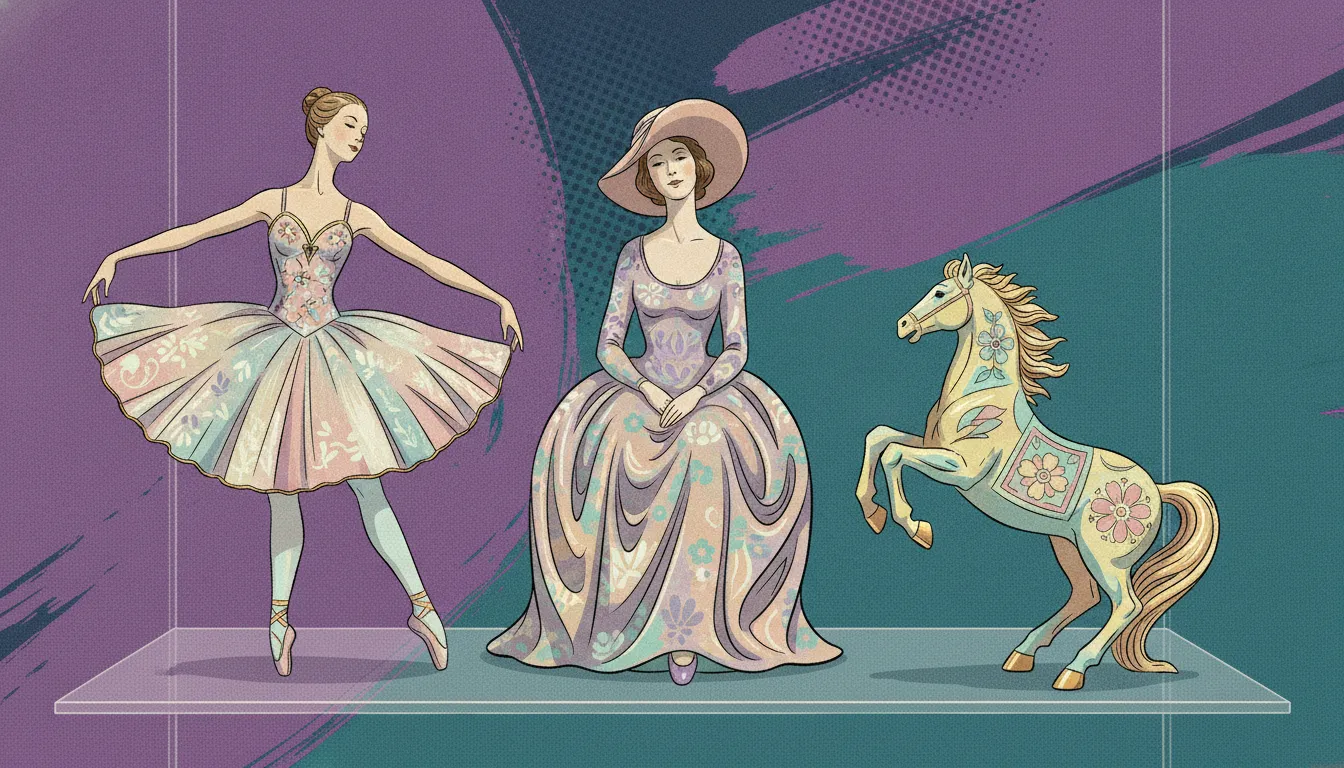
The brand is known for its soft pastel palette, graceful poses, and meticulous attention to detail. From delicate ballerinas and religious figures to elaborate multi-figure compositions, Lladro figurines represent a distinctive intersection of artistry and collectibility.
For collectors and sellers alike, understanding Lladro’s history, markings, and value factors is essential before buying, selling, or insuring these pieces.
How to Identify Authentic Lladro Figurines
Identify authentic Lladro figurines by examining the base for the blue bellflower mark, Lladro wording, “Hand Made in Spain,” and an engraved or impressed model number. Date the mark, compare the model with reliable catalogs, and inspect craftsmanship, weight, glaze, and any seconds mark. Unmarked early pieces require specialist authentication before valuation.
Authenticating a Lladro figurine relies on identifying its base markings, which evolved through distinct eras: pre-1960 pieces carried no formal stamp (exceptionally rare), 1960 introduced the first logotype, 1971 brought the iconic blue bellflower stamp, and 1974 refined the modern blue stamp still in use today. According to Lladró’s official authentication guidelines, the bellflower mark shape and color are the primary authenticity indicators. Pre-1960 unmarked pieces require professional authentication by a specialized appraiser.
The most reliable way to authenticate a Lladro figurine is by examining its markings. Lladro has used several distinct marks throughout its history, and knowing which mark corresponds to which era helps you date your piece accurately.
Lladro Marks by Era
Pre-1960 (Earliest Pieces)
The very first Lladro pieces from the 1950s often carried no formal stamp at all, or they featured a simple handwritten signature. These early, unmarked pieces are exceptionally rare and valuable. If you suspect you have a pre-1960 piece, professional authentication is recommended.
Lion & Unicorn offers expert art and antiques appraisal in Florida and nationwide, with specialists who can authenticate and value your earliest Lladro pieces.
1960–1970 (First Company Logotype)
In 1960, Lladro introduced its first official logotype. During this period, pieces were marked with a stylized “Lladró” text and “Made in Spain” on the base. Some pieces from this era also feature an incised model number.
1971–1974 (Blue Stamp Introduction)
Beginning in 1971, Lladro introduced the now-iconic blue stamp featuring a bellflower (often described as resembling a tulip). This mark reads “Lladró” with “Hand Made in Spain” and includes the bellflower symbol. The blue stamp became the brand’s defining authentication mark.
1974–Present (Modern Blue Stamp)
Since 1974, the blue bellflower stamp has remained Lladro’s primary mark, though it has undergone subtle refinements over the decades. Modern pieces typically feature:
- The blue bellflower logo
- “Lladró” text
- “Hand Made in Spain”
- An engraved or impressed model number on the base
- Some limited editions include a handwritten serial number
Additional Identification Tips
- Model Numbers: Every Lladro figurine has a unique model number (typically 4-5 digits) engraved or impressed on the base. You can cross-reference this number with the official Lladro database or third-party catalogs to confirm the piece’s name, year, and production status.
- Quality of Craftsmanship: Authentic Lladro pieces exhibit smooth porcelain surfaces, precise hand-painted details, and clean glaze application. Fakes or imitations often show rough edges, uneven paint, or inferior porcelain quality.
- Weight and Feel: Genuine Lladro porcelain has a distinctive weight and translucency. It feels substantial but not heavy, with a smooth, almost silky surface texture.
- “Seconds” Marks: Lladro pieces that didn’t pass quality control were sometimes sold as “seconds.” These are marked with a line scratched through the blue stamp. Seconds are authentic Lladro pieces but carry a lower value than first-quality items.

Lladro Figurines Value Chart
Lladro figurines commonly range from about $10 to $200 for small, widely produced pieces, $100 to $5,000 for many retired or limited designs, and $2,000 to more than $60,000 for rare High Porcelain or elaborate multi-figure works. These are broad secondary-market ranges, not guaranteed offers. Condition, packaging, edition size, sculptor, and recent sold prices can move an individual piece substantially.
Use the chart as a starting point, then compare the exact model number and condition with completed sales. An asking price is not the same as a realized price, and a broad category label such as retired or limited edition does not establish value on its own.
| Figurine category | Broad secondary-market range |
|---|---|
| Small common figurines | $10 to $200 |
| Medium detailed figurines | $75 to $500 |
| Large single figurines | $200 to $2,000 |
| Retired figurines | $100 to $5,000 or more |
| Numbered limited editions | $500 to $15,000 or more |
| High Porcelain works | $2,000 to $65,000 or more |
| Multi-figure groups and dioramas | $1,000 to $50,000 or more |
| Gres collection pieces | $50 to $1,500 |
| Nao by Lladro | $10 to $150 |
These ranges are general educational guidance. A specialist should review rare, damaged, unusually large, or well-documented pieces before you insure or sell them.
Most Valuable Lladro Figurines
The most valuable Lladro figurines are generally large, complex, limited-production works from the High Porcelain or Gres collections, especially pieces by recognized master sculptors. Documented high-value examples include elaborate coaches, equestrian subjects, multi-figure scenes, and rare masterpieces that have sold for tens of thousands. Exact results vary with condition, provenance, and demand.
The highest-priced Lladro figurines at auction share three characteristics: they belong to the Gres or High Porcelain series, they were produced in limited runs, and they were created by recognized master sculptors like Francisco Catala. Documented sales include “The Wedding” by J. Gruart selling for over $15,000 and rare Gres series pieces achieving $40,000 to $60,000. The common thread is size, artistic complexity, and limited production that created scarcity in the collector market.
Certain Lladro figurines consistently command high prices at auction. Here are some of the most sought-after pieces based on documented sale prices:
- A Grand Adventure (2002), High Porcelain Collection. Sculpted by Joan Coderch and D. Julio Ruiz. Documented sales up to $64,250.
- 18th Century Coach (1985), an elaborate horse-drawn carriage scene by Francisco Catalá. Sold for approximately $57,200.
- Cinderella’s Arrival (1994), a limited-edition masterpiece by Francisco Polope featuring Cinderella’s coach with extraordinary detail. Sales recorded around $40,000 to $51,000.
- Summertime Symphony (2014), a High Porcelain piece by Marco Antonio Nogueron. Valued around $18,800.
- The Fox Hunt (1986), a dynamic multi-figure scene by Salvador Furió. Estimated value exceeds $15,000.
- Tea in the Garden (1992), an elegant garden scene by José Puche. Sold for approximately $12,900.
- Spanish Pure Breed, Haute Ecole, a detailed equestrian sculpture valued around $12,650.
- Spanish Pure Breed Horse, another prized equestrian piece with documented sales around $11,400.
- Arabian Pure Breed, a fine equestrian sculpture valued near $10,770.
- Quarter Horse, a realistic horse sculpture with sales around $8,770.
The common thread among the most valuable Lladro figurines is their size, complexity, limited production runs, and the reputation of their sculptor.
Factors That Affect Lladro Figurines Value
Lladro value depends first on condition, then on rarity, production status, size, complexity, sculptor, series, theme, finish, original box, and collector demand. Retired and numbered limited editions are often more desirable than current common pieces, while chips, repairs, discoloration, or missing packaging can reduce the price. Compare the exact model with recent auction results.
Condition is the single most important value factor for Lladro figurines. A mint piece with no chips, cracks, repairs, or discoloration commands the highest price, while even minor damage such as a broken finger can reduce value by 50 percent or more. Figurines retaining their original box and packaging may bring more than identical pieces without packaging. Rarity of the sculptural design and the reputation of the sculptor also affect demand.
Understanding what drives value helps you assess your own pieces accurately. Here are the key factors:
Condition
Condition is the single most important value factor. A figurine in mint condition with no chips, cracks, repairs, or discoloration will always command the highest price. Even minor damage, such as a broken finger or repaired petal, can reduce value by 50% or more. When you are ready to sell, learn how to sell your antiques and collectibles.
Figurines that retain their original box and packaging are especially desirable. A mint-in-box piece can be worth 20–30% more than the same figurine without its box.
Rarity and Production Status
Retired figurines (no longer in production) are typically worth more than active pieces. Lladro regularly retires designs, making previously common pieces increasingly scarce over time. Limited-edition figurines, produced in numbered runs of 300 to 3,000, carry premiums based on their edition size and how many remain in circulation.
If you own a collection of rare or retired Lladro, consulting experienced estate appraisers near me can help you understand the full market value before selling.
Size and Complexity
Larger figurines and multi-figure groups require more labor, skill, and material. A large diorama with multiple figures, detailed landscaping, and intricate accessories can take weeks or months to produce, which is reflected in both retail and resale pricing.
Sculptor and Series
Pieces by renowned Lladro sculptors like Francisco Catalá, Salvador Furió, José Puche, and Juan Huerta tend to command higher prices. The High Porcelain Collection, introduced in the early 2000s, represents the pinnacle of Lladro craftsmanship and consistently achieves the highest auction prices.
Theme and Subject Matter
Certain themes hold enduring appeal:
- Equestrian figurines (horses) are among the most valuable categories
- Don Quixote figurines, as a nod to Spanish literary heritage, remain highly collectible
- Religious figures maintain steady demand
- Disney and Star Wars collaborations have created crossover collector interest
- Animal figurines, particularly birds, are popular with both Lladro collectors and general animal figurine enthusiasts
Glaze Type
Lladro produces figurines in several finishes:
- Glossy glaze, the classic Lladro look and the most common finish
- Matte/Gres finish, with earthy tones, a sculptural feel, and niche collector appeal
- High Porcelain, elaborate work that often combines multiple techniques and occupies the highest value tier
Popular Lladro Series and Collections
Popular Lladro collections include Children, Ballerina, Gres, Flowers, annual Christmas editions, Don Quixote, and High Porcelain, while Nao by Lladro occupies a more affordable companion category. High Porcelain and scarce Gres works typically sit at the top of the market because of their scale, artistry, and limited production. Series identification helps establish a realistic comparison set.
Lladro’s most collectible series include the figurative “Children” collection, the elegant “Ballerina” series, and the premium Gres line characterized by matte stoneware finishes and minimalist forms. The “Flowers” series and annual Christmas editions also maintain dedicated collector followings. Auction data shows that Gres series pieces consistently outperform all other Lladro categories in appreciation, with some designs tripling in value over a decade due to limited production runs and shifting collector preferences toward contemporary aesthetics.
Nao by Lladro
Nao is Lladro’s more affordable companion brand, also produced in Spain. Nao figurines use similar themes but with simpler detailing and lower price points. While Nao pieces are genuine Lladro-family products, they are not considered the same as mainline Lladro figurines for collecting purposes. Nao pieces typically sell for $10 to $150 on the secondary market.
Gres Collection
Introduced in the 1980s, the Gres Collection features figurines with a distinctive matte finish in earthy, subdued tones. These pieces have a more modern, sculptural aesthetic compared to the classic glossy Lladro look. The Gres line appeals to collectors who prefer a more naturalistic style.
Don Quixote Series
Lladro’s Don Quixote figurines are among the brand’s most iconic. The original 1971 Don Quixote sculpture remains highly sought after, and subsequent interpretations of Cervantes’ famous character continue to attract collectors. Older editions with detailed facial expressions and flowing robes command the highest prices.
High Porcelain Collection
Launched in the early 2000s, High Porcelain represents Lladro’s most technically ambitious and artistically elaborate pieces. These large-scale sculptures feature hand-cut crystal elements, gold accents, and extraordinary detail. Prices for High Porcelain pieces start in the thousands and can reach well over $60,000 for the rarest examples.
For comparison with another maker known for detailed limited-edition porcelain, see our guide to Cybis figurines and values.
📖 Related: Swarovski crystal value guide
How to Determine the Value of Your Lladro Figurine
Determine a Lladro figurine’s value by documenting the model number and base mark, confirming the series and production status, assessing condition and completeness, and checking recent sold prices for the same piece. Include the original box, certificate, and provenance in your records. For rare, damaged, or high-value examples, request a specialist appraisal before selling.
The most useful Lladro valuation is tied to the exact piece, not just the brand or collection name. Work through these steps so a dealer, auction house, or appraiser can review the same evidence you used.
Step 1: Record the base mark and model number
Photograph the underside in good light. Record the blue bellflower mark, wording such as “Hand Made in Spain,” the model number, any edition or serial number, and any line through the stamp that may indicate a second.
Step 2: Confirm the model and production status
Match the model number to a reliable catalog or manufacturer record. Note the official name, sculptor, series, production dates, edition size, and whether the piece is current or retired. Do not treat a marketplace listing title as proof of identity.
Step 3: Assess condition and completeness
Inspect the figurine under strong, even lighting without cleaning or polishing it. Record chips, cracks, hairline fractures, repairs, discoloration, loose parts, missing flowers or accessories, and the condition of the original box, certificate, and packing materials.
Step 4: Compare completed sales
Compare the same model in similar condition with recent completed auction sales, not only unsold listings or optimistic asking prices. Adjust your comparison for buyer location, selling fees, shipping risk, provenance, box and certificate, and whether the reported number is a hammer price or a final transaction amount.
Step 5: Request a specialist review when the stakes are higher
A specialist review is especially useful for early unmarked pieces, High Porcelain works, large multi-figure groups, rare editions, inherited collections, and pieces with damage. Lion and Unicorn offers photo-based online estimates as a convenient first step, and experienced antique appraisers can prepare documented valuations for estate planning, insurance, or a planned sale.
Keep the photographs, model details, condition notes, and comparable sales together. That record makes it easier to compare an auction, consignment, dealer, or private-sale option on an informed basis.
Do Lladro Figurines Appreciate in Value?
Some Lladro figurines appreciate, but appreciation is not guaranteed. Retired designs, scarce limited editions, High Porcelain works, sought-after sculptors, and pieces in excellent condition tend to perform best when collector demand is strong. Common current-production or damaged pieces may remain flat or decline. Track comparable sales over time rather than relying on original retail prices.
Not all Lladro figurines appreciate. Common production pieces from the 1990s and later may hold steady or decline in real terms, while limited editions and scarce Gres pieces can perform differently when collector demand is strong. Investment-grade Lladro pieces often share limited production, a named sculptor, excellent condition, original packaging, and a series with proven auction demand. Treat appreciation as uncertain and track comparable sales rather than relying on original retail prices.
The short answer is: some do, significantly. But not all Lladro figurines are good investments.
Pieces that tend to appreciate:
- Limited-edition figurines with small production runs
- Retired pieces that are no longer available
- High Porcelain Collection items
- Large, complex multi-figure groups
- Pieces by renowned Lladro sculptors
Pieces that tend to hold steady or decrease:
- Common, widely produced figurines still in active production
- Small single-figure pieces in standard themes
- Damaged or repaired figurines
- Nao by Lladro pieces
The Lladro market has matured over the past two decades. While the most rare and desirable pieces have appreciated considerably, the broader market for common figurines has softened as collector demographics shift. This makes identifying which pieces have real value all the more important.
Collectors often pair porcelain figurines with other ceramics; see our Weller pottery for another popular collecting category.
Where to Sell Lladro Figurines
Sell Lladro figurines through an online marketplace, specialist dealer, local auction, or established auction house, depending on value, condition, collection size, and the amount of work you want to handle. Rare High Porcelain, limited-edition, and multi-figure works benefit from professional authentication, cataloging, careful packing, and access to serious collectors. Obtain a valuation before choosing a sales channel.
The right selling route depends on your priorities. A private listing may be convenient for a common piece, while an auction house may be better for a rare model or an entire collection where specialist descriptions and competitive bidding can improve exposure.
Auction houses
An established auction house can handle identification, cataloging, photography, marketing, bidding, payment, packing, and shipping. This route is often worth considering for rare or valuable pieces, large collections, inherited property, or sellers who need help with logistics. Ask about the seller’s commission, reserves, insurance, pickup, timing, and when proceeds are paid.
Lion and Unicorn is a full-service auction house based in South Florida with over 30 years of experience in art, antiques, and collectibles. The team can evaluate Lladro collections and coordinate pickup, professional packing, and transport, with nationwide service available.
Online marketplaces
Marketplaces can work for common, well-documented pieces when you are comfortable photographing the item, writing an accurate listing, answering questions, packing fragile porcelain, and managing returns. Compare completed sales, disclose every flaw, calculate platform and payment fees, and insure the shipment before choosing this route.
Antique dealers
A dealer may offer a faster, simpler transaction, but the offer usually reflects the dealer’s costs, risk, and expected resale margin. Request a written description of what is included and compare the offer with a specialist auction or consignment review before accepting.
Consignment shops
Consignment can provide a local sales setting, but ask how the piece will be displayed, advertised, insured, and priced, along with the commission and expected timeline. Make sure the agreement explains what happens if the item does not sell.
Prepare before you sell
- Photograph the front, back, base mark, model number, and any damage.
- Keep the original box, certificate, packing materials, and purchase or inheritance records.
- Do not repair, repaint, polish, or glue the piece before it is evaluated.
- For a collection, keep related pieces together and note where each item came from.
- Compare the net proceeds, effort, risk, timing, and service included by each channel.
Compare your Lladro selling options with a specialist and bring your model details, condition notes, and photographs to the conversation.
Frequently Asked Questions
How much are Lladro figurines worth?
Lladro figurine values range widely, from $10 for small common pieces to over $60,000 for rare High Porcelain masterpieces. Most medium-sized figurines in good condition sell for $75 to $500. Retired, limited-edition, and large complex pieces command the highest prices.
Are all Lladro figurines marked?
Most Lladro figurines produced after 1960 carry the company’s stamp on the base. Very early pieces (1950s) may be unmarked. All figurines produced since 1971 should have the blue bellflower stamp along with a model number.
What is the difference between Lladro and Nao?
Nao is Lladro’s more affordable companion brand. Both are produced in Spain by the Lladro company, but Nao figurines feature simpler detailing and lower price points. Nao pieces are not interchangeable with mainline Lladro for collecting purposes.
Where are Lladro figurines made?
All Lladro figurines are handcrafted at the company’s factory in Tavernes Blanques, near Valencia, Spain. Each piece goes through a multi-stage process of sculpting, molding, painting, and glazing by hand.
Do Lladro figurines appreciate in value?
Some Lladro figurines have appreciated significantly, particularly limited editions, retired pieces, and High Porcelain Collection items. However, common figurines still in production may not increase in value. Condition and rarity are the biggest drivers of long-term appreciation.
How can I sell my Lladro figurines?
The best way to sell valuable Lladro figurines is through an established auction house that specializes in antiques and collectibles. Contact Lion and Unicorn for a free evaluation. We offer nationwide services including pickup, packing, and transport, with over 30 years of auction experience.
How do you identify an authentic Lladro figurine?
To identify an authentic Lladro figurine, check the base for the official blue bellflower stamp, “Lladró” text, and “Hand Made in Spain”. Additionally, look for a unique 4-5 digit model number engraved or impressed into the porcelain. Authentic pieces feature smooth porcelain, clean glaze, and precise hand-painted details without rough edges.
How can you tell the era or age of a Lladro figurine from its mark?
Lladro’s markings indicate its era: pre-1960 pieces are often unmarked or have handwritten signatures; 1960 to 1970 pieces feature a stylized “Lladró” logotype with “Made in Spain”; 1971 to 1974 pieces introduced the blue bellflower stamp with “Hand Made in Spain”; and 1974 to present pieces feature the modern refined blue bellflower stamp along with an engraved model number.
What does a line scratched through the Lladro stamp mean?
A line scratched or ground through the blue stamp on the base of a Lladro figurine indicates a “second”, which is a piece that did not pass the factory’s strict quality control. While these are authentic Lladro pieces, they have minor imperfections and carry a lower resale value than first-quality items.
Have Lladro, antiques, art, or collectibles you are ready to sell? Contact Lion & Unicorn to discuss an evaluation or selling route.
Free Consultation
Ready to Sell Your Estate or Collection?
Lion & Unicorn's expert team offers free appraisals and nationwide pickup service.
Over 30 years of experience — Florida's most trusted auction house.