

Wedgwood Jasperware Value Guide: Colors, Marks, Worth
Free Consultation
Ready to Sell Your Estate or Collection?
Lion & Unicorn's expert team offers free appraisals and nationwide pickup service.
Over 30 years of experience — Florida's most trusted auction house.
If you have inherited a cabinet full of pale blue pottery with white raised figures or picked up a trinket dish at an estate sale. You have likely asked yourself one question: what is my Wedgwood Jasperware value? The answer is rarely straightforward because Jasperware spans more than 250 years of production. Pieces range from 18th-century masterpieces to mid-century decorative objects. A single piece can be worth twenty dollars or several thousand, and the difference comes down to four factors: color, age, condition, and form.
Get a free Wedgwood Jasperware appraisal from our certified specialists today.
This guide gives you the framework to estimate your piece’s value yourself. We cover which Jasperware colors are rarest, how to decode historic backstamps by era. Real auction results for comparison, and when it makes sense to get a professional appraisal.
Martin Brothers pottery offers a contrasting British studio-ceramics case study; compare it in the Martin Brothers pottery value guide.
For a related European mark-identification comparison, see the Capodimonte porcelain identification and value guide.
What Is Wedgwood Jasperware?
Jasperware is a fine, white, dry-bodied stoneware developed by Josiah Wedgwood between 1772 and 1775. Its defining characteristic is a matte background color, most famously pale blue, with white neoclassical figures and motifs in bas-relief. The body contains barium sulphate, which allows Wedgwood to tint the entire clay with metallic oxides rather than applying surface paint or enamel. The result is a smooth, unglazed finish that imitates the look of onyx or sardonyx without needing glaze, which would blur the crisp relief details.
Josiah Wedgwood held the Jasper recipe in strict secrecy during his lifetime; no two employees ever had a complete understanding of the full process. That proprietary chemistry, combined with the artistry of sculptors like John Flaxman and William Hackwood, helped establish Wedgwood as the union of art and industry in English ceramics. The formula was so guarded that after Wedgwood’s death in 1795, his successors struggled to maintain consistent color quality for decades.
Jasperware’s enduring appeal lies in its classical revival aesthetic. The white relief figures often depict scenes from Greek and Roman mythology, architectural motifs, or pastoral landscapes inspired by the grand tour. Those designs were pressed into the unfired clay body using specially carved molds, a technique that allowed fine detail without the blurring that glazing would cause. This technical innovation gave Wedgwood a decisive edge over competitors throughout the 19th century and remains central to how collectors evaluate Wedgwood Jasperware value today.
How Color Affects Wedgwood Jasperware Value
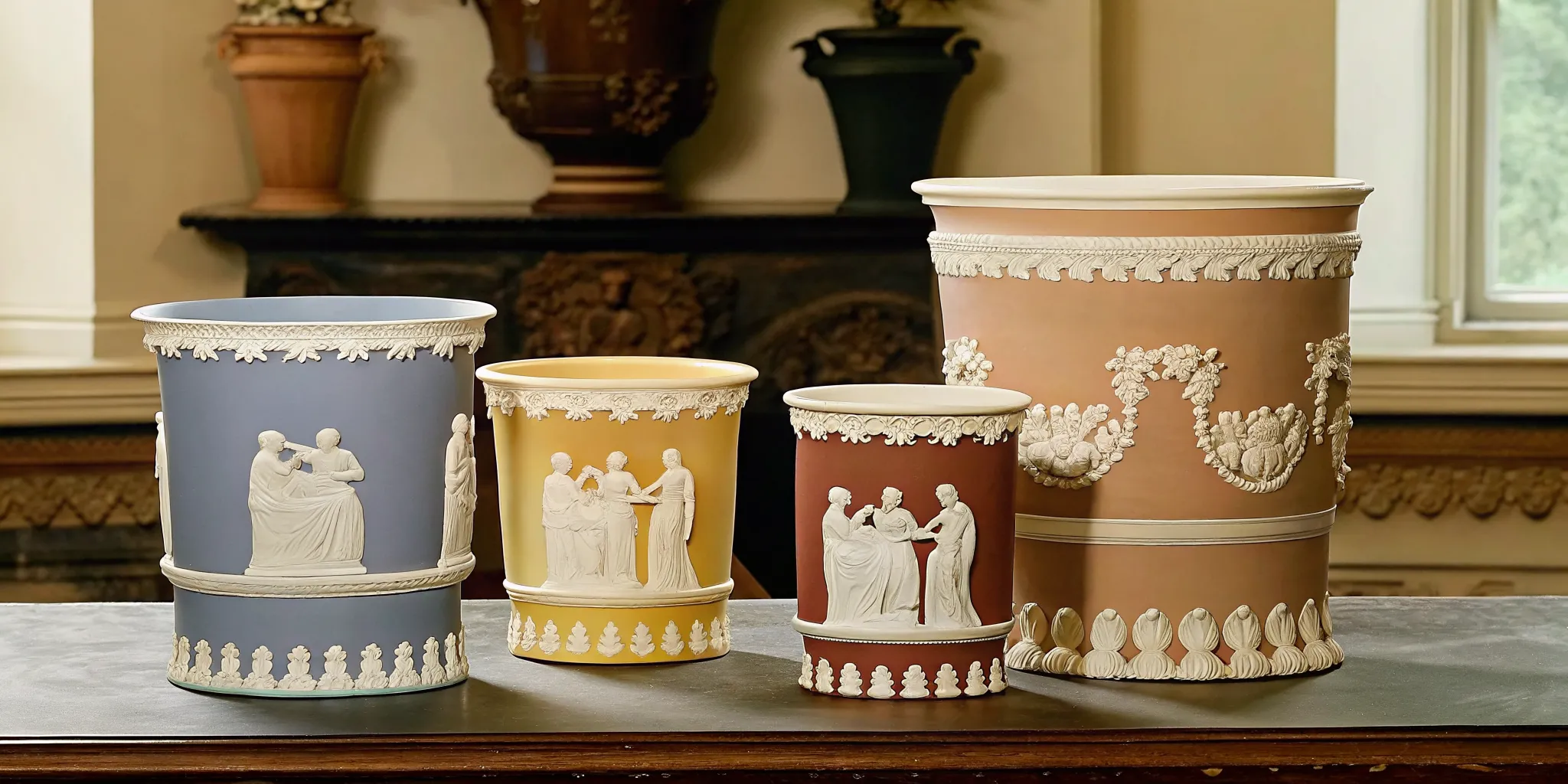
Color is the single most important value driver. Wedgwood produced Jasperware in roughly thirty different colors, but the market strongly favors certain hues over others. Understanding where your piece falls on the rarity spectrum is the fastest way to gauge its rough market worth.
Common Colors (Lower Value)
Classic pale blue is the most iconic and most abundant Jasperware color. Because it was produced in vast quantities from the 18th century through the present, pale blue pieces carry the lowest relative value. Sage green and black are also common and generally fall in the same tier. Small decorative items in these colors, including trinket dishes, ashtrays, and small vases, typically sell for $20 to $80 at auction or through antique dealers. Larger items in common colors, such as mid-size vases or biscuit barrels, usually range from $50 to $200.
Collectible Colors (Moderate to High Value)
Yellow and lilac Jasperware command a noticeable premium because they were produced in smaller runs and are harder to find in good condition. Tri-color pieces, items featuring three or more distinct Jasperware colors on a single piece, are especially sought after. A tri-color Britannia Vase sold at auction for £4,100 in November 2021, driven largely by its color rarity and large size. Even modest yellow or lilac pieces in good condition can command $200 to $800 depending on form and age.
Rarest Colors (Premium Value)
Crimson dip Jasperware, produced from the late 1800s through the 1920s, is the holy grail for collectors. Crimson was incredibly difficult to manufacture consistently because the color had a tendency to bleed during firing. Surviving examples are scarce, and even modest crimson dip pieces can sell in the hundreds to low thousands at auction. If you own a piece in this color, it is worth having professionally evaluated regardless of size.
The broader principle: any color other than pale blue, sage green, or black adds a significant value bump. The further from the classic “Wedgwood Blue” a piece ventures, the more a dedicated collector will pay. For a deeper look at what drives value in the broader ceramics market, see our auction analysis for Royal Doulton, Wedgwood, and Boehm selections.
Decoding Wedgwood Backstamps to Determine Age
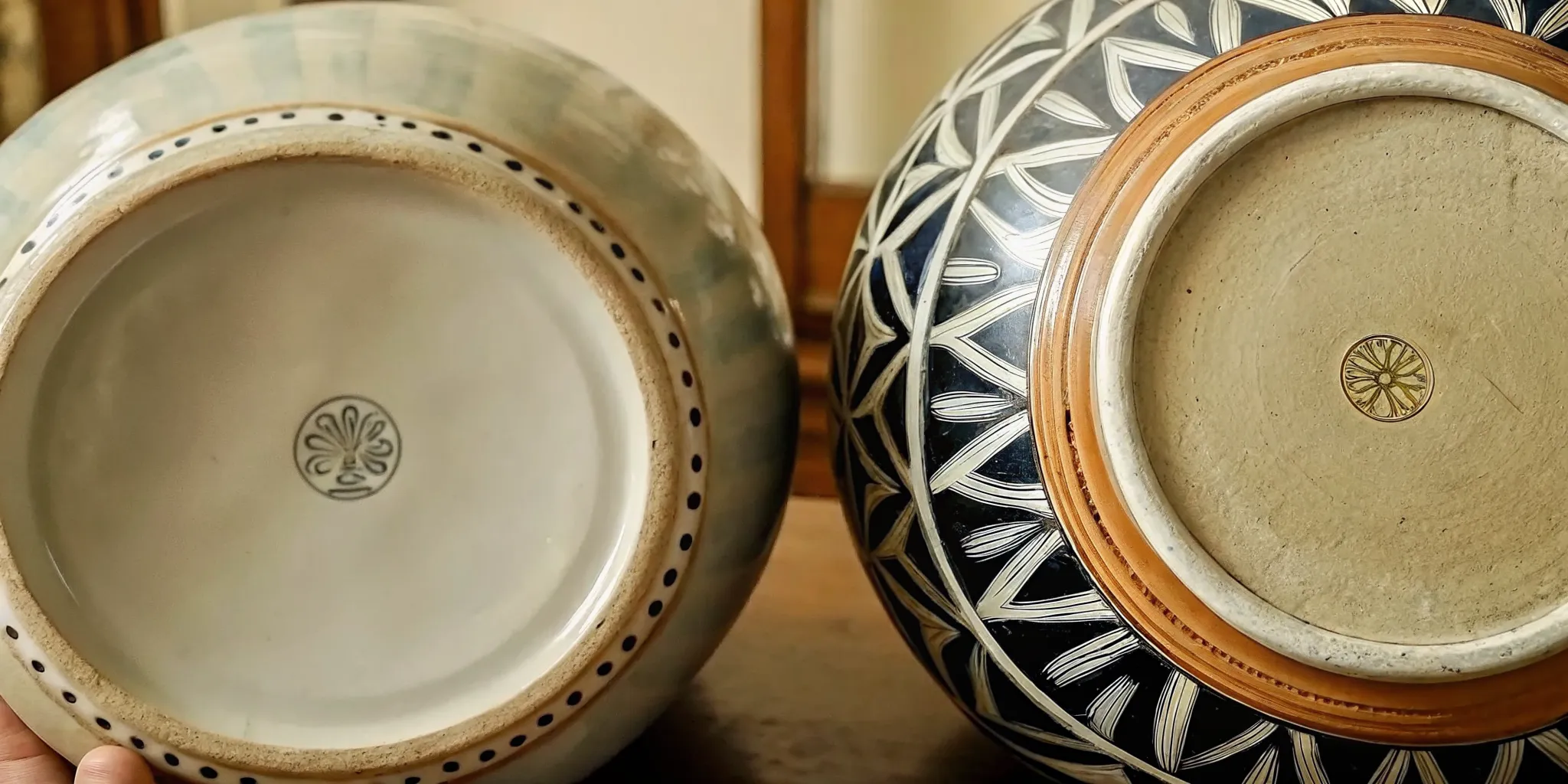
Age is the second most important value factor. Several backstamp guides exist online, but the basic chronology is straightforward. Flip your piece over and check for these marks.
Pre-1860: “Wedgwood” Only
Pieces marked simply WEDGWOOD with no country designation or three-letter code almost certainly date before 1860. These are the most desirable from a collector standpoint. If the piece also has the correct period design characteristics, it can carry a substantial premium over later examples. The earliest pieces may also bear the impressed mark “WEDGWOOD & SONS” or include a single letter or symbol used by individual workmen.
1860 to 1891: Three-Letter Date Codes
Between 1860 and 1891, Wedgwood used a system of three impressed letters to encode the month, the potter, and the year of manufacture. A piece stamped WEDGWOOD plus three letters falls in this range. Dating books and online Wedgwood reference guides can decode the specific year. Pieces from this era are considered antique and carry good value, though not as high as pre-1860 examples. A large 19th-century blue Jasperware pitcher from this period recently listed for $550, demonstrating the gap between common color items and their rare-color counterparts from the same era.
1891 to 1908: “WEDGWOOD ENGLAND”
When the McKinley Tariff Act required country-of-origin marking on imports to the United States, Wedgwood began stamping WEDGWOOD ENGLAND on its wares. Pieces bearing this mark generally date from 1891 to around 1908. The addition of “England” signals late Victorian to Edwardian production.
1908 to 1969: “WEDGWOOD MADE IN ENGLAND”
In 1908, the mark changed to WEDGWOOD MADE IN ENGLAND. This stamp continued through most of the 20th century, covering the Art Deco period, mid-century modern production, and the post-war decades. Mass-produced decorative pieces from the 1950s through the 1970s carry this mark and typically hold the lowest resale value, especially smaller items like trinket boxes or ashtrays. If you are thinking about selling, our guide on how to sell your antiques and collectibles covers the full process from identification to auction.
Post-1969: Modern Marks
After 1969, Wedgwood used a variety of marks including the full “Wedgwood, Barlaston, England” stamp. Modern Jasperware remains collectible to some degree. But 20th- and 21st-century pieces rarely reach the prices of their 18th- and 19th-century counterparts unless they are exceptionally large or rare in color. For a comprehensive look at the top-tier end of the market, read about the Important Wedgwood auction collections handled by our specialists.
Piece Type, Size, and Condition
Form and Scale
Size matters enormously in Jasperware valuation. Small collectibles including trinket boxes, match strikers, buttons, and small dishes usually sell for $20 to $80 regardless of age. Large decorative pieces including urns, cachepots, book slides, punch bowls, and tea sets command hundreds to thousands of dollars. The premium for size applies across color categories. A large yet common blue urn will almost always outperform a small rare-color trinket dish at auction, simply because scale attracts serious collectors who display their pieces prominently.
Condition Is Everything
Jasperware is unglazed and highly susceptible to damage. Because the matte finish cannot be easily repaired, any chip, crack, or loss to the white bas-relief figures will dramatically reduce value. Flawless pieces command maximum resale value, while damaged pieces often sell for 70 to 90 percent less than their mint-condition counterparts. Check the raised white details especially carefully. Missing or chipped figures on an otherwise intact piece still cut deep into value. Hairline cracks in the body, even if stable, can reduce value by 50 percent or more. Before deciding to sell, learn what a professional antique appraiser near you would look for during an examination.
Real Auction Values: Recent Comparables
The following recent auction results illustrate the range of what Wedgwood Jasperware actually sells for at auction. These are real hammer prices, not asking prices from dealer inventories, so they provide the most reliable benchmark for your own valuation.
- Tri-color Britannia Vase – Sold for £4,100 at Fine Art auction (November 2021). Large size and extreme color rarity drove this result.
- Flaxman-designed blue and white Jasperware chess set – Sold for £1,700 at Fine Art auction (March 2022). Full sets of any Jasperware are uncommon and command strong premiums.
- Modern Jasperware incense burners on dolphin-shaped tripods – Sold for £650. Even modern pieces can reach solid prices when the form is unusual and the condition is pristine.
- Group of vintage Wedgwood Jasperware – A single group of 90+ pieces listed at $5,500, showing that quantity and variety in a single lot can attract serious collector interest.
- Large 19th-century blue Jasperware pitcher – Listed for $550, demonstrating the gap between common color and large form versus rare color and large form.
- Pair of lilac Jasperware urns with classical relief – Sold for $1,200 at a regional auction, illustrating the premium that matched pairs and rare colors together command.
These numbers reinforce the pattern: the highest prices come from the intersection of pre-20th-century age, rare or multiple colors, large form, and flawless condition. If your collection fits that profile, tell us about your collection for a full auction evaluation.
Wedgwood Jasperware Value Range by Category
| Category | Typical Range | Top Auction Results |
|---|---|---|
| Small trinket dishes (pale blue) | $20-$80 | – |
| Mid-size vases (sage green, black) | $50-$200 | – |
| Rare color pieces (lilac, yellow) | $200-$800 | – |
| Tri-color or crimson dip items | $500-$4,000+ | £4,100 (Britannia Vase) |
| Full tea sets or large urns (pre-1900) | $500-$2,500 | – |
| Special forms (chess sets, figural) | $300-$2,000 | £1,700 (chess set) |
| Modern decorative (post-1950) | $10-$100 | – |
These ranges are guidelines. A rare crimson dip Wedgwood perfume bottle in perfect condition can outperform a large but common blue vase. Always evaluate color first, age second, size third, and condition as the final multiplier. For a step-by-step guide to getting your pieces in front of the right buyers, see how to sell your antiques and collectibles with Lion and Unicorn. If you decide to sell, learn how to sell your Wedgwood Jasperware through a specialist.
Is Your Jasperware Worth an Appraisal?
If you suspect your piece falls into one of the higher-value categories, pre-1860 age. Rare color, large form, or excellent condition, a professional appraisal is a smart next step. Certified appraisers who are members of the International Society of Appraisers (ISA) and follow USPAP standards can provide accurate market valuations that are accepted by insurers. Estate executors, and auction houses. At Lion and Unicorn, our in-house specialists routinely evaluate Wedgwood Jasperware as part of our estate and consignment services nationwide. Learn more about the appraisal process and what it costs.
For most pieces, a simple backstamp check and color assessment will tell you 80 percent of what you need to know. The remaining 20 percent, the exact auction estimate and the right selling venue, is where professional expertise makes the real difference. Even if your piece appears to be a common blue trinket dish. An experienced appraiser may spot subtle details that elevate its value, such as an unusual mold variant or a rare design attribution.
Frequently Asked Questions
How much is my Wedgwood Jasperware worth?
The majority of Wedgwood Jasperware falls between $20 and $200. To narrow it down, check the backstamp for age, identify the color, inspect the condition, and measure the piece. Rare colors, pre-1900 manufacture, large size, and flawless condition push value higher. Exceptional pieces, including tri-color vases, crimson dip items, and full tea sets, can reach $500 to $4,000 or more at auction.
Does the color of Wedgwood Jasperware affect its value?
Yes. Color is the strongest single value driver. Classic pale blue, sage green, and black are common and carry lower prices. Yellow, lilac, and tri-color pieces are more collectible. Crimson dip Jasperware from the late 1800s to 1920s is the rarest and most valuable due to production difficulties that limited surviving examples.
What Wedgwood Jasperware colors are most collectible?
Lilac, yellow, and any tri-color combination are the most actively sought by collectors. Crimson dip is the rarest of all. If you own a piece in one of these colors, it is worth having it professionally evaluated regardless of its size or form.
How can I tell how old my Wedgwood Jasperware piece is?
Turn the piece over and read the backstamp. “Wedgwood” alone means pre-1860. “Wedgwood” with three impressed letters means 1860 to 1891. “Wedgwood England” means 1891 to 1908. “Wedgwood Made in England” means 1908 to 1969. Modern marks use “Wedgwood, Barlaston, England.” The earlier the mark, the higher the potential value.
How does condition affect the value of Wedgwood Jasperware?
Condition is the final multiplier on every piece. Because Jasperware is unglazed, chips and cracks cannot be easily concealed or repaired. A damaged piece may lose 70 to 90 percent of its value compared to a flawless example. Examine the white relief figures especially carefully, as any missing detail substantially reduces collector demand.
Which Wedgwood Jasperware pieces are the most valuable?
The most valuable pieces combine all four premium factors: pre-1860 or 19th-century age. Rare or multiple colors (especially crimson dip or tri-color), large size (urns, punch bowls, full tea sets, chess sets), and mint condition. The tri-color Britannia Vase selling for £4,100 and the Flaxman chess set selling for £1,700 are textbook examples.
Ready to Get Your Wedgwood Jasperware Appraised?
If you own a piece of Wedgwood Jasperware and want to know its exact market value, Lion and Unicorn offers free, no-obligation appraisals from our certified specialists. With decades of experience and a dedicated Wedgwood category specialist on staff, we provide accurate valuations backed by current auction data. Contact us to get started.
For more on Wedgwood collecting, also read about Betty Issod, the Queen of Wedgwood and her incredible collection.
Free Consultation
Ready to Sell Your Estate or Collection?
Lion & Unicorn's expert team offers free appraisals and nationwide pickup service.
Over 30 years of experience — Florida's most trusted auction house.